• blog
  • tips & advice
  • adventures
  • photography
  • book
Menu

a backpacker's life

  • blog
  • tips & advice
  • adventures
  • photography
  • book
×
book
1000001160.jpg
Short Fiction: Dust (Draft)
Read more →
1000001098.webp
Short Fiction: Last Communion (Draft)
Read more →
1000001445.jpg
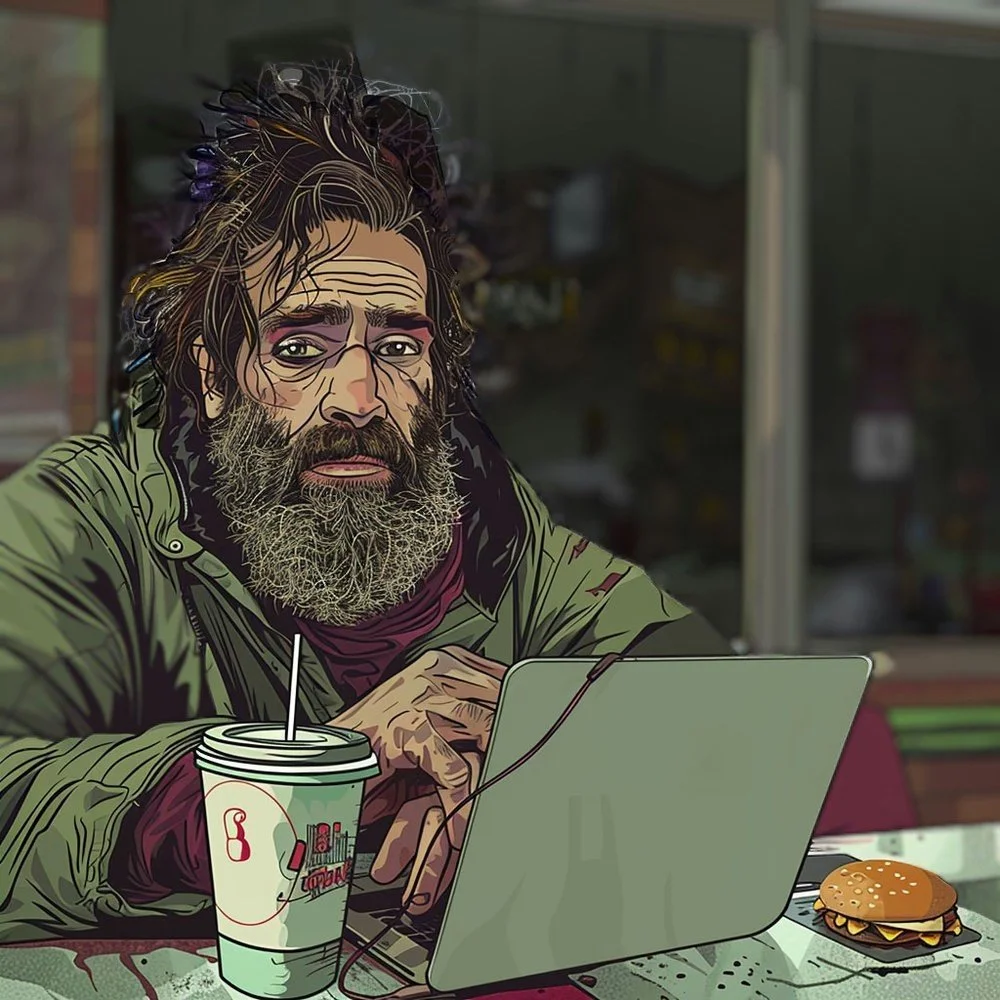
Chapter 22: Tech Support for the Homeless
Read more →
1000001446.jpg
Chapter 20: Trailsick
Read more →
1000001453.jpg
Chapter 19: Four More Days
Read more →
rg2058_graphic_novel_style_a_backpackers_foot_splashing_in_cree_59cb206e-6e95-4b63-b90f-836bb01992e0.png
Chapter 16: The Men Who Don’t Fit In
Read more →
1000001524.jpg
Chapter 15: Death and Fun-size Candy Bars
Read more →
1000001424.jpg
Chapter 14: The Hardees Bag
Read more →
slightest_distance.jpg
Chapter 12: The Slightest Distance
Read more →
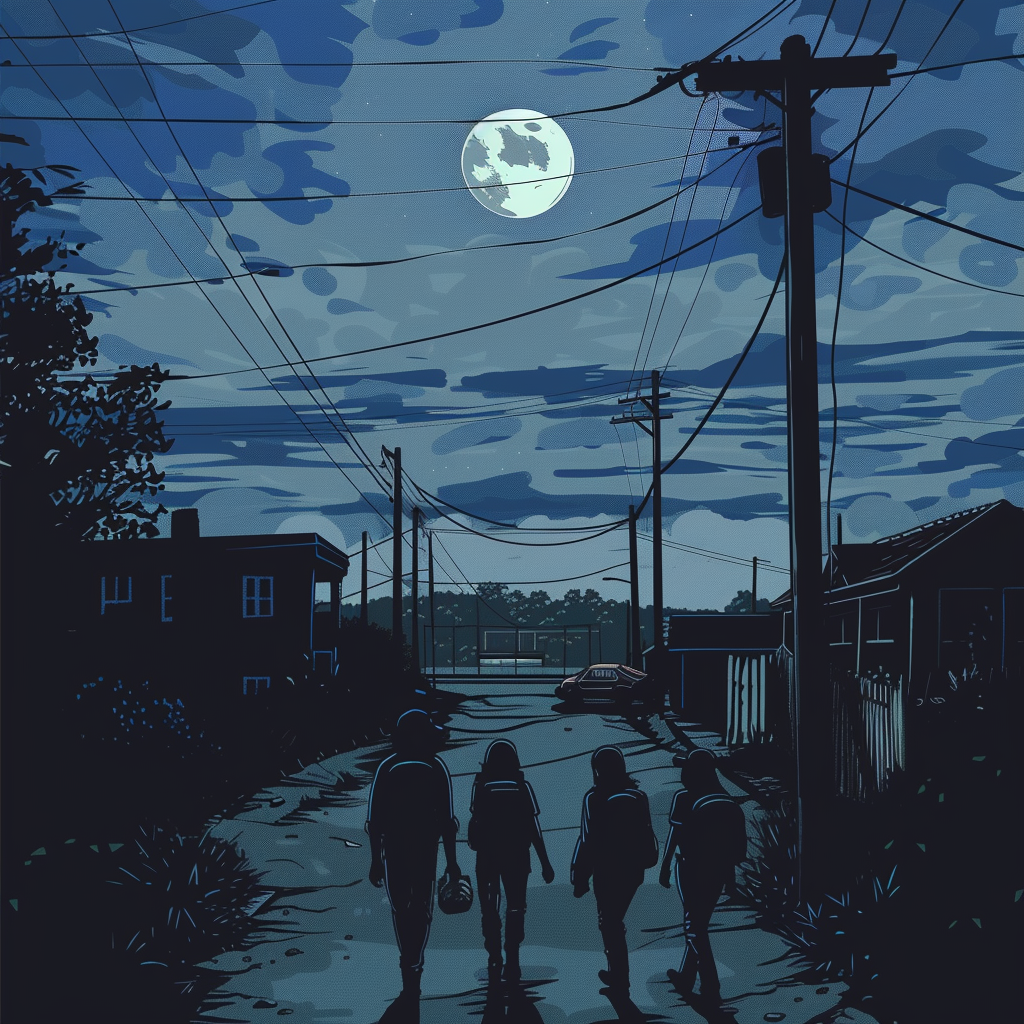
rg2058_graphic_novel_style_4_backpacker_sillhouettes_of_2_femal_dcf6bbae-6769-4579-acdb-8ce28d9fe5ec.png
Chapter 6: That Time in Andover
Read more →
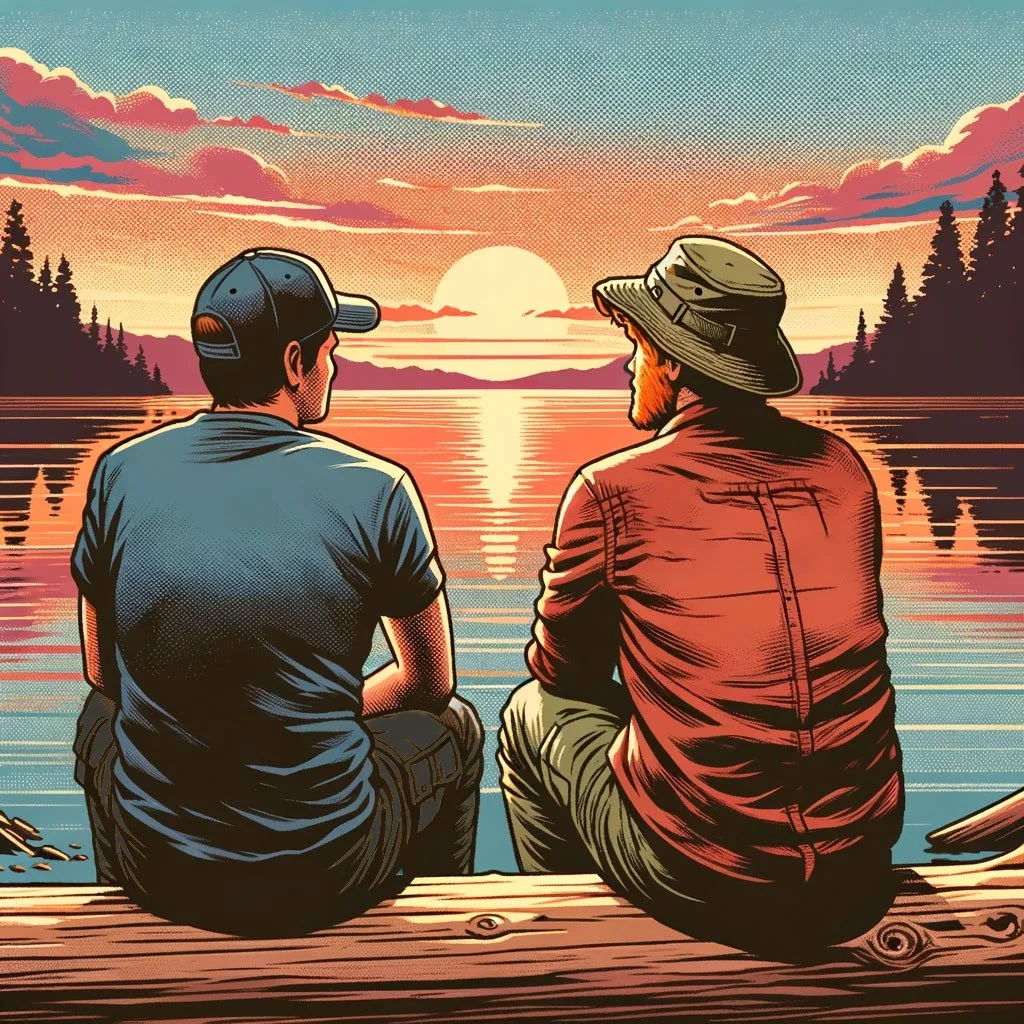
DALL·E-2024-03-02-17.50.38---In-a-graphic-novel-style,-illustrate-two-men-sitting-2-feet-apart-on-opposite-ends-of-a-log-on-the-shore-of-a-lake,-watching-a-sunset.jpg
Chapter 4: The Million Dollar Question
Read more →
1000001535.jpg
Chapter 3: Feeling the Pull
Read more →
futures_past.jpg
Chapter 1: The Future's Past
Read more →
rg2058_graphic_novel_artwork_silhouette_of_a_backpacker_in_a_ba_a00189ad-9988-4c49-bfe2-a89df13ecc93.png
Epigraph
Read more →
cover.jpg
A Backpacker's Life List Book in Progress
Read more →

Short Fiction: Dust (Draft)

Ryan Grayson September 8, 2024

Dust

By Ryan Grayson


"A good violinist keeps a hall listening. She made them forget to breathe."

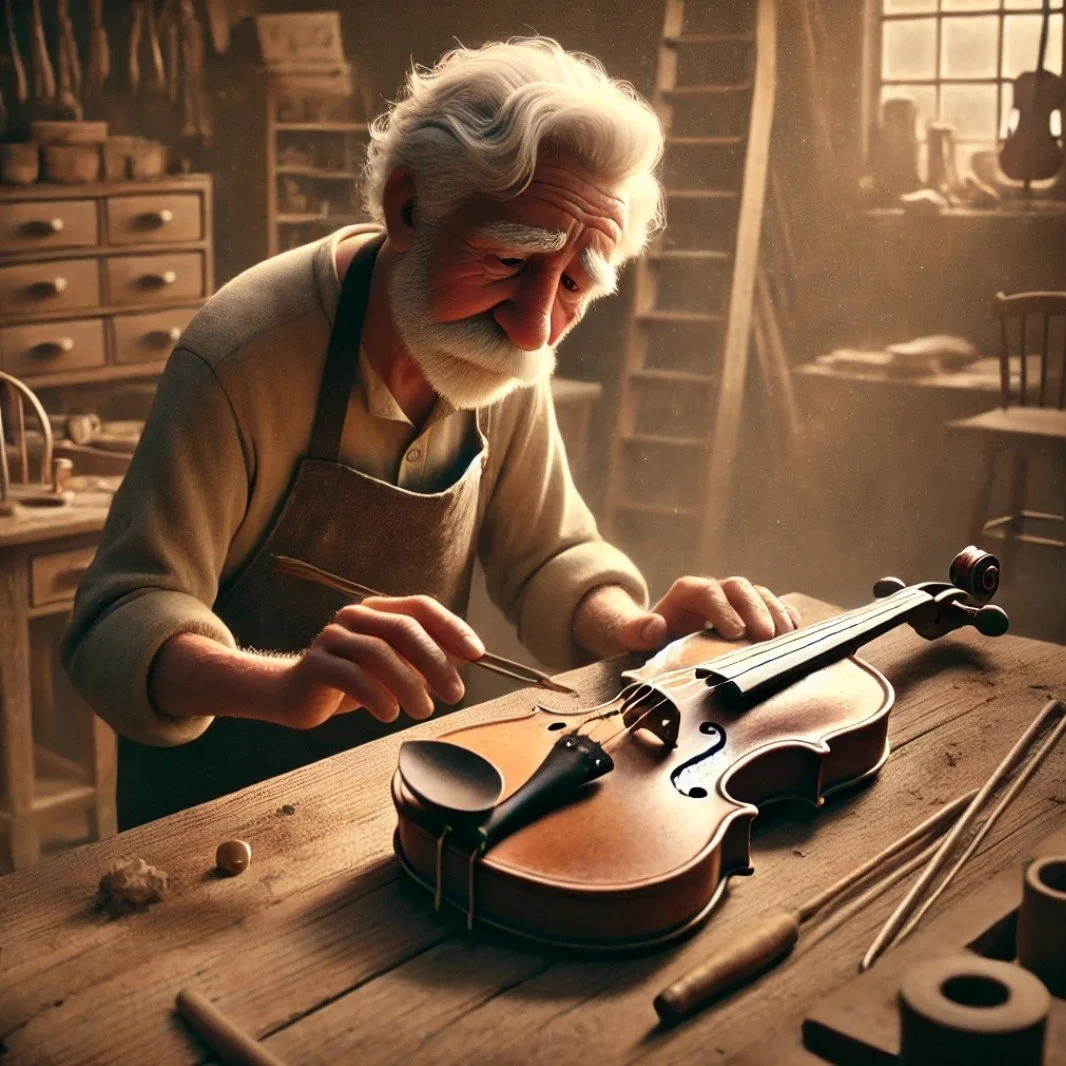
The old luthier ran a cloth over the violin to clear the dust before he declared the restoration complete.

A child leaned in, fingers hooked over the edge of the workbench. The old man only used that voice when a story was coming.

"An instrument is crafted for more than making music," he said.

He pressed his thumbs against the wooden bridge, straightening it under the tight strings.

"A violin is a vessel. A musician pours their feeling into the strings, and the wood carries it through its dark hollows and out into the room."

He plucked the highest string and let it ring out.

"And when a master like her lands the right note at the right moment, the whole hall goes still."

He set the violin down and carefully lifted a round gray clump of dust from a wooden tray.

"Most luthiers throw these away," he said with disapproval. "They clean the wood, sweep out the dust, and toss it aside. Not the Todorovas. Never."

He turned the gray ball between his fingers to study it.

"This is not just dirt. A violin keeps a piece of everyone who plays it. Skin cells, a stray eyelash, a thread from a sleeve, rosin worked off the bow. For generations it rolls inside and gathers itself together." He smiled and leaned closer, the way a man leans in for a secret. "Most see debris. We see history."

He held it up for the child to see.

"In the trade it is called a toneball, but to us it has always been Dushichka."

The child mouthed the word.

He glanced over his shoulder and lowered his voice.

"Some believe a musician leaves behind more than physical traces," he whispered. "Not just scraps, but a piece of their mind or spirit that lingers."

He rolled it gently in his palm.

"This does not happen from skill alone. Perfection never made anything come alive. It requires the kind of music that raises goosebumps, that makes you forget where you end and where the music begins."

"Some say it happened one night at La Scala, in Milan."

He set the clump down and took up the violin, holding it to the light to check for smudges.

"The master violinist stepped onto the stage beneath the great chandeliers, lifted her violin to her chin, and set her fingers on the strings."

He mirrored the motion, tucking the violin against his shoulder to feel the fit.

"She waited for the great hall to settle. A final throat cleared. She took one breath."

He drew a breath of his own, lifted the bow over the strings, and held it there, not quite touching.

"The first notes were barely there, like a thread pulled through the air. Then she took the melody higher, and higher, until the whole hall leaned forward. And just when they could bear it no longer, she resolved the melody. The hair came up on people's arms. Old men wept and did not know why."

"But no one felt it more than she did. By the end she had stopped seeing the faces below her, and the lights from above. There was nothing left to her but the sound, and she could not feel herself apart from it."

"And down in the dark of the violin, a small gray clump of dust lay as it always had. The sound moved through it, and for the first time, it stirred."

He set the violin down and took up the clump, placing it in the child's palm. The child watched it without blinking.

"Go on," he said, nodding toward the f-hole of the instrument. "Back inside its home for now. This one has not heard the note it needs just yet."

The child slipped the dust bunny into the violin and watched it disappear into the dark.


1


In the summer of 1940, a narrow alley off a crowded London street led to a pawn shop buried in shadow. Unlike the grand antique emporiums that dotted the city, this one was small, forgettable by design. It survived on being overlooked, drawing in the desperate and those needing quick, anonymous transaction with no questions asked.

Nikolai Todorova, an elderly man, a Bulgarian immigrant, and a craftsman by trade, often shuffled by the shop’s grimy windows, his gaze drawn to the hodgepodge of items inside. He had no love for the pawnbroker, but sometimes, among the dust and clutter, he found a tool worth salvaging.

Today, it wasn’t a tool that caught his eye but a weathered violin case, out of place among the usual pawned odds and ends. Its leather was worn, cracked from time and neglect, as if it had lived a hundred turbulent years. He decided to go inside for a closer look.

Nikolai held the door for a young mother clutching her daughter’s tiny hand and stepped in behind them. The pawnbroker eyed them warily, arms crossed behind his cluttered counter, making them feel as welcome as debt collectors.

The mother offered a polite smile as she greeted the pawnbroker, her gaze flicking over the grey overtaking the black in his hair and the bit of extra timber where muscle used to be. 

With her daughter pressed close to her leg, she pulled a small item from her purse, holding it out carefully with both hands, as if that might make it worth more. 

Nikolai used the moment to slip into the dimly lit aisles to find the violin.

The shop was cramped, packed with rusted tools and assorted dishware in need of a wash. Tarnished jewelry sat in dusty display cases, and whatever didn’t fit on the shelves was left in careless piles on the floor.

"This was my grandmother’s," the young woman said, holding the item a moment longer before offering it. “It’s a beautiful ring, isn’t it? My grandfather proposed with it. Took her on a walk through the park, she told me. He was so nervous, he dropped the ring in the snow. So he—"

"The clarity and cut here are poor, quite poor," the pawnbroker interrupted. Nikolai doubted he knew the first thing about either. 

"Ten quid, love. That’s me being generous."

“But that won’t even get us through next month,” the young woman said.

Nikolai watched as the mother looked between the ring and her child. The shop was quiet. After a moment, she gave a small nod and set the ring on the counter, blinking fast. 

Nikolai's dislike for the pawnbroker deepened, but his attention stayed on the violin case, now caught in a sliver of window light.

He unlatched the tarnished brass clasps and lifted the lid. The violin inside was a pitiful sight, its varnish dulled, its strings slack or missing. Worst of all, the wood was split and concaved below the bass-side f-hole.

Nikolai lifted the broken piece into place, careful not to press too hard. The damage was severe, but not beyond repair.

He peered inside and spotted a faded label: ‘Joseph Guarnerius fecit Cremonae anno 1739 HIS,’ with a small cross beside it. 

“A decent forgery, all things considered,” he muttered, begrudgingly impressed.

He lifted the violin from its case and stepped closer to the sunlight. The subtle asymmetry in the f-holes was clear. The imbalance carried through the shoulders and scroll ears, a hallmark of Guarneri del Gesù’s style, fitting the name and year on the label.

Turning the violin over, he traced a split running down the back seam, then let his hand slide over the arch of the top plate. The scroll was broad, its curves less refined, rough tool marks still visible along the edges. The body felt right in his hands. Its weight, its balance. None of it was proof, but nothing had ruled it out.

Nikolai let the thought settle. This might actually be a 200-year-old Guarneri del Gesù. He realized his jaw had gone slack and closed it. Not since first seeing his late wife had something stopped him so completely.

He placed it back in the case, but as he refastened the clasps, his hands shook slightly, the clasps clicking together more than once before snapping shut.

Looking over his shoulder, he pulled the violin case closer, like he’d stumbled upon a stash of banknotes and feared someone might make a move for it. Hugging the case to his chest, he edged toward the front.

As the young mother and daughter left, he set the case on the counter. The pawnbroker flipped it open and grabbed the violin by the neck, giving it a rough shake. Nikolai winced.

The pawnbroker squinted at something inside and tried to shake it out.

"Got somethin' stashed in 'ere, have ya?" he said.

"No, sir, not to my knowing," Nikolai said, keeping his eyes down.

The pawnbroker turned the violin upside down and shook it harder. Nikolai tensed as the broken piece of wood flapped up and down like a loose tooth, but he held his tongue, trying not to reveal its true value. 

A lumpy ball of dust tumbled from the broken f-hole onto the counter. They both stared at it.

"Ah, never you mind then. You seem straight, mate, but you wouldn’t be the first bloke tryna nick valuables hidden inside a hunk of junk. So I always check. Can’t be too trusting these days."

The dust bunny opened big, plaintive eyes that blinked in the light. It looked up at the old man, who locked eyes with it, not finding this strange at all.

“No offense taken, sir,” he said to the pawnbroker. “Your caution, it is a wise thing, I think.” 

As the pawnbroker reached to sweep the fluff off the counter, Nikolai moved quickly to stop him.

"Oh, eh, you do not mind if I keep that?"

“What’s the bother with a bit of old fluff, mate? It’s rubbish.”

 “Ah, but this is not just a bit of old fluff,” he said. “I come from a long line of luthiers, craftsmen who restore violins. My father and their fathers before them believed what gathers inside a violin is not only dust. It holds a bit of the instrument’s history. We put it back after a restoration, to keep that history with the violin.”

A flicker of hope stirred within the dust bunny. For years, it longed for a time when its existence was inseparably entwined with beautiful music.

The pawnbroker eyed him, saying nothing.

“I haven’t worked on violins for many years.” Nikolai gestured toward the case. “This one… it is not so valuable. So it is good for me to practice, to remember the skills my father gave me.”

The pawnbroker’s gaze lingered a moment longer before he pressed a lever on the register. A dull chime rang out.

Nikolai dropped a stack of tarnished coins on the counter, scooped up the dust bunny, and flicked it back into the violin before snapping the clasps shut.


2


Nikolai hurried back to his workshop. As he passed a newsstand, he slowed to read the headline on a stack of newspapers: “BRITAIN AT WAR: GERMANY IGNORES FINAL ULTIMATUM”. 

“Feels like we just got outta the last war to end all wars, don’t it just?” the news vendor said. “Well let’s hope they’re right this time, yeah?”

 The luthier nodded and picked up a paper. 

“Got a shelter, down our way. Well, just a basement, but if you fancy stickin’ round, we could squeeze in one more if we need to. Gotta be safer than that ol’ shop of yours?

"Ah, thank you, but I think I will take my chances with the Germans," Nikolai said, then handed him a coin, and tucked the newspaper under his arm. 

Raindrops began to speckle the ground as Nikolai approached his workshop, “Todorova Craftsmen” etched on the sign above. He noticed a flyer on the door, pulled it off, glanced at the ominous message of an imminent German attack, and then stuffed it into his pocket with a shake of his head. 

Inside, the workshop was a haven for a craftsman and his tools. A sturdy workbench took center stage, surrounded by an array of chisels, planes, and other woodworking tools hanging from wooden pegs. Curled wood shavings littered the floor, and pieces of antique furniture in various stages of restoration were scattered about. 

In one corner, a cold fireplace stood beside a lone homemade chair. The walls were bare, devoid of personal touches. A narrow, spiraling iron staircase led to a modest loft with a single twin bed.

Nikolai carefully set the violin on the workbench, lifted it from its case, and placed it beside him. His attention shifted to the dust bunny, looking up at him through the broken f-hole.

With a steady hand, he reached in with long tweezers and carefully lifted him out. The dust bunny blinked in the warm light.

Once in the open air, its fibers seemed to contract, pulling in tightly, a small, dense ball of fear until Nikolai gently placed it in the safety of a wooden dish.


3


The dust bunny's first awareness was music, a life-giving vibration from the violin that encased it. 

From his place in the concertmaster's seat, he reveled in the rehearsals, soaked in the slow, sweet notes of chamber pieces, and felt the glorious thunder of grand symphonies. He watched audiences rise for standing ovations, their fashions the only thing that ever changed, the music was timeless.

For decades, this was his life, a constant, joyful immersion in sound. With each performance, he grew denser as tiny particles of rosin and dust settled into the violin. 

It was a life he assumed would last forever. Then the music stopped. The world went silent and cold. He crossed the Atlantic in a crate, heard the distant, muffled clamor of an auction room, and was then locked away. His home became a mere commodity, a treasure to be owned, not played. The darkness was absolute, a dead, still quiet that lasted for years. When light finally returned, he was with a new owner, a young man’s inheritance who forced his uninterested daughter to take lessons.

The sound she made was wrong. It was a jagged, scraping screech that vibrated horribly, making the dust bunny’s fibers contract and cower. 

One day, the girl, in a fit of frustration, stopped her horrible scraping. Her scream was followed by a terrifying feeling of weightlessness as the violin sailed through the air. The world cracked open with a deafening crash, and in the same instant, the dust bunny was ejected, landing on the vast, cold emptiness of a wooden floor.

He had never been outside. A shadow fell. A massive ginger cat loomed, its eyes huge. Then a soft paw batted him. 

For the cat, it was just a game. For the dust bunny, it was a terrifying, helpless tumble across the floor, a blur of fur and jarring impacts that ended only when he rolled under a sofa just out of the cat’s reach.

The dust bunny tried to move, to get back to the violin, but something was wrong. Other dust bunny surrounded him. They were cold and still, but they seemed to pull at him, their lifeless fibers clinging like hands of the undead.

The father’s voice stormed into the room, screaming at the girl. Then went for the violin. 

The dust bunny lay still, trapped in the dark with the lifeless clumps of dust. He would be left behind, to be swept away with the garbage. 

He made one last push to propel itself to the safety of the violin. His body felt heavier now, weighed down as he clung to the edge of the broken belly of the violin just as it is lifted in the air by the angry father, who clumsily dropped it back into its case, flinging him safely inside. The case was slammed shut and he went back into darkness.

Until one day, a shaky light panned over the f-holes and shined inside. He moved towards it, and he saw the face of a man wearing a black balaclava holding a flashlight. 

The robber closed the case and stuffed it in a sack. Sending the dust bunny back into darkness for hours until seeing the scowling face of a man inspecting it, and buying it for a few pence. 

Then he was back into the case once more, back into darkness.

Through all these years unplayed, he barely hung onto consciousness, his purpose and energy faded. When the case opened again, he looked at the eyeball of an old man peering inside but didn’t bother to move toward the light. Instead, he lay back down, listless, nearly lifeless.

Next he was tipped upside down and fell on a counter. For the second time in his life, the dust bunny was outside, but no longer had the energy or will to move. 

He opened his eyes, resigning to his fate, blinking away the bleary vision. The old man’s kind face came into view. 


4


“Do not worry, little friend. She will sing again soon,” Nikolai said as he cleared a wooden dish and set the dust bunny inside with care. 

He turned back to the violin, his eyes resting on it. "To think, I almost felt guilty for what I paid. But in those careless hands, she would be no more than wood and strings. She is a treasure, worth more than all I have, even more than myself.”

He leaned closer to the dust bunny and beamed. “Ah, you are quite the marvel, aren’t you? From the moment I saw you, I was absolutely certain the violin was genuine.” Nikolai laughed then eased himself onto a nearby stool, his knees creaking with the effort. He brushed his fingers against the worn fabric of his trousers.

“Let me tell you a story from when I was just a boy, no taller than this bench, back in Bulgaria. We lived above our small workshop in Plovdiv, where the city buzzed with the stirrings of revolution against Ottoman rule. In that workshop, my father, a proud Bulgarian man dedicated to his craft, taught me the art of bringing violins back to life."

Nikolai’s voice softened as he carried them both back through the years. “One evening, my father showed me a violin he had just restored. It gleamed in the firelight, its wood glowing with a fresh, polished sheen. He held up a small gray ball, much like you. ‘A toneball,’ he called it. ‘Every note played, every soul that had poured their heart into this violin leaves a trace behind,’ he said. ‘That is their legacy—rosin from their bow, flakes of skin cells, strands of hair, bits of wool from a favorite sweater. Over the years, this dust rolls around, gathering more and more. It’s literally made up of all its players, shaped by the vibrations of their music and the movement of their bodies. 

“My father believed each toneball was like a symphony in itself, a budding planet in a universe of memories and melodies, growing with every performance. Some luthiers discard them, but my family… we cherished these pieces.” 

Nikolai chuckled softly. “A toneball,” he said, “is more than just dust and debris. It is a silent witness to the violin’s history. 

Some folks are superstitious about removing it after restoration, thinking it might hold the key to the instrument’s tone. But my father, much like myself, was a rational man. He didn’t believe in superstition. So, does a finer violin create a finer toneball, or does the toneball create a finer violin?” Nikolai lifted his shoulders. “Eh, who am I to say, but how could anyone throw away such a piece of history, such a piece of art?” 

He smiled, warmth spreading across his face. “Imagine that, something so small, yet so full of meaning.” He gingerly petted the toneball with the back of his finger. 

“So, my father handed me the toneball and asked me to return it to its home, inviting me into the family ritual.” Gently, Nikolai tapped the violin, his mind drifting back to that long-ago moment. 

“Now that I was part of the ritual, my father leaned in, like I was ready to be let in on a family secret. He lowered his voice and said, ‘My father, your grandfather, claimed that if an instrument is truly special and the right piece of music is played, the kind that gives you goosebumps, the kind that stirs the soul, well...’” Nikolai smiled as he said, “The  toneball could come to life.”

He chuckled, shaking his head. “Now, I never believed it. Just a story you tell a child when you want to make the ordinary magical. My father didn’t believe it either, a rational man like I said. But my grandfather swore on it, said he’d seen it happen. Said it wasn’t only physical pieces of themselves musicians could bequeath to a toneball, but a piece of their souls.'

“Of course, I’d believe it was another one of his old stories.” He paused, glancing at the small ball of dust looking back at him. “But here I am, talking to you now.” He let out a laugh.

 “But your time to help shape beautiful music will come later," he said, waving both hands, brushing the thought away. "First, we must prepare your violin.”


5


Nikolai picked up his tools and began working on the Guarneri del Gesù. Though it had been decades since he last restored a violin, the familiar motions returned naturally. 

Each day, he went to the bench, the tools laid out with purpose, working with steady precision. The dust bunny had settled on a shelf, where it could watch over and follow every movement.

As he examined the instrument, Nikolai glanced up at the dust bunny. “Patience, Nikolai. Patience is everything in this craft,” he said, his voice gentler now, like he was passing the lesson down to a son of his own, mirroring the way his father used to teach him. 

He assessed the varnish, eyes tracing the worn, cracked surface. “We don’t strip it all away,” he said. “The scars, the marks—they’re part of its story.” He moved slowly, working around the damaged areas, careful not to disturb the character that had settled into the wood over time.

Days passed as Nikolai worked, gradually shifting from cleaning to the more intricate repairs. 

Each morning, he heated the animal glue over a spirit lamp, the sharp, earthy scent filling the air. 

"This glue recipe," he said, stirring the pot, "has been in our family for generations. My father taught me, just as his father taught him. Heat it just right, or it loses its strength."

As the warmth spread through the workshop, the dust bunny defluffed, softening and loosening its fibers, subtly shifting its form, settling into the comforting heat.

“My father once said, ‘Violins are like people, they can both be shattered—’” Nikolai worked the glue into the cracks. “—but with care and patience, they can be made whole again.”

He wafted the scent of the glue toward his nose, breathing it in deeply. “This smell takes me back to the last lesson with my father when there was a knock at the door.”

Nikolai's hands stilled for a moment. “I saw his face change before he went to answer, so even though I couldn’t hear the words, I knew. The Ottoman reprisals were coming." He exhaled slowly. "My father didn’t wait. We gathered what little we could carry. He’d get us to safety, and then he would return to the fight.”

He set down his glue brush and pressed both palms flat on the bench. “When we fled toward Serbia, unrest was everywhere. Most of it’s gone to fog now, the places we passed, where we stayed. But I remember the fear. I remember how my legs ached trying to keep up. I remember my mother, begging my father not to go back. She had always been a strong woman, so what came out didn’t sound like her. I remember that clearly. It made my stomach go hollow. Nothing around me looked the same after that.” 

Nikolai retrieved his spool clamps to secure the pieces he’d carefully glued. “My father went back anyway, and we never saw him again.”

He picked up a clamp and looked at it like he’d forgotten what he meant to do with it, and then fixed it in place. He turned the screw until the wood held firm. “Too much pressure and the wood cracks,” he said. "Too little, and it won’t hold.”

Nikolai left the violin overnight to let the glue set. The next day, he removed the spool clamps and began preparing the surface. His hands moved over the wood, sanding and polishing, revealing the violin’s character.

He mixed the spirit varnish, applying thin, even coats. “The varnish shows everything,” he said. “The scars, the beauty, the history. We don’t hide the past; we let it speak.”

After weeks of work, Nikolai finally set down his tools and examined the violin, whole once again. He turned to the dust bunny, lifting it gently. “You’ve been patient, little one,” he said, placing it back inside the violin. “Back home where you belong.”

The dust bunny settled into his place inside the instrument. Nikolai stepped back, observing the restored violin. Most of the work was done.


6


Nikolai moved to the chair by the fireplace and settled in, resting the violin on his lap. 

“My father put a violin in my hands when I was only four,” he said, fingers brushing over the freshly polished wood. 

“He believed a luthier should know what it’s like to bring an instrument to life, to feel it as an extension of themselves.” 

He picked up the strings, guiding each one through the tailpiece and over the bridge. With each threading, he worked the string around the pegs, turning them slowly to find the right tension, listening to the faint creak as they settled into place, a sound he’d forgotten he loved. 

His movements grew more fluid, slipping into the familiar rhythm of the task, each step pulling him back to a place he’d left behind.

Nikolai plucked each string in turn, listening closely. He turned the pegs, coaxing each string toward the right pitch. 

The dust bunny peeked up through the f-holes, watching Nikolai’s every movement, waiting quietly, eager to hear him play.

Nikolai positioned the violin under his chin, gripping the bow. He raised it, but his hand remained still. 

A distant air raid siren pierced the quiet. Hearing a commotion outside, Nikolai got up, set the instrument on the chair, and went to the door. 

As he opened it, the sound surged in. A man holding a small child ran past, the mother hurrying alongside them. He watched them sprint toward the makeshift bomb shelter under the newspaper vendor’s home.

Nikolai stayed in the doorway until the last of the footsteps faded. 

The street was empty now, quiet except for the siren winding up slow, its hollow wail rising and falling over the rooftops.

He stood there a moment longer, listening, his mind drifting to places he’d rather not go. Then he shut the door, the latch clicking into place.

For a while, he stayed still. Then turned back. The violin waited, the dust bunny watched.

Nikolai sat down and took up the bow again. “You’ll be the first to hear me play in… I guess it’s been about twenty six years,” he said. “A long time.” He gave a brief smile. “I’ll be rusty. If you can help me sound better, I won’t mind.”

He drew the bow across the strings. The first sound scraped out dry. He kept going, adjusting his grip until the notes steadied, the rough edges easing as he found the balance.

The dust bunny closed its eyes and felt the notes send shivers through his body. He began to move with the music. He found spots where the wood carried the sound best. Pressing into the violin’s curves, he felt the resonance change, the air inside tightening or loosening around him. When he pushed near the f-holes, the notes darkened. He puffed up, catching some of the higher vibrations and dulling their edge. Shrinking back, he let the sharper tones pass clean through. 

The more he tried, the more certain he became. Every slight shift had an effect. He wasn’t just a passive listener anymore. He was a part of it now. A thrill ran through him. 

Each night, Nikolai played, and the dust bunny’s dance grew more deliberate. He followed the pull of each note, adjusting his movements to meet the sound. The angle of the violin guided him as much as the music, sending him rolling or drawing him higher as the body shifted.

The violin no longer stayed shut away in its case. It rested nearby, always within reach. By day, the dust bunny stretched out in the sunlight. At night, he waited by the fireplace, listening for the first note.

Over time, he grew denser, rounder, gathering shape with every song. What once had been passive listening became a careful choreographed dance, each movement timed to the music. Together, they had changed. The luthier played better than he had in years, and the dust bunny felt his part in every note. After two centuries of drifting, he finally had a reason to be.

That night, Nikolai chose a sevdah melody, slow, mournful, and full of longing. The dust bunny stilled deep inside the violin, settling low against the wood as the vibrations pressed around him. This was his favorite. 

The melody pulled slow and heavy, each note dipping low before climbing just enough to ache. There was a sweetness buried in it, but it never lasted, always slipping back into something darker.

Another night, another air raid siren rose fast, winding higher until it cut through the room. Nikolai kept playing. He’d stopped for enough false alarms already.

Then the first rumble hit, low but close enough to catch in his chest. Not a warning. This was impact. 

He stopped, the bow paused halfway across the string. Another rumble followed, closer. 

For a moment, he stayed where he was. Then another blast, closer still, rattling the windows. He set the violin down in its case and crossed to the door.

Outside, the street had broken open, neighbors, shouting, a woman clutching a child in her arms, running toward the newspaper vendor’s house. 

He looked back at the violin and the small, frightened eyes peeking out. 

All this time, he’d stayed put, too proud to run. But the violin wasn’t his to lose. Two centuries of craft and care, he wouldn’t allow it to be destroyed under his watch. The violin and its occupant was all that mattered.

The rest could burn.

He shut the case, pulled it tight against his chest, and ran for the newspaper vendor’s house.


7


As Nikolai rushed toward the shelter, the rumble in the distance set his nerves on edge. His heart pounded harder with every step, and suddenly, he was no longer in London. He was back in 1914, clutching a different violin to his chest while gripping his wife Mila’s hand as they fled the Austro-Hungarian forces advancing through Serbia. The sound of shells and gunfire echoed around them.

Their escape was a frantic scramble, moving under the cover of night to avoid detection. 

The Austro-Hungarian forces were relentless, shelling towns and chasing any who tried to flee. They moved quickly, never staying in one place for long, always wary of the artillery fire and soldiers that seemed to be everywhere. Then came the explosion, shrapnel tearing through the air, striking Mila. But they couldn’t stop. Not with the enemy closing in.

Nikolai did what he could to care for her wounds, but without proper supplies, the infection quickly took hold. 

The chaos of war left little chance to find help. Hospitals and clinics were either overwhelmed with casualties or destroyed by shelling. Moving through fields and back roads to avoid soldiers, they saw the devastation everywhere. Burned villages, abandoned carts, and other families on the run. 

For three days, they kept moving, their journey marked by the sounds of distant artillery and the fear of being caught. 

With each step, Mila grew weaker, her strength slipping away as fever set in. 

Finally, they found an abandoned house where they could rest with some semblance of safety. 

It was barely standing, with shattered windows and partially collapsed roof, but it was shelter. He made her a bed out of old blankets and clothes he scavenged from the rooms, trying to keep her warm against the chill that seeped through the walls at night.

Despite her obvious exhaustion, her eyes found him sitting in a chair, framed by the moonlight, keeping watch out the window. 

“You must be freezing,” she murmured, offering one of the blankets. “Here, take it. I’ll be fine,” she said, though the shivering in her voice betrayed her. 

Nikolai looked at her, moved by how she still thought of him, even now, when she needed every bit of warmth for herself. 

He hesitated for a moment, then took the blanket and settled in beside her, wrapping it around them both.

She lay in silence for a while, her breath shallow and uneven. Then, in a whisper, she made a request. 

“Will you play our opera song?”

Nikolai’s throat tightened. He knew what she meant. Thaïs: Méditation. It was their song, the one that had played during their first date at the National Theatre in Belgrade, a night that belonged to another life. 

He hesitated. They should stay quiet, remain hidden. If they were discovered, it could bring danger to their door. But seeing her so frail, her skin drained of color, he couldn’t refuse her, not now. He reached for the violin beside them.

He drew the bow across the strings. The first few notes were delicate, tentative. He closed his eyes, setting the fear aside so he could play unrestrained, pouring all his feeling into each note, hoping she could feel it too. He stole a glance, and for a moment, their eyes met. A soft smile touched her lips, and he knew she indeed felt it too. 

With that, he played, not just for her, but for both of them, giving everything to the music as if it could take them back to that night, before everything fell apart. 

The notes weaved around them, bringing back the warmth of the theater lights, their shared looks, and the way the world seemed to fall away as they were swept up in the sound. There had been no worries, no sorrow, just the heady joy of new love and that perfect moment.

“The violinist played it just like this, didn’t he?” Mila whispered. “Like he was telling the story of us, note by note.”

“Exactly like this,” Nikolai whispered back, “Like he was playing it just for us.”

And so, he played on, each note carrying the memories of their life together. The melody, delicate at first, grew fuller, like their love that had deepened over time. The final note hung in the air like a breath that neither of them wanted to let go.

When he finished, he opened his eyes, expecting to hear her soft hum she always made when she loved something he played. That quiet, contented sound that told him everything was perfect. But there was only silence, a silence that would live in him forever.

“Mila?” he whispered.

Her lips held a peaceful smile, but she didn’t answer.

The violin slipped from his hands, crashing to the floor with a hollow thud. He rushed to her, pulling her into his arms, but it was too late. She was gone, and everything around him fell away.


8


Nikolai hurried through the dark London streets, clutching the violin case as the sirens continued to wail. The newspaper vendor waved him over from the doorway, urging him inside. Nikolai gave a quick nod and descended the narrow basement steps.

A bare bulb dangled from a wire overhead, its light morphing the faces with each swing. Nikolai kept his head down, weaving through the crowd before hiding in the shadow of a wooden pillar.

The basement settled into a tense silence. Distant explosions rumbled, just enough to send slight tremors through the ground and rattle dust from the floorboards. A few children whimpered, while their parents forced calm smiles and held them close, murmuring promises they didn’t know if they could keep.

Another explosion rumbled, closer this time, shaking the floor harder beneath their feet. The children's cries grew louder. A young mother pressed her hand to her mouth, eyes wide as she drew her child close. Nikolai recognized her. The woman pawning her grandmother’s ring.

The air felt suffocating and the walls closed in. Nikolai’s breath came quick and shallow. His fingers fumbled with the clasps of the case before flipping open the lid. 

He scanned the stricken faces staring back at him, then gently lifted the violin, settling it under his chin. The bow hovered over the strings for a heartbeat. Then his first notes broke through the silence.

Inside the violin, the dust bunny stirred to life, drawn into the music. The vibrations of the strings pulsed through him, as he moved in time with the melody. He shifted and swayed, responding to each note with instinct, adjusting the sound in ways that felt natural to him. Every movement brought the music closer to perfection.

Another rumble shook the room, raining dust from the floorboards above, which settled into the violin, becoming part of him as he danced.

The music washed over the basement, and for the first time, the tension cracked. An adult let out a sob—quiet, but enough to break the dam. A woman near the back wiped her eyes quickly, but the tears came faster. A man next to her bowed his head, his shoulders shaking. The others didn’t try to stop it anymore. No longer held back by the burden of holding it all together, they let go. 

One by one, the tension drained away,  replaced by quiet sobs and shaky breaths. Then, amidst the tears, someone laughed, soft, almost startled, like they’d forgotten they were allowed, and it spread. 

The children, seeing the adults’ faces change, began to giggle and loosened their grips. Soon the whole room felt lighter, for a moment, they found something they thought was lost.

After the last note faded, the room stayed quiet. Someone cleared their throat, offering a soft "thank you." A few people shifted in their seats, still shaken, some with faces flushed from the raw emotion they’d put on display in front of neighbors and strangers. 

A woman of about  Nikolai’s age reached out and gently patted his arm, but saying nothing, her smile faint, her eyes still red.

From the back, a voice spoke up, "Can you play another?"

Nikolai smiled, then raised the bow again.


9


By morning, they received the all-clear. Nikolai stepped outside and drew the cool air deep into his chest, eyes scanning the sky, almost surprised to see it still there.

For a few more months, the raids came and went. Each time the sirens wailed, they’d shuffle their children into that dark space, where the walls pressed in close and the air felt stale. The nights were punctuated by distant rumbles, or nothing at all, but either way, Nikolai would take out his violin and begin to play and the dust bunny danced. Their notes didn’t chase away the fear, but they moved through it, filling the empty spaces with something other than silence. 

Some nights, the tension in the room would dissolve into quiet sobs or shaky laughter. Other nights, the music gave them something to share, something to connect with, other than uncertainty.

At times, a couple would hold each other, gently swaying, or a child would stand on their father’s toes as he twirled her around in small, careful circles.


Dust hung in the air, swirling with every movement.


Inside the violin, the dust bunny was growing quietly with each note. He danced as if each performance was his last and his first, alive in the moment, taking none of it for granted.


As he grew denser with each drift of dust, the music became fuller, more textured. Nikolai could hear it. A richness in its tone that hadn’t been there on their first night.

One night, after the all-clear sounded, Nikolai felt a tap on his shoulder while latching his case. He looked up to see the young mother from the pawn shop standing there, looking tired. Her little girl was hiding behind her leg, peeking out with one wide eye.

“Sorry to bother you,” the mother whispered, shifting her purse. “We’re heading up, but she won’t leave me be. She keeps asking to see the singing box.”

“The what?” Nikolai asked.

“The singing box, that’s what she calls it. She’s got a bit of poet in her, that one. She said it was crying.” She smoothed the hair at the back of the girl's head. 

Nikolai unlatched the case and lifted the instrument. “It is not crying,” he said gently. “It is just telling a story about a long journey.”

The girl stepped out from behind her mother’s leg. She didn’t look at his face; she stared at the wood. She reached out a small finger and pressed the faint, jagged line running down the belly, the crack he had glued weeks ago.

"It has an owie," she said.

The mother moved to pull her hand away, but Nikolai shook his head. "It is okay," he said. He looked at the girl. "It did have an owie. But look." He knocked on the spot. "The wood holds together tight now. The broken parts... sometimes they become the strongest parts, if you give them time to set."

The girl nodded, as if this made perfect sense.

"I'm Nikolai," he said.

"I'm Pearl," the girl said.

Nikolai smiled, a faint, genuine thing. "Pearl," he repeated. "A fitting name. A pearl starts as just a spec of grit, did you know that? But with time, it becomes a treasure."


10


“This doesn’t happen from skill alone. It doesn’t come from playing perfectly. Perfection alone never made anything come alive. It has to be the kind of music that raises goosebumps, a performance that makes you forget where you end and the sound begins.” 

He placed the round dust bunny in Pearl’s palm. Her eyes widened, locked on it, not blinking. “Go on,” he said, nodding to the violin. “Back inside its home for now. This one hasn’t heard the note it needs just yet.” 

She slipped the round dust bunny into the violin, watching as it disappeared into the dark. 

Nikolai set the restored violin into Pearl's hands.

"Now show me," he said.

Pearl tucked it under her chin.

He lowered her shoulder with two fingers and nudged her thumb along the neck.

"Better," he said.

"Will you play the opera song again? I want to see it again," she said. "That’s my most favorite."

Nikolai smiled. "Mine too.”

He lifted his del Gesu, set the bow, and drew out the opening note of the Meditation from Thais.

Inside, the dust bunny danced.

Copyright © 2024 Ryan Grayson. All rights reserved.

Short Fiction: Last Communion (Draft)

Ryan Grayson September 7, 2024

Last Communion


Ryan Grayson


1


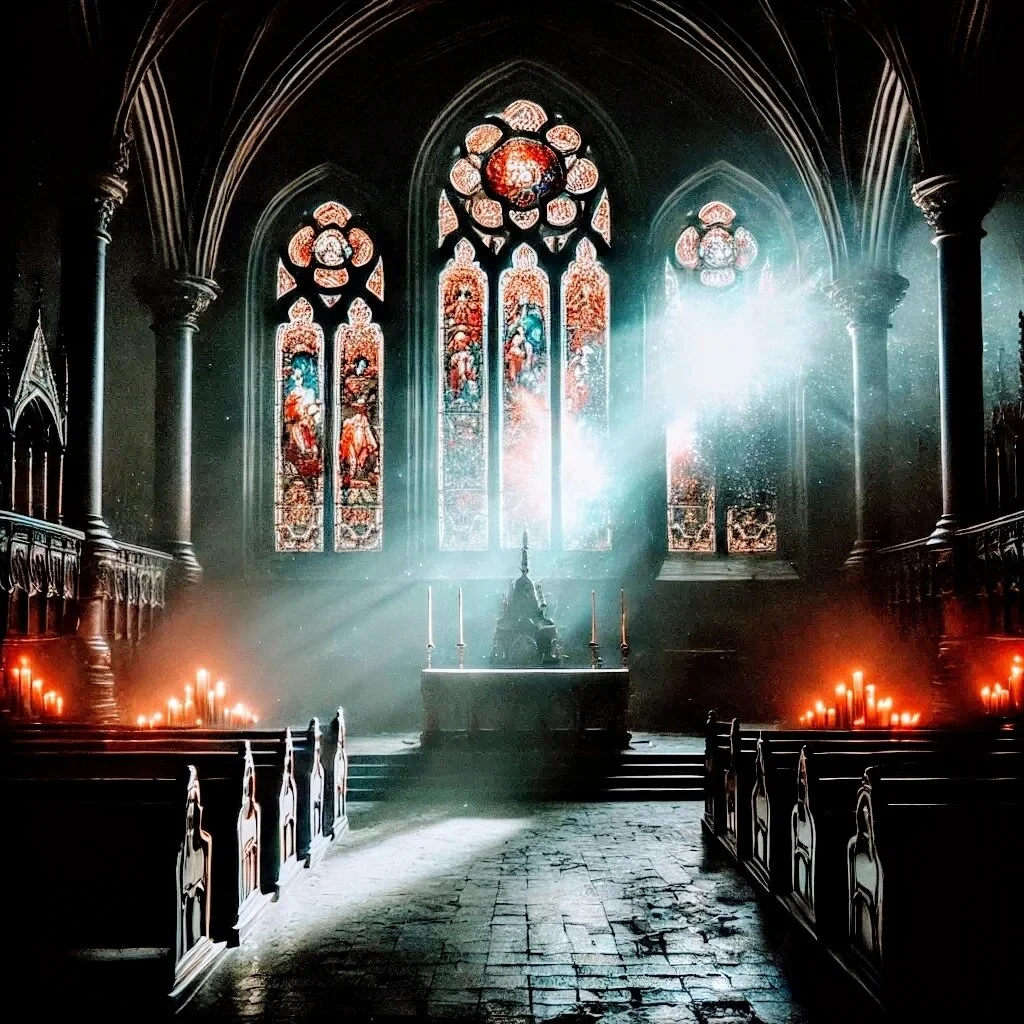
Dusk slipped through the stained glass in fractured bands and stretched across mostly empty pews. A priest ran his hand over the altar cloth, a wave of white linen rolling under his fingers. He turned the chalice a little, then back again.

His hand came to rest on the missal. He traced the leather cover with his thumb, then opened it.

Across the pews, his lone parishioner sat dressed for Mass, poised in a stretch of empty rows. Her name escaped him, but he recognized her face. She’d chosen her usual spot.

Disasters used to fill these pews, he thought. There had also been servers, sacristans, people who shared the weight. Now he alone arranged the sacred vessels. He alone filled the fonts. He alone swept up the broken glass. He alone climbed the choir loft to patch holes with tarp and rope. And it was he alone who went on with the liturgy anyway.

He smoothed the wrinkles out of his black shirt. He'd left the vestments in the sacristy; they felt incongruous with the world outside.

Was it Mary or Maura? Definitely an M name, he thought, but pushed it aside and cleared his throat. The sound echoed off the stone walls then faded.

“In the name of the Father, and of the Son, and of the Holy Spirit.”

“Amen,” the woman, Mary or Maura, replied.

There was a knowing look in her eyes, as if she saw through his act, and it made him feel like one more broken piece among the shattered glass and toppled statues—likely the work of local lads, the priest thought, though that too seemed insignificant now.

The grace of our Lord Jesus Christ, and the love of God, and the communion of the Holy Spirit be with you all," he continued. Same words, same cadence.

"And with your spirit," she replied, resolute, as if nothing around them could touch her.

He had served this parish for nearly two decades, each year shaped by the rhythm of holy days and ritual. He could still remember his ordination—the bishop's hands on him, the swell in his chest, a current of certainty that he'd been chosen for something higher.

His hands tightened on the edges of the pulpit.

​"My dear friends. We gather here tonight, in this holy space, as the day gives way to night, as we’ve done so many times before. We seek God in the stillness, in the quiet moments when the world seems lost, when the darkness feels close.

“But what happens when that stillness feels more like emptiness? When the quiet is too quiet?”

His gaze dropped to the floor, then fixed on a crack in the stone.

He used to think his faith needed doubt. It kept him honest. But the more he saw, the harder it was to justify. Not just one tragedy, but patterns. Good people suffered. The cruel thrived. And all of it was met with silence.

For a while, believing that suffering had purpose was enough. The Lord works in mysterious ways, he’d said at bedsides and graveyards, or that it was all part of His plan. After all, that silence wasn’t proof of God’s absence, just the space where faith lived. But he’d come to realize that doubt lived there too.

His voice cracked, but he went on.

“We’ve all walked through the valley of the shadow of death—some more than once. We’re told we’re not alone in those moments. That God walks with us, guides us, comforts us. But I know… I know how hard it is to hold onto that promise when the shadows seem so thick, when the valley stretches on with no end in sight.”

He listened to his own voice rise and fall in all the right places.

“I wish I could tell you that faith is always a beacon, a light that never dims. But faith can be fragile. It can flicker in the wind. And when it does, it’s easy to wonder if we’ve been left alone in the dark.”

His fingers traced the edge of the page. “During these long, quiet hours, I’ve had to sit with doubts I pushed aside for a long time. But faith isn’t about never feeling doubt. It isn’t about never questioning or never fearing the dark. Faith… real faith… is about taking the next step, even when you can't see the ground beneath you.

“We are not alone in this valley, even if it feels that way.”

He looked out over the empty pews.

“Maybe the light returns. Maybe even the smallest flicker is enough to keep going.”

He took a breath, then picked up the Bible and read from Ecclesiastes:

“There is a time for everything, and a season for every activity under the heavens: a time to be born and a time to die, a time to plant and a time to uproot. A time to weep and a time to laugh. A time to mourn and a time to dance…”

His voice cracked again. He stopped. “The Word of the Lord.”

“Thanks be to God,” she said.

He came down from the pulpit. His footsteps echoed through the nave. As he passed, the candlelight quivered across the stone walls.

She looked up at him expectantly, but he didn’t know what to say. He just sat beside her. The pew creaked beneath him.

She spoke first.

“What’s on your mind, Father? You seem troubled.”

He searched her face for any trace of sarcasm and found only the slight tilt of her head, the forward lean of her posture.

“Mary, isn’t it?”

“Helen,” she said, not unkindly.

He nodded. "Right. Helen." For once, the right words didn't come. "Do you think it might be the imminent extinction of humanity?"

“I’ve been on this earth a good long while, Father. Long enough to fret over every kind of trouble you can imagine. And you know what?”

He gave a small shrug.

“All that worry was just like chasing the wind. Everything has a way of…” She paused, eyes drifting past him. “a way of…”

“Sorting itself out?” he offered, glancing over his shoulder but seeing nothing.

She nodded slowly. “Yes, that’s right. Every time.”

“Until it doesn’t,” he said, eyes settling on the broken stained glass, the colours fading with the light.

“We’re on the brink, Helen. The final hours.”

She studied him. “Why do you reckon we’re the only ones here?”

For years he'd asked himself why he kept returning, but never found an answer. He wasn't expecting one now.

Her calmness unsettled him. Clearly she already knew the reason, and was just waiting for him to catch up. It reminded him of everything he'd given up for the Church, and everything the Church never gave back.

He kept his eyes on the altar. “I don’t know why I keep coming back,” he said. “Habit, maybe. Or because without this…” He touched the collar at his throat. “I wouldn’t know what to do with myself. People forget there’s a person under it. You wear it long enough, so do you.”

She just sat there, back straight, hands in her lap, watching him with a sympathy that made him feel small.

“You think I don’t want to believe?” he said. “I do. More than anything.

"People would come to me, looking for something. Guidance, comfort, whatever it was they thought I had. And I'd give it to them. The right words. The right tone. But half the time I was thinking, if they could see what was really going on in my head… And the worst part was, they walked away comforted. And they thanked me for it."

She didn’t respond.

“I remember when it felt real. Not just the scripture or the stories, but God’s presence.”

He met her eyes, just for a second, then looked away.

“It used to feel like sunlight on my skin. And now it’s like… trying to warm myself with the memory of it.”

He took in a slow breath. “I wonder if I ever truly believed, or if I just needed to. I remember having doubts, even early on. Not about God, not at first. But about the stories. A man surviving three days inside a whale? Or building a boat big enough to carry every kind of creature over a flood. I used to tell myself it didn’t matter if they were real. The meaning was what mattered. The stories pointed to something deeper.

And that worked, for a while. But then I started to realize that most stories do that. Novels, films, myths. They all carry symbolic weight. That doesn’t make them any truer than Harry Potter.

“The more I studied, the harder it became to draw the line. If Jonah’s just a metaphor, what about the parting of the Red Sea? A divine miracle, or a metaphor for faith overcoming impossible odds? Did Jesus raise Lazarus, or was it just a metaphor for spiritual renewal? What about the virgin birth? Or the resurrection of Christ?

“And when all of that falls away… what are you left with? Is God just symbolic too?”

He shook his head. “If you stop believing any of it’s true, you can’t build a life around it. Not really.”

​He ran his hands over his eyes. “The world right now... it only makes sense to me if there’s nobody at the wheel. Do you see that? It isn't malice or punishment. It’s just physics. The stars move. The earth spins. And then, out of nowhere, something just happens. A shift, a burst of energy. The universe doesn’t notice or care that there are humans in the way.”

He looked at her. She still hadn’t moved, hadn’t spoken. Just sat there, watching him. Like she was waiting for more. Like she knew he hadn’t really said it yet.

He shook his head and gave a short, dry laugh.

“You don’t just leave the priesthood. It’s not like quitting a job. It’s not only your work, it’s your home, your community. The only thing that gives your life meaning.

​“And what would I have fallen back on? A doctor leaves a hospital, he’s still a doctor. Still respected. Still has a family. A name. A sense of who he is.

​“But if the parishioners knew I didn’t believe? They would have turned on me.

​"I gave them twenty years. My youth. My chance for a normal life. Love. A family. If I walked away, all of it was for nothing."

His voice shook and he stood up, his words coming faster, more frayed.

 “And now it’s almost over. Not just us. Everything.

“I keep thinking about how long we’ve been here. How many lives came and went before us, believing things, building things. The prayers, the plagues, the wars, the art. People falling in love under empires that don’t exist anymore. Children playing in streets no one remembers.

“All of it, layer after layer, just to get here.

“And we learned so much. We learned how to split atoms and save lives from the brink of death. We learned how far away the stars are, and how unlikely it is that we’re even here at all.

“And still, it will all disappear. Just like that.

“What was it all supposed to amount to? What was the point?”

His eyes misted over, and he looked to the ornate ceiling above the nave.

“I had a beautiful garden once,” she finally said.

He turned to her. She was still looking past the altar, like she'd forgotten he was there.

“My cherry blossom, that was the crowning glory.” Her expression softened and she closed her eyes.

“Henry and I would sit under it. Just enjoying each other’s company. It was…” She drew in a breath and smiled. “…so lovely.”

His mouth twitched at one corner. He watched her for a moment, then sat beside her again. “I understand,” he said.

“Understand what?” she asked.

“The beauty of impermanence. That a thing doesn’t lose its meaning just because it ends—that it has meaning because it ends,” he replied.

She smiled.

A dull regret crept in. She’d lived a long full life. She’d known love—the kind he’d turned away from when he took his vows. Maybe her calm didn’t come from faith, but from that. From living. But he hadn’t done that either.

A crash rang out as stained glass hit the floor. The priest turned. Dust drifted through the slant of light pouring through the broken window, where scenes from Genesis had once glowed in vibrant colour. Helen didn’t flinch. She just watched him, hands still folded in her lap.

“I’m the one who’s supposed to be comforting you,” he said. “But it’s been the other way around.”

She watched him as if waiting for him to go on.

“You seem troubled, Father.”

“I know you mean well, I do. But I can’t sit here and pretend everything—”

“Everything has a way of sorting itself out in the end,” she said.

“No, Helen, it doesn’t. Not always. How can you stay so calm with the world outside…” he waved towards the broken window, where wind howled into the church. “…falling apart?”

“I had a beautiful garden once,” she said.

“I don’t care about your garden!” He hadn’t meant it to sound so harsh.

“My cherry blossom, that was the crowning glory,” she said. “Henry and I would sit under it. Just enjoying each other’s company. It was…” She drew in a breath and smiled. “…so lovely.”

Same tone. Same timing. No hint she knew she'd said it before.

As if her mental clock had been rewound. If time could be rewound, would everything play out the same, repeating the same words and the same mistakes?

He started to put an arm around her, then set it on the pew behind her instead. She didn’t need his sympathy. In fact, he envied her. What he would give to escape into an echo of a mind lost in time.

After a while, she turned to him. ​"Father, could you give me a wee minute alone? I'd like to light a candle for my Henry and have a little word with the Man above for him.”

She stood with one hand braced on the pew.

He guided her towards the candles with a light touch on her elbow.

She lit a taper from the central flame and brought it to her candle. He watched her in silence. She didn’t need his company. She was, in her own way, going to be just fine.

“Helen, I just need to get a bit of air. Stay as long as you like.”

He stepped outside. The air had that late-day warmth that lingered before dark.

From the open door, her voice reached him, soft and marked by pauses as though in conversation. He couldn’t catch the words, but there was a rhythm to it, a back-and-forth, like she was listening as much as speaking.

He watched the last of the sun slip behind the trees. He wondered if he’d ever see another sunset.

He hadn’t heard her footsteps, but suddenly she was beside him.

“Helen,” he said, startled. “I didn’t realize you’d finished.”

He looked down the street, then back at her. “Let me walk you home.”

“Oh, no need, Father. I live just around the corner,” she chuckled.

He didn’t know that. He should have.

He offered his arm anyway and she took it.

He opened his mouth to say something, maybe an apology, but Helen began to hum a tune before he could speak.

They walked past the shut-up shops and the weeds pushing through the cracks in the road and footpath. The wind stirred dry leaves in small circles. Her melody slipped into the empty streets, restless as the wind through broken windows.

They reached her home faster than he wanted. The walk gave him no answers, and he did not want to be left alone. She let go of his arm. He felt the warmth of her touch fade.

“Goodnight, Helen.”

She said nothing and kept humming.

The houses stretched out ahead. No light in the windows. No voices. No footsteps.

He turned to go and saw it. A column of smoke rising in the distance, an orange flicker behind rooftops.

He stared for a moment, then finally recognized Helen’s song.

“Ubi caritas et amor, Deus ibi est,” she sang as she climbed her front step.

He looked towards the fire. Likely just another blaze in a ruined city, but he let himself see it differently, as a lighthouse. Helen’s door clicked shut.

Now, left alone in the valley of the shadow of death, he began to walk.


2


As daylight faded, a young woman approached her childhood home, slowing as it came into view.

The house sat alone at the end of the street, its weather-beaten façade washed pale in the dim light, the curtains drawn.

Inside, her torchlight sliced through the darkness, catching dust motes swirling in the stale air.

After weeks on the road, the relief of seeing the area evacuated was short-lived. The signs of the family who had lived there after her were disorienting, every unfamiliar detail a distortion of her past. The bones of the house were still there, but it wore a false skin. Like a serial killer donning clown makeup to appear harmless.

She slid her rucksack off her shoulders and walked down the hall towards her old bedroom, her fingers brushing walls lined with smiling family photos. The images clashed with the memories that surged back—her father’s heavy footsteps, the men he let into her room, the stink of stale booze, the grip of fear.

She stopped at the doorway, heart pounding. Her hand closed around the door knob, but she hesitated. Then, with a breath, she pushed the door open.

Her torchlight swept across a room remade into a child’s sanctuary—pink walls, unicorn posters, princess dolls, a sea of soft toys.

Dust covered everything, but it still looked like the bedroom of a happy child.

She sank onto the bed, tears blurring the cheerful colours. Her body shook with sobs as she faced what her childhood should have been.

Wiping her eyes, she got up and stormed down the hall. In the living room, she dropped the torch and yanked open her rucksack, pulling out a tin of white spirit. She tore off the cap and poured it across the carpet and furniture, her voice rising with fury.

“How could you?! How could you do it?!” she screamed. The heavy, oily reek of white spirit filled her nose, mixing with the must of old wood and damp. “You knew! You knew and you did nothing! You just sat there! I was only small! I was a child! You just sat there and let them!”

She hurled the empty tin across the room and watched it rattle to a stop near the dusty sofa.

With trembling hands, she struck a match. The hiss of  sulphur cut through the stench of the white spirit. She lit the rest of the match heads and flicked them onto the soaked carpet. Blue flames tore across the floor.

She sank into a corner, spent. The fire took the furniture, climbed the walls, and stripped the curtains.

She thought of staying. Leaving it all behind for good. But as the heat closed in, the instinct to live won out. She snatched up her torch and rucksack then bolted for the street.

She turned. The house was lighting up the block. The fire moved faster than she expected. The heat hit like an open furnace. The windows blew out. Glass sprayed the garden. She moved away as the smoke billowed. The roof collapsed, sending a swarm of sparks into the air.

The firelight flickered across her face as she watched the levelling of her childhood home.

She sat on the grass next door, as close as she could bear to the heat and the stench of scorched wood and melting plastic.

In less than an hour, the house was gutted, a blackened skeleton with flames picking at the remains.

She let out a breath, expecting relief, but it didn’t come. She felt hollowed out. She pulled her knees to her chest and sat in the quiet, the finality of it all closing in.

"If you were ever going to show your face," she said quietly, "this would be the time." She hesitated. "God?" The word felt wrong. "If you’re there, I need something. We both know you fucking owe me.

“How could you turn your back on a wee girl? When she was looking for you? What kind of a creature does that to a person?”

She pulled her knees tighter and sobbed.

“You left me to it, to find my own way. I did things I can’t bring myself to put a name to.” She wiped her nose with the back of her hand. “I’d ask for forgiveness, but you never lent an ear then. Why would you bother your head now?”

She let out a dry laugh through her tears. "Why does this feel like another shitty relationship? Still chasing after a bit of approval from someone who never cared if I lived or died.”

Her shoulders dropped.

“I haven’t a clue where to go. I feel well and truly lost.” Her sobs came in ragged gasps. She took a breath to calm herself. “Just show me there’s some hope left. A reason to believe. The bare fucking minimum. Could you manage that much for me?”

She swallowed hard. "I know I’ve fucked up. But if there’s a life after this one... I don't know. I just want to believe there’s room for me."

"And if this is the end," she gestured to the sky, then dropped her hands into her lap, "then help me be at peace. Or at least let me spend the time I have without the same shite screaming in my head."

The fire died down to a low hiss. She looked up for the stars but found the sky blotted out by smoke. She let out a slow breath. "Please." She sat in the quiet, rubbing her arms against the chill.

A faint scuff of footsteps made her flinch. She turned. A figure stepped from the shadows, tall and dressed in black. She planted a hand on the grass and started to scramble back. Then she saw the white collar.


3


As the priest hurried towards the smoke, his own selfishness came home to him then. He’d turned to an old woman because she was the only one left to listen. Helen was back there with her cherry blossoms and her peace, and he hadn’t even considered her feelings, just wanted to unburden himself.

I don’t care about your garden. It was the only honest thing he’d said in twenty years.

He had spent his prime flogging a cure he didn’t even buy himself. What hurt most was what he had given up for it. He thought about a life he had missed out on. A father crouched on a footpath tying his daughter’s shoelace while she chattered at him. A man lifting a sleepy child from the back of a car and carrying him inside without waking him. The kind of moments he used to notice and then pretend not to want.

He imagined what it might have been like to fall in love. A wife opposite him at a kitchen table. Her face when she laughed at something stupid he said. The ease of being known by someone over years instead of hours, a life built day by day.

Then the thought turned, as it always did, to the part he tried not to name. The ache of wanting and being wanted. The warmth of someone under the same blankets. Bare skin against his. Her breath near his neck. The comfort of holding someone close enough to feel her heart beating. He had denied himself all of it for so long that now, with the world ending, its absence felt less like virtue and more like loss.

At the end of the road, the house was a collapsed cage of blackened rafters, with orange still glowing low in the wreckage.

He was close enough to feel heat when he heard her voice. He stopped. She was in the grass, knees pulled to her chest, watching the wreckage.

He caught himself staring and looked away, like always. The way she dressed had none of the modesty he was used to. But tonight, with the world coming apart, he let his eyes drift back to the way her clothes clung to her. The way they exposed skin he’d never let himself look at beyond a glance, the curve of her hip bare above her waistband.

Then he realized she was praying.

He froze mid-step. He hadn’t meant to eavesdrop, but now he was too deep in it to pretend he hadn’t heard.

She flinched at the sound of his footfall and turned towards him, planting a hand behind her and drawing her knees in tighter, until she saw the collar. Then she just stared.

Firelight lit one side of her face, catching the wetness beneath her eyes.

“Hey,” she said, wiping away her tears with her wrists. “Are you lost, or is this some kind of divine intervention thing?”

He rubbed the back of his neck. “Hey-lo. Hello. Hi. Hey.” His eyes stayed on the fire. “Sorry. I saw the flames and thought maybe someone was… are you hurt? Is anyone else—?”

“No. It was abandoned. Had been for a while, from what I could tell.” She didn’t look at him, just stared into the flames. “For some reason I thought it would feel more satisfying.”

“So, this was you then?”

She nodded.

“You know every building is already marked for destruction, including this house.”

She shot him a look. “I’m well aware,” she said, then turned back to the fire. “Couldn’t stand the thought of some random cosmic bullshit getting the satisfaction.” She wiped her eyes again. “This was mine to burn.”

“What happened? Why this of all places?”

She looked at his collar, then back at him. “Probably what you think,” she said. “Times ten.”

“Your father?”

“Times ten.”

“I’m sorry.” The words came out before he could think what else to say. He glanced at the wreckage, then back at her. “I heard you praying. The bit about forgiveness.” He hesitated. “I don’t know what happened here. But whatever you’re carrying, I doubt it started with you.”

“Were you eavesdropping?”

“You were kind of shouting it.”

She nodded. “Thought I was alone. Don’t know why I prayed. I’ve never really been the religious type. Nothing personal.”

“There are no atheists in foxholes, or so the saying goes,” he said, lowering himself to the grass. “But after all the faces I’ve seen in hospital beds and funeral homes, I’d say in the foxhole, we’re all agnostic.”

“If God’s out there, he’s a bastard,” she said, brushing away another tear.

He nodded. “Hard to argue with that these days.”

She squinted at him. “Are you actually a priest, or is that just a costume to keep you safe from murderers and rapists?”

“Technically speaking, I’m a parish priest.”

“Is there a difference?”

“Not much that matters anymore.” He started to say something else but stopped. “You know… forgiving them can be powerful.”

“Forgive God? Isn’t it supposed to be the other way round?”

“It’s not about them,” he said. “It’s not about pretending any of it was okay. It’s just saying you won’t be carrying it around anymore.” He shifted his weight. “Sorry,” he said, looking at her. “I do this. Try to fix things nobody asked me to fix. And this,” he tapped his collar, “doesn’t mean I have the answers. So… Maybe a good first step is letting it out. If all you’ve got is rage, then use it. So yeah, fuck them all. Times ten.”

She let out a laugh. “I might’ve gone to church if they preached that.”

“I doubt the higher-ups would sign off on my ‘fuck-them-all’ sermon.”

“Higher-ups,” she said. “I suppose that means something different in your line of work.” She looked up at the sky. He followed her gaze. The stars were starting to show as the wind pushed the smoke aside.

“Somewhere along this weird little pilgrimage,” she said. “I ran into these people. They called themselves missionaries. They were cult members, really.” She snorted. “Too cheerful. Too eager to talk about their church. And there was something off in their eyes.”

He smiled.

“They called themselves the Wayfarers of the Church of the Cosmic Ascent. Or Stellar Ascension. Something batshit.”

She picked a blade of grass and rolled it between her fingers. “They worship these aliens with technology that can do anything. Make anything. Cure anything. Stop you getting old. Make you live forever.”

She tossed the blade of grass. “Because who wouldn’t want to live forever in this absolute shit show, right?” She swallowed, plucked another blade, and tossed it aside.

“Anyhow, they said all this is just a transition. A purification. Getting ready for some higher existence.”

“Their leader claimed she was a hybrid, part human, part… one of them. Said they’ve been watching us for centuries, waiting to step in and save a chosen few.”

She brushed hair from her face. “But only if you ‘align with their values and frequencies.’ Whatever the hell that means.”

“It’s easy to write them off as mad,” he said, “but it’s a familiar story, isn’t it? A chosen few being saved and taken to a better place, free from suffering and death.” He wiped ash from his trousers. “Aliens instead of angels.”

“I get what you’re saying,” she said. “But trust me. You didn’t look in their eyes.”

“Fair enough.”

“It’s wild,” she said. “The stories people tell themselves so they don’t have to believe this is it.”

“What else have you heard?”

“Plenty still think the scientists got it wrong. Even after every country on earth confirmed it, even the ones that hate each other.” She shook her head. “Then there’s this group who swear it’s all a hoax.”

“That doesn’t surprise me.” He brushed ash from his sleeve. “So what’s their version?”

“That it’s a coordinated power grab,” she said. “The government, the news, all of it. They said the numbers are fake. They said the panic is the point.”

“Did they seem sincere?”

"Oh yeah, absolutely. Anything you throw at them, they've got an answer ready."

"Unfortunately, having an answer for every doubt isn't the same as having evidence. It's just storytelling. I suppose it's less scary to think someone's pulling the strings than to accept how fast it can all unravel without any help."

“They’re harmless, really. It’s just how they cope.” She shrugged. “I don’t buy any of it. But I like listening to people who still hang on to hope, even if it’s laced with anger and nonsense. Who knows? Maybe one of them is right.”

 He pressed his lips together, then just said, “Maybe.”

“I kept hoping one of the stories would resonate.” She looked down. “I’d give anything to believe this wasn’t the end. Even if it wasn’t true.”

He said nothing.

A gust carried the smell of smoke back down the street. She rubbed her arms again, then gathered her coppery hair and draped it over one shoulder. He stared at the curve of her neck a moment too long.

She met his eyes, then covered her neck with her hair. He looked away and his stomach dropped.

“So, em, tell me more about yourself,” he said, nervously adjusting his sleeves. “You called it your weird pilgrimage earlier. Where did you come from?”

She pulled an overshirt from her rucksack and slipped it on without buttoning it up. “A place I’d rather leave behind. A couple of hundred mile back.”

​"That's a long way to burn a house down."

​"Aye, maybe I'm the mad one." She glanced at him, then looked away. "I just thought it might help me draw a line under it all. Or at least give me a change of scenery. Make the days stretch out a bit, you know?"

​"I do, yeah."

​"I just needed to do something other than sit around and wait. This goal seemed as good as any."

​"And you walked all that way? I can't imagine there were many other options."

​"Mostly walked, yeah. I found a bike, but it got a puncture after a couple of days. So, went back to my two feet, walking the empty roads in the day, settling into abandoned homes before the sun went down.”

​She pushed herself off the grass and brushed her clothes. "My legs are gone stiff. I’m gonna go have a look at the state of it."

​She began walking across the lawn towards the glow of the fire. The priest got to his feet to join her.

​"So what's it like out there?" he asked. "Did you run into any trouble?"

"You'd be surprised," she said. "It wasn't like those first few weeks. It's mostly just quiet now. Less of everyone looking out for themselves. More of a sense we're all in it together. The psychos are well outnumbered, but I’m sure they're still about.

“One night I passed a brick building at the edge of a town. The bottom windows were smashed out and barricaded from the inside with cabinets and desks. Through a gap I saw two young girls standing against a wall. Just staring at the floor. Then I saw a couple of men with heavy rucksacks go around the back."

​ They stopped ten feet from her childhood home. It had folded in on itself. The timber frame had burned through, dragging the outer walls down into a heap of broken blockwork and shattered slates. The insulation had melted into a black, glassy slag.

“I’m afraid to ask what happened next,” he said.

​"I put my head down, and kept walking," she said. "Just kept my eyes on the footpath."

​She stared down into the crater. Her childhood bedroom, where she had stood earlier, was gone, reduced to a pile of glowing ash. A twisted, blackened wire mattress spring rested crooked on a scorched joist. She nudged a piece of scorched wood into the pit with the toe of her shoe.

​"I made it one block before I stopped,” she said. “I knew I'd never get those girls' faces out of my head. I didn't have a plan. I just circled back around the alley and looked through the open door. I was bracing myself for the worst.

“I walked up. Slow. I almost turned around and ran away, if I’m honest, but I stopped at the door.

“It wasn't what I thought. The men were unpacking their bags, pulling out blankets and tinned food they’d scavenged.”

​She crossed her arms and looked across the smoking ruins.

​ “There was a little community in there. They'd brought in old sofas and rugs. Made it feel like a home. A woman saw me and pushed the door open wide. Just asked if I was hungry. Like I had just gotten in late. She moved aside and told me there was food on the table and plenty of empty beds if I needed one.

​"I ate first. I figured I'd sleep a few hours and leave before anyone started asking questions. But nobody did. In the morning somebody told me to grab a plate before it was gone.”

Smoke drifted across them and she paused, holding her breath, eyes closed tight until it passed.

​"I ended up staying a few days. Just kept out of the way at first. Then I saw a woman trying to sort clothes while she kept getting pulled away, so I sat down and started folding. There was this little girl who kept orbiting me. First she just watched me. Then she started bringing me things. A toy. A bit of ribbon she'd found. Later I used it to tie off the end of a plait after I did her hair. She sat in front of me just chattering away like she wasn’t bothered by anything.

​"The next night she woke up screaming from a nightmare. I was on my feet before I knew what was happening. So was half the room. Her da got there first. Someone brought water. Somebody else got a blanket. One woman started talking to her soft, like she'd done it a hundred times. And she calmed down because they knew what to do. They knew how to hold a scared kid. All of them. Like it was nothing. Like that's just what you do."

​Her jaw tightened and she swallowed.

​From somewhere inside the collapsed house, a flame flared up, washing them in orange for a second before dropping back into the glow.

​"Anyhow, I was back on the road before dawn."

​ She looked away from him, sniffed, and wiped at her eyes as her gaze drifted over the dark street and the empty houses beyond it.

A shift in the wind pushed another thick roll of smoke towards them. The smell came with it, thick enough to sting the back of their throats. She turned her head and coughed into her sleeve.

“Christ,” she muttered.

The priest stepped back from the smoke and heat. “Let’s move down a bit.”

They walked along the edge of the garden until the air cleared. The glow of the house still lit the street behind them, but the smoke drifted the other way now.

​Then she touched his arm and lowered herself onto the grass.

​"Look."

A deer stepped out from the trees into the open. It paused, ears twitching, then lowered its head to graze. Two more came out behind it and spread across the grass.

He sat on the grass beside her.

"It's strange," she said, her voice low. "I've seen a lot of towns like this. Empty streets. Abandoned shopfronts. Cars left where they died. Most people headed for the cities, or the burrows, or wherever they thought they still had a shot." She kept her eyes on the deer. "But then you get this. This quiet. Almost better, in a way. Like the world without us can finally breathe."

They stayed still, not wanting to spook them.

"There've been mass extinctions before,” he whispered. “Life never stopped. It just started over in different shapes. Maybe this time won’t be any different.”

He turned to her. “Why didn't you go down with the others?"

She let out a huff. "Down where? The burrows?" She shook her head. "Seems like hell to me. Best case, you spend whatever time's left sitting under concrete and dirt waiting. I'd rather die with the sky over my head."

She stretched her legs out in front of her. "And I don't believe half of what they're promising anyway. Say the burrows hold. All you've bought yourself is more time in the dark before the same ending, only dragged out." She glanced at him. "Besides, they weren't taking people like me."

He looked at her. "What do you mean, people like you?"

She gave him that lopsided smile. "Doctors, engineers, people with letters after their names. Despite mine being the world's oldest profession, it didn't exactly make the cut."

Heat rose under his collar. He cleared his throat. "That doesn’t… everybody deserves a chance."

She gave a small shrug. "It's fine. I know how people see me. Everybody does what they can to get by."

He nodded. "For what it's worth, I think you chose right."

Her eyes narrowed a little, not unfriendly. "Yeah?"

"I'd rather be out here too, under the sky," he said. "If this is it."

She shifted and pointed towards the deer again. "They remind me of this town I passed through. There was a piano in the middle of the street, just sitting there. From far off I thought it was another deer. Then I got closer and heard it."

She glanced at him. "An old man was playing. Right there in the road, like he was in his own front room. He never even acknowledged that I was there.

"The song was sad. Really sad. It felt like his life story was in those notes. It carried down that empty street and made it feel even emptier. But it hit me in this strange way. It made me feel happy."

He nodded slowly. "That makes sense to me. Melancholy."

She studied him for a second, then looked away.

"I haven't heard live music in so long," he said. "Just scratchy old hymns on a wind-up gramophone we have at the church.

"I suppose as long as there are people, there'll be art," he said.

"In one city, I passed a graffiti artist. He had this massive mural on the side of a building. In the middle, in big letters, it said WE WERE HERE. Around it, he'd painted this collage of everyday life. It looked like his memories at first, but he kept asking people passing by to tell him their life stories, and he was working those in too.

"He had piles of spray paint tins scattered around him, like he'd cleaned out every hardware shop in the city."

The priest was quiet a moment. "He wasn't just painting a wall."

She watched him, waiting.

"He was letting them leave something behind. Letting them linger a little longer."

She held his eyes a second, then looked away.

"Yeah.”

"Did you add one? A memory?"

She shook her head. "No. At the time, I didn't have any memories I wanted to... linger."

"And now?"

"Now?" She sat up a little. "Now I just want to make new memories..."

She took a breath, letting the lump in her throat settle before speaking again.

“You ever think about how weird it is that we remember anything at all?”

“Hmm.”

“I mean, I remember the first time I rode a bike. I was eight. And I can still feel it—that second I was going fast enough, and it felt steady under me. And it all made sense.”

“I like that. That you can still feel it,” he said. “I still remember the first time I walked into the corner shop with my own money. Bought a fizzy drink and walked all the way to this stream. Sat on the bank, drinking it slow. It felt very adult.”

“It makes me wonder—what’s the last thing I’m going to remember?”

“I think about that too.”

“I hope it’s something peaceful. Just a nice feeling. Like hearing rain outside and knowing you’re inside for the night,” she said. “Or waking up before dawn and realizing you can go back to sleep.”

“Yeah,” he said. “Those are good ones.”

“What about you? If you had to pick?”

“I have this memory of my dad driving. The way he used to hold my mum’s hand, or rest his hand on her knee. I don’t know why that’s the one that stays with me.”

“Well now mine seems daft,” she said, exhaling, not quite a laugh.

“No, it’s not daft. A little time where there’s nothing to worry about and nothing you need to do... that’s a great feeling. I can’t remember the last time I felt that.”

“You ever think about all the things you’ve done for the last time without even knowing it?” she asked.

“What do you mean?”

“Like the last time you climbed a tree,” she said. “Or caught a frog and felt it wriggling in your hands before you set it free.”

“I used to draw when I was a kid,” he said. “Not anything good, just little things. Characters and spaceships. I probably stopped when I was, what, twelve? Thirteen? I don’t remember the last time I did it. Just one day I never did it again.”

She nodded. “I used to step in puddles on purpose. Not splashing, just barefoot, slow enough to feel mud squish between my toes. Sometimes I imagine telling myself back then, ‘This is the last time you’ll do this, so pay attention.’ I would’ve been so sad.

“I don’t like that we don’t get to know,” she said. “That we never mark the moment.”

“Yeah,” he said. “But maybe that’s better. If we knew, we’d try too hard to make it count. It wouldn’t feel the same.”

Both of them fell quiet, caught in their own memories.

“You know, when I first heard the news, I didn’t react the way I always thought I would if somebody told me I was going to die. I didn’t panic. I didn’t fall apart. All I felt was calm. Just this deep... relief. All the endless shit life threw at me... in an instant, none of it mattered. The anxiety I’d been carrying around for years just lifted.”

She glanced at him, surprised to see a look of understanding on his face.

“It can wear you down,” he said. “Living that way. Sometimes the fear takes more out of you than the thing itself.”

She ran a hand through her hair. “Somewhere along my walk here, something changed. I started seeing things differently. People, life, all of it. And now... now that I actually want to live, there’s no time left. It’s like...” She shook her head and swallowed. “It’s like some sick joke. Like I finally started to get it, and now it’s over.”

Tears began to spill down her cheeks, making her words come out in shaky bursts. “I finally started to work it out—finally started to give a shit—and now it’s all going away. And I—I can’t stop it. I can’t do anything. I can’t—”

“Hey, look at me.” He took her hand. “You found it. That’s all that matters. There’s still time to feel what you’ve found. That’s still yours.”

She took a slow breath and wiped her eyes. She rested her head back on her knees and stared at the ground, idly pulling at the grass until her breathing slowed.

"Do you ever wonder what happens next?”  she asked. “I mean, I suppose you don't. You've got it worked out with heaven and hell, right?"

He thought of a cherry tree in full bloom.

"Of course I wonder. I think everyone does," he said, choosing his words carefully. "The Church teaches that after death there is judgment. Our lives are weighed before God. Some souls go to heaven, some to purgatory, and some are separated from God."

He glanced at her. "And it teaches the resurrection of the body. In the end, it isn't only the soul. Heaven, in that belief, is union with God. Peace. Love. A return home."

"That's what the church teaches, sure, but what about you? Do you believe it?"

He resettled on the grass. "There are many different beliefs about what happens after death. People find comfort in different ways. In Buddhism, there's reincarnation, a cycle of lives shaped by what came before."

"I never liked the idea of reincarnation," she said. "Becoming something else with no memory of what came before... that still just sounds like death to me." She looked at him. "And what does that even mean when everything's wiped out? There'll be nothing left to come back as."

"It was never only about this world," he said. "They believe there are other worlds. Other cycles. The wheel keeps turning after any one place is gone."

"Handy, that. There's always another world."

He smiled. "Every story has an answer ready."

"So what's the ending? Of their story."

"Eventually, you achieve Nirvana. A release from the cycle. A state of ultimate peace."

"I don't know. That still sounds like the end of you." She hesitated, then added, "And for those who don't believe at all? What if they're right? We just fade into nothing and become worm food."

"That's one way to look at it," he said. "But even then, when the brain begins to shut down, who's to say what might happen? Even if there's nothing after, perhaps the act of dying is an extraordinary experience, like the most incredible dream you've ever had. Our perception of time might distort. What feels like seconds could stretch into hours or days, with memories drifting to the surface. Maybe it's like that mural, your mind painting over the void with your dearest memories, your happiest times. One last farewell before everything fades. And then, as consciousness slips away, a peaceful drift, like floating on a calm sea at twilight.

"And after that, the elements that made you, forged in the hearts of stars, go back into the world. The carbon in you, the oxygen, the calcium in your bones, the iron in your blood, none of it's really yours to keep. Those atoms were something before you, and they'll be something after. Just gifts getting rewrapped. They go back to earth and air and water. They pass into roots, into animals, into species that don't even exist yet. And some part of them, someday, may find their way back into stars. In that way, you do continue, not as a conscious self, but as part of something real that goes on."

"That's poetic, sure, but if that was meant to be comforting, you'll need to try harder."

"It's not an afterlife in the way most people mean it," he said. "But I do think there's something beautiful in going back to what made you."

She looked at him. "Another kind of return home," she said.

She searched his eyes. "You don't really believe in an afterlife, do you? I mean, that sounded like someone who's thought a lot about there being nothing after. It's okay if you don't."

He started to shake his head, then stopped. "Well, I just…"

"Would you want me to spend what could be my last day on earth pretending to be someone I'm not? Just to protect your feelings?"

"Absolutely not," he said.

"I feel the same way," she said. "Besides, I'm done playing a role for other people. And don't forget, this may be your last day too. Your last day to be unapologetically you."

He sighed. "Well, in the end, I think what matters is whatever gives you hope."

"So what gives you hope?"

"You're not going to let me off the hook, are you?" He smiled.

She grinned and shook her head.

"Hmm." He looked down for a moment. "For a long time, I thought I was on one clear path. Then the doubts started, and after a while it felt like I was in a maze. I couldn't tell what led where. It terrified me at first. But now..." He paused. "Now I think the not knowing might be the only thing that gives me hope. Anything could still be possible."

"That's... one way to look at it," she said.

"Maybe the astronomers got it wrong," he said. "I don't buy that thousands of astronomers are part of some elaborate cover-up, but there's always uncertainty in something like this. It's not like an asteroid, where once you have the orbit pinned down, the maths gets a lot cleaner. Maybe their estimates are off. Maybe we have more time than we think. Or maybe it doesn't play out the way they fear."

"Or maybe there's some last-minute miracle waiting to surprise us," she said.

"Or maybe there's something about the universe, or the maths, we still don't understand."

She turned that over in her mind then stretched out on the grass and looked up at the sky. "So we just keep the door open to doubt, even if it's only a crack."

He lay back beside her. The smoke had cleared, and above them the stars were thick enough for the Milky Way to show as a pale band across the sky.

For a moment neither of them seemed in a hurry to speak.

 “I’ve been looking at that bright one over there,” she said, pointing towards the sky. “But it’s moving, so maybe it’s a planet? Oh, maybe that’s the spaceship coming for those alien missionaries?”

“Yeah, they’ve probably been wondering when their lift would turn up,” he said. “Actually... that might be the ISS.”

“Anyone still on board, do you think?”

He considered it. “If there is, I’m not sure I envy them.”

“Me either.”

He could feel her beside him as they both watched the space station drift across the sky.

"One good thing in all this, I suppose," she said. "Once the lights went out, the stars came back."

"Do you like stargazing?" he asked.

"I do. It always made me feel small, but in a good way. No matter how big my problems seem in my head, they look small next to the universe."

"That they do," he said. "When I was a kid, my family went camping every summer. My dad would point out the constellations and tell us the myths behind them. My sister and I used to make up our own."

“Oh, tell me one!”

“They were pretty silly. We were just kids.”

“Please,” she said. “I need the distraction.”

“Okay, um... do you see that sort of S-shaped cluster of stars?”

She squinted at the sky. “Where?”

“Here,” he said, sliding closer. He guided her arm and pointed her finger towards the stars. He could feel the warmth of her beside him, and kept his eyes on the sky.

“There. You have to use your imagination a little. Do you see it?”

She followed his hand. “Oh, yes. I think I see it now.”

“That’s part of Spiralina, the Celestial Dancer. She’s twirling across the sky, her gown made of stars.”

She smiled. “Spiralina, huh?”

“I was a kid. Do you want to hear the story or not?”

“It’s actually really sweet. Go on. But don’t edit it. I want the ten-year-old version.” Her soft voice, close to his ear, sent a shiver down his spine.

He let out a small breath. “Okay, so once upon a time, there was a dancer so graceful she captivated an entire kingdom,” he began. “She was so light on her feet that even the wind would stop to watch her dance. She danced like she had wings on her feet.”

“Wings?”

“Again, I was ten when I came up with this.”

She chuckled. “Right, go on.”

“As her fame grew, her dancing began to draw crowds. People came from all over to watch her, and even the gods watched from the heavens. The queen, vain and jealous, took notice.

“One night, the queen had the dancer taken away and killed. But the gods would not let that be the end of her story. Moved by her beauty, they brought her back for one final performance.

“As her dance ended, she transformed into stardust and rose into the sky,” he said, tracing a slow spiral in the air with his finger. “There she still dances on clear nights, with stars swirling around her like a gown. She lived on in the sky, and after a while nobody even remembered the queen’s name.”

She gazed upward, picturing the dancer in the night sky. "What a beautiful story," she murmured. "A spirit too bright to be snuffed out."

He kept his eyes on the cluster.

"Strange to think some of those stars are gone already," he said. "Burned out. We're only now catching the light they sent."

"So we're looking at the past."

"Every night."

She was quiet a moment. "You know what I think sometimes? If it's possible to go back in time, whether anyone ever figures out how or not, then tonight is a place you could go. And you can't go back to a place that's gone." She kept her eyes on the sky. "So tonight never truly ends. It has to stay. We're always here. Somewhere."

He turned his head to look at her.

"What?" she said. "I know. I sound like a stoner."

"No," he said. "That's a better story than any I've told tonight. Even as a boy, I wanted to believe the best parts of us could live on, no matter how dark things got."

He looked up at the sky again.

"I've forgotten a lot of the details of those constellation stories over the years, but I remember that one because my sister always asked for it. He swallowed and got to his feet. "How about a walk?"

"Yeah, I think I'm ready," she said. "Oh, could we go to the cathedral? I've always wondered what it looks like inside."

He offered his hand. "It's seen better days, but it's still a beautiful place. You'll see."

She took it and got to her feet, brushed the dirt and ash from her clothes, and slung her bag over one shoulder. She looked back at the house, now mostly a low red glow in the dark.


4


They made their way up the deserted street, the moonlight a pale wash over the footpath. For a stretch they said nothing, just walked side by side past shuttered shopfronts and dark windows. They might have been two people walking home too late on an ordinary night.

“I didn’t think I’d be spending my last night with a priest,” she said.

“And I didn’t think I’d be spending mine with...” He hesitated. “Someone like you.”

“Oh, just say it. You won’t burst into flames.” She snorted. “You and I aren’t so different, you know.”

“How do you mean?”

“Well, people come to us for comfort, to be listened to... to feel valued. They want you when they feel lost. They want me when they feel empty. But they don’t really want us, do they?”

He gave a low, thoughtful hum and watched their feet. “Did you ever dream of doing anything else?”

“I used to want to be Spiralina.” She shook her head. “A dancer, I mean. As a kid I used to dance in my room and pretend I was somewhere else. I didn’t have words for it then. I just knew I felt free.”

For a few steps, her footfalls found a rhythm and a sway slipped into her stride, then she caught it and fell back into step.

“I actually got a job dancing once, at a burlesque. Anyhow… it went the way things usually do.”

“There’s still a dancer in you,” he said.

“What about you? Did you always want to be a priest?”

“Not always. I never really had an answer to the question, ‘What do you want to be when you grow up?’”

She glanced at him. “So when did you decide on becoming a priest? I bet your parents were thrilled.”

He laughed once. “Actually, my parents were atheists. Academics, too. They never understood why I took to religion.”

“Really?” she said. “So that’s how a teenager with atheist parents rebels, huh?”

He smiled. “I never thought of it that way, but yeah, maybe a little.”

She smirked. “Did your little sister have to join the Benedictine nuns to outdo you?”

He held the smile a moment too long. “Since we’re being open and honest here, the truth is, she never got that far. She passed away when she was eight. Leukemia.”

She stopped walking. “Oh, fuck.” Then, softer, “I’m sorry.”

He shook his head. “It’s okay. You couldn’t have known.” He looked down at the street. "When she got sick, she was so scared. Just a little girl. We all tried to comfort her in different ways. My parents kept telling her she was strong and brave, and that the doctors were doing everything they could. But most of the time, that didn't comfort her, and they refused to tell her anything they didn't believe to be true."

He kept his eyes on the street. “We shared a bedroom, so I started telling her stories at night. Myths about people who lived on after death. I wanted to give her something, anything, that might help her believe there was more.”

“Like Spiralina, living forever in the stars,” she said softly.

“Yeah. Exactly that.” He was quiet a moment. “I think it helped. She still believed she might get better, but the stories gave her something else too. A sense that there could be more, no matter what happened.”

She looked at him. "You gave her hope."

He took a deep breath. "I tried. Or doubt, at least. But I needed those stories too. Watching her suffer, seeing her fade bit by bit... it broke something in me. She was the easiest person in the world to love. If God didn’t care what happened to her, then who did he care about?”

“So you went looking for a better story?”

“Yeah. At first, I was angry with my parents. Their lack of belief felt like they were stealing the only comfort I had.”

“Is that why you’re here with me and not with them?”

"They're gone now, too," he said. "They didn't cope well. Their grief pushed them apart, and they got divorced. Not long after, my mum died in a car accident, though no one was ever sure it was really an accident. Then my dad... he had early-onset coronary artery disease, and with all the stress. He had a heart attack when I was eighteen."

She noticed his eyes rimmed red. “I’m sorry to bring up such a painful memory.”

He brushed his fingers under his eyes. “Actually, I’m glad you did. I’ve kept that bottled up for too long.”

“You don’t need to do that,” she said softly. “Say whatever you need to say.”

He nodded. “So you grew up here. Where did you go afterwards?”

“I tried to find somewhere I belonged, but it was always temporary.”

“That’s hard,” he said. “Always being uprooted.”

“Yeah, but I’d take that over feeling trapped.” She gave a short smile and let it fade. “My parents are dead too. Well, my ma... she disappeared when I was little and was presumed dead. I don’t remember her. She’s just a face in an old photo. My dad never talked about her.”

She toed a loose rock up the footpath.

“Sometimes I wonder if she left us... or if my da had something to do with it. It’s just that,” she kicked at the rock again, “he wasn’t exactly the kind to let go of people easily.”

“Anyway,” she said, crossing her arms. “He kept me around, but not because he cared about me. I was useful to him.” She looked over at him once, then away. “Open and honest. He... sold me to his buddies when I was underage. They’d pay him, and then...” She stopped, jaw tight for a second. “I never saw a cent of that. Not even pocket money.”

She pulled her arms around herself and rubbed the backs of her arms. “After I got the hell out of here, when I had to... well, I told myself it was different. At least I was the one getting paid this time.” She gave a small shrug. “It did feel... almost empowering, in a way.”

He watched her seem to fold inward as she walked, her pace slowing. “Nothing you’ve told me changes how I see you.”

Her hands went still.

He reached for her hand. She looked up at him, then squeezed back and gave a small smile.

For a while they just walked, listening to their steps.

“You ever wonder what a normal life feels like?” she asked. “Sitting at a dinner table with someone every night, talking about your day, passing the salt back and forth. Arguing over whose turn it is to do the washing up.”

“I do think about it,” he said. “Quite a lot, actually.”

He let their hands swing once between them, then gave hers a light tug. “For a second back there, you looked like you were about to start dancing. You don’t strike me as the shy type.” He let the thought hang there a second. “There’s no one here to judge.”

​She searched his face. “Oh, is that right?”

​“Not me.”

​Her laugh was brief. "When I danced for men I despised, I didn’t worry what they were thinking because I already knew."

​ He was quiet for a step. "I wasn't asking for a show. Do it for you."

Something in her face eased, but she didn’t answer.

“Hey, speaking of normal life,” he said, "There's a full pantry back at the church. Might even be some wine left.”

Her head turned, and he felt her hand tighten around his.

“We took in a lot for the food bank. People came by for their share at first, but the crowds thinned out. I kept the rest in storage in case anyone came in needing a meal. No one ever did."

“A proper meal and wine?” she said.

“Don’t get your hopes up too much.”

“I think I’ll start with a glass of Chablis,” she said. “And something with truffle oil.”

“It’s mostly non-perishables.”

"And gnocchi with brown butter and sage."

"Tinned food, dried pasta, beans, rice."

"And roasted mushrooms," she said. "With cream and crispy shallots."

He laughed. “You are going to be very let down.”

"And panna cotta," she said. "With berry compote."

He chuckled. “Alright, then. Let’s see what we can cook up.”

Ahead of them, the church came into view, its spires black against the moonlit sky.


5


As they neared the cathedral doors, she caught the dress code sign and slowed. A smaller notice beneath it mentioned shawls were available for immodest attire.

​"Am I even allowed in here, or am I being disrespectful?" she asked.

​"It isn't about disrespect," he said. "Places like this are built to draw your mind away from the physical. Or that is the idea."

​“Good to know. I wouldn’t want my bare shoulders ruining an otherwise pleasant doomsday.” She glanced at him with a smirk. “But what about you? I have to say there is a definite appeal to the black clothes and white collar.”

​He looked down. A flush crept up his neck as he smiled. “I suppose that is subjective.”

​He opened the heavy door so she could step inside first. The glow of the altar candles pulled her attention at once. Her gaze lifted to the vaulted ceiling where the stone arches disappeared into the shadows.

​She moved further into the nave. Her footsteps echoed softly against the stone, and the candle flames wavered as she passed. They walked towards a votive stand tucked into a side aisle. She lit a taper from a single flame and carefully touched it to the unlit wicks. He joined her, and they lit several more in silence.

​The flickering light revealed intricate carvings in the stonework. The faces of saints and angels emerged from the shadows. The stained glass windows sat darkened by the night outside, but the candlelight caught just enough of the glass to suggest their vibrant colours.

​He took two candles from the altar and handed one to her. She followed him down a side corridor past the sanctuary. The soft glow of the flames lit their path, and their long shadows shifted with each step. The cool air carried the scent of aged stone and faint remnants of incense. At the end of the corridor, they reached a heavy wooden door.

​He pushed the door open. The large kitchen sat in deep shadow. A single slant of moonlight fell from a high window and pooled on the stone floor. The thick altar candles in their hands cast a wide circle of light. They illuminated high wooden beams and a long stone countertop. He walked to the counter and lit a row of jar candles left sitting there. The new flames chased the shadows into the corners and revealed an old, wide hearth.

​He guided her to a small pantry. He held his tall candle higher. The shelves held tins, glass jars, and boxes of dried goods. “This is what we have,” he said. “Mostly non-perishables that could last.”

​She looked over the contents. “I can work with this.” She grabbed a few tins and carried them to the counter. “It might not be fancy, but I promise it will be the best meal we’ve had in weeks.”

​He watched her gather the ingredients and lay them on the counter. There were tinned tomatoes, a jar of olives, sun-dried tomatoes, and capers. She added a bottle of olive oil and a tin of artichoke hearts. He could see the intent behind every choice.

​"There are old pots and pans by the hearth," he said. "The wood stove works. It just needs a bit of tending."

​She nodded and moved towards the stove. “Perfect,” she replied. She picked out a pot and set it on the hob. The metal clanked against the iron.

He reached for a few logs and stacked them into the stove. The dry wood crackled as he lit the kindling, and he watched the fire for a moment as the warmth began to spread through the room.

​They moved around the kitchen together. The fire and candlelight cast a glow across the stone walls.

​She set a pot of water on the stove and dropped in a few pinches of salt. She sorted through the ingredients on the counter.

​ "Could you open the tomatoes?" she asked, nodding towards the tin opener on the counter. He lingered a second, then got to work.

​ She watched his hands as he turned the handle, caught herself staring, and looked back at her own task. ​“Can you crush those too?” She gave him a grin. “I saw a wooden spoon in that drawer.”

​He retrieved the spoon and crushed the tomatoes in a bowl. He looked over his shoulder. She chopped the olives with an intensity that kept her focus pinned to the counter.

​ "Here you go," he said, handing her the bowl.

"Thanks." Her fingers brushed his as she took it.

She poured the tomatoes into the pot, letting them sizzle in the olive oil she had already warmed. She added the sun-dried tomatoes and capers, their tangy brine mixing with the rich oil, and stirred in the chopped olives. She leaned over the pot, steam rising around her face, and breathed in the warm brine. She smiled into the vapour.

​She halved the artichoke hearts and dropped them into the sauce with a sprinkle of dried herbs. She tasted the sauce and closed her eyes for a moment, then added a dash of black pepper.

The sauce simmered and thickened. She wiped her hands on a tea towel and turned to him. "I think we're almost ready. Do you have a table we can use?"

​He nodded. “There is a small one in the side room just off the nave. I’ll get it set up. You’ll keep an eye on the stove?”

​She smiled. “Deal. Just don’t take too long and let this masterpiece go to waste now.” She gave the pot another stir.

​​“I’ll be quick,” he said then headed down the corridor. Inside a side room, a small wooden table sat beneath a dust sheet. He dragged the heavy wood into the nave. At the foot of the altar steps, he adjusted the table legs until the surface was level.

​ He put the plates and glasses on the table. He gathered the scattered candles from the corners of the nave and set them in a tight circle. He aligned the forks. He placed the wine bottle between the plates and turned it a little, then back again.

​ When there was nothing left to adjust, he went back to the kitchen for her.

She stirred the pot and tasted the sauce one last time. Footsteps echoed down the corridor. He appeared in the doorway with a shy smile.

​ He moved around her and picked up a tray, setting the pasta and the bowl of sauce in the middle to balance the weight.

​“Are you ready?” he asked. “Come and see.”

She followed him out of the kitchen and into the main hall. They turned the corner, and she stopped.

​A circle of candles surrounded the table near the altar. The light carved a small, warm room out of the vast dark. Soft shadows stretched from the plates and glasses.

​"This is beautiful," she said.

​He set the tray on the table.

​"I wanted it to be special," he said. "A new memory."

​ She stepped into the ring of light and brushed her fingers along the bare wood of the table.

"Oh, one second," he said.

At a side table, he lowered the needle onto the gramophone. A crackle, then the music began.

​She let out a quiet laugh.

​"This is... it’s perfect," she whispered. "Thank you. For this... for everything."

​He pulled out her chair. "No, thank you for making the meal. This was the easy part."

​He reached for the wine. "How about we make this a little more special?"

​"I was wondering when you would get to that," she said. "It has been a long time since I saw a real cork."

​He pulled the cork, poured both glasses, and took his seat. He lifted his drink.

​"To making something from nothing," he said.

​Their glasses clinked.

​He took a large bite and paused. "This is incredible. I think I forgot food could actually have flavour."

​She took a bite, chewed slowly, and looked at him. "I forgot what it was like to sit across from someone."

​He gave a single nod, his mouth still full.

​"With people." She shrugged. "I always kept my distance. Don't trust anyone too much. Don't need anyone too much. It keeps things simple." She let out a dry laugh. "Turns out the end of the world is great for commitment issues."

He took a sip of wine and set his glass down. “That warehouse you mentioned earlier,” he said.

She nodded. “What about it?”

“I keep thinking about it.” He turned the stem of his glass.

"I spent the first few nights waiting for the catch," she said.

“The catch?”

"You know, the part where someone tells you why they're being decent. What you owe. Maybe a pamphlet. Maybe a quiet talk about saving my soul. But it was just people helping.”

He leaned back. "I spent my life in places that were supposed to be exactly that," he said.

"Churches."

"We took the need to belong, the need for purpose, and we gave them names and rituals. We didn't create those things. We just built a roof over them."

"The warehouse had one of those," she said.

He raised his glass to her.

"The people there didn't look religious," she said.

"How does someone look religious? Like an ornate hat?"

She laughed. "No. I mean no fake smiles. None of that creepy eye contact. They just looked tired. Normal."

She ate a small bite. "I always thought it'd get ugly once the rules went."

"Didn't it?"

"At first," she said. "But not the way I imagined. People shared things. They helped strangers. It was almost disappointing."

"Disappointing?"

"I spent my life preparing for the worst in people," she said. "Turns out most of them are decent. And I avoided them like they were out to take something from me."

"The strange thing is how safe it felt," she said. "No one knew me. No one cared who I was. It was the first time I didn't feel like I had to explain myself."

"A place without a story attached to you," he said.

"Exactly," she said.

He sipped the last of his wine. "That was always the point. Not judgment. Just refuge. The tragedy is how many people stayed away because they couldn't accept the miracles. The metaphysics."

"A lot of it never made sense to me," she said.

"To many people," he said.

"But I'd have liked this." She gestured around them. "Feeling like I belonged enough to sit here."

"That never required the supernatural," he said. "Only people willing to show up."

The candles burned low. "There are things I still admire about the Church," he said.

"Like what?"

"The spaces. The music. The attempt to remind people they weren't alone. And giving them room to speak. A place where they can say what they're carrying. They aren't corrected. It never leaves that booth."

She followed his eyes to a confessional.

She picked up the bottle and tipped it over his glass. A few drops fell.

​“That’s the last of it,” she said.

​He lifted his glass and finished it off. “That was good wine. And by that I mean it was wine.”

​She turned the empty bottle in her hands, reading the label. “That might be the nicest thing anyone’s ever said about Canyon Oaks Red Blend.”

​He smiled into his glass.

​“I’m not even sure bad wine is still a thing,” she said. “Any wine with alcohol count as good now.”

​“Scarcity improves reputation,” he said.

​“Tragic for wine critics.”

​“They’ve had a disproportionately difficult few years,” he said.

​ She laughed. For a moment her face belonged to some other life.

​ The music ended. The needle hit the paper label, scratching out a rhythmic hiss. His eyes lingered where her smile had been.

​"I think the record is done," she said.

​He stood and walked to the gramophone. He flipped the disc and set the needle back down.

"Something warm?" he asked. "I think there's still coffee."

​She looked up. “You have coffee too? I haven’t seen any for weeks.”

​“It’s just instant,” he said. “But technically coffee. I’ll put the kettle on.”

He headed down the corridor. Left alone, she settled deeper into her chair. Half a bottle of wine sat as a dull warmth in her chest. Above her, the candlelight barely reached the lower arches before the rest of the cathedral vanished into the dark.

​She picked up a candle and moved along the outer wall. A rack of votive candles sat in the shadows, their wax hardened into thick, overlapping layers. She thought about the people who had come here to trade a prayer for a miracle, wondering if any of them felt they had been cheated.

​ The light revealed a small shrine with a marble figure of a woman, her hands open, her expression peaceful. The stone looked soft. Further on, she passed a series of high reliefs depicting the Stations of the Cross.

​She turned into a narrow alcove and a face appeared. She flinched. A stone saint looked down, the features carved into a severe, heavy-browed glare.

​He returned with two mugs, the steam rising into the dim light.

​She looked around. "This place is incredible," she said. "Even with just the candlelight, or maybe because of it."

​He nodded. "No matter how you feel about the church or its doctrines, there is no denying they know how to create a space that quiets the mind."

​She looked over the arched ceilings and the shadows cast by the stone columns. "What is it about the way it’s built that does that?" she asked. "It’s immense but feels so still. "

"The height draws your eyes up. That's deliberate. It makes the space feel endless, like it's pulling you towards something bigger. The stone walls block sound from outside, so there's no background noise sneaking in. And inside, sound doesn't get absorbed. It reflects, carries, lingers. That's why when it's quiet, it feels even quieter."

​"Everything here feels tranquil, welcoming, except for that statue." She gestured towards the stern figure. "That one feels very judgmental."

​He took a step to the statue, looking up at it with his coffee mug held in both hands. “Saint Ignatius. I think he’s carved that way on purpose. The expression, stern, almost severe, it’s meant to provoke reflection, maybe even discomfort.”

​She studied the statue’s expression, her shoulders tensing. "It’s definitely doing that," she murmured, turning away from its gaze.

​ "You know, I've only ever seen those in movies," she said, nodding towards the confessional. "All those years of listening to people's worst. Could you still look at them the same after?"

He followed her gaze. "You'd think not. But it mostly went the other way. Whatever they told me in there was the most honest minute of their week. It's hard to think less of someone for that.”

She set her coffee mug down on a pew and walked to the door, her fingers brushing over the carved wood as she considered her next move. After a moment, she opened the door and stepped inside, then glanced back at him with a small, playful smile. “Do you mind?” she asked.

The priest returned the smile. “You’re on the wrong side,” he said.

“Oh, that figures,” she said with a soft laugh, quickly switching sides. “I’m not exactly a regular.”

She knelt and closed the door. “This is my first time doing this.”

​He moved into his side and took a seat. “There’s a first time for everything,” he said.

​She waited.

​“Usually, you’d start with, ‘Bless me, Father, for I have sinned,’” he said.

​“Oh, right. Bless me Father for I have sinned, it's been... Jesus, I don't even know. Forever? Since my last confession.”

​“Whenever you’re ready, you can share whatever’s on your mind.” His faint outline showed through the wooden grille.

“Let’s see. I once stole a lipstick from a chemist when I was a kid.”

​“Thank you for being honest and bringing this heinous transgression to confession,” he said. “Why did you do it?”

​“I don’t know. It wasn’t even my colour.”

​“Was it not? Then that’s no sin.”

“So I’ve been carrying this guilt my whole life for nothing?”

​“Now you understand why people come to confession. Is there anything else you’d like to confess?”

​Her face turned serious. She looked up at the screen and forced a smile. “Well, I may have snuck into a few pubs when I was underage,” she said.

She drummed her fingers on the shelf. ​"And let’s see… oh, in school, I used to lie about being sick to get out of class. Maybe to get some extra attention from Mrs. Murphy."

She tilted her head towards the screen. “So, what’s the verdict? Am I going to hell?”

 ​“I think you’re safe,” he said. “But maybe a small penance. Just to balance things out.”

​A laugh escaped her. “Alright, that seems fair.”

​“Is there anything else you’d like to get off your chest?”

She went quiet. She gripped the edge of the wood. He leaned forward. The chair creaked. "Are you okay?"

"I killed my da.”

The priest blinked in the dark.

"I was sixteen," she said. "He kept a shotgun in the house. I couldn't take another day of it."

He sat in the small space, trying to work out if she was still joking.

"I made it look like a suicide," she said. Her breaths were uneven. "The guards never questioned it. They put me into care, but I ran the first chance I got.”

​She stared at the floor. She waited for him to flinch. She waited for him to tell her what she already knew.

​"You were a child," he said. His voice was low. "Put in a situation no one should ever face."

​"Isn't it a mortal sin?"

​"There is no sin in keeping yourself alive. You’ve carried this long enough. You were just a kid trapped in a nightmare.”

​ "But I killed him," she said. Her eyes filled with tears. "He was passed out drunk. I had to wedge the barrel under his jaw so the angle looked right." She stared at a point in the dark then squeezed her eyes shut. "I still see it.”

She opened her eyes.

“And I know if I was back in that situation, I'd kill him again."

​ "I don't doubt it," he replied. "In a better world, there might have been a better way. But even if we could turn back the clock, we'd have the same reasons to make all the same choices."

​ She looked down. "But it was still me that did it. I can't forget. I don't know if I can ever forgive myself."

​ The air in the small box grew too hot to breathe. She shoved the door open and stumbled out, sank onto a nearby pew, and buried her face in her hands.

​ He followed and sat down beside her.

"What if you didn't see the young girl who did this as you?" he asked. "Imagine her as some other young girl. A scared kid with no way out."

He waited.

"Would you tell her she is a monster? Would you turn your back on her? Ignore her pleas?"

He waited.

"Or would you comfort her? Would you tell her you understand what it is to be afraid? To be trapped? Would you tell her it wasn't her fault?"

He waited.

"Would you tell her it's okay to forgive herself?"

Tears slipped down her cheeks. She looked up. "Of course I would."

​"Then start there," he whispered.

​After a moment, she rested her head on his shoulder. She wrapped her arms around him. The warmth of it settled into her. It felt familiar in a way that made no sense.

​She kissed him. He didn't pull away.

​When they pulled back, her pulse pounded in her chest. She searched his face. She waited for the horror to set in. She expected him to look at her and see the girl with the shotgun. She expected him to see the sex worker she became. She expected him to see someone completely beyond saving.

​ His hands remained on her arms. His thumbs traced the fabric of her sleeves. He did not flinch. He looked at her the exact same way he had before she spoke. He looked at her like she was just a person.

​"I have another confession," she said. "I think I’m falling for my priest."

​ She gave a quiet laugh. Her fingers curled into her sleeves.

He hesitated. "Are you sure it isn't just the situation? I mean, are you sure it's not just—"

She cut him off. "Of course it is." Her hand twitched. She almost reached for him but stopped herself. "But I like it. I told you everything and I still like how you're looking at me. I want to feel this, for as long as we've got. Just let me feel it."

​He stared straight ahead. His fingers brushed his collar.

​She waited for him to put things back where they belonged. She expected him to remind her what he was.

​He unfastened it slowly. He pulled the strip of white from his throat and felt the absence of it. He set it down on the pew beside him.

​She looked at the collar, then at him. The white band rested on the dark wood. He made no move to pick it up. He did not look away from her.

​ The gramophone crackled on. The scratchy sound of strings drifted through the cathedral.

​She stood. She held out her hand.

​"Dance with me?" she asked.

​He took her hand and led her into the wide main aisle of the nave. They stood in the dim wash of fractured reds and blues from the stained glass.

​He pulled her close. She rested her head against his chest, and they found a rhythm to the music. His hand guided her waist. They turned slowly across the stone. Their steps matched the slow beat of the old record.

​ She slipped her hand from his to dance on her own. She stepped backward into the glow of the candles, eyes closed, face tilted to the high ceiling. She swayed to the strings and turned softly through the patches of moonlight and amber, her shadow turning with her across the stone. She moved with the careless lightness of a girl who had forgotten the world outside her own bedroom. He stood in the aisle and watched her, not moving, afraid the smallest thing might end it. Dust rose in the candlelight around her. The record played on. She laughed, opened her eyes, and met his gaze. With one final turn, she came all the way back and pressed against his chest. He caught her and spun her once.

​She rested her head against his shirt. He held her close, and they swayed.

​"Why couldn't our paths have crossed sooner?" she whispered. Her lips brushed against his ear.

​He rested his cheek against her hair. "We had to make all the wrong turns first."

​A sudden, blinding glare appeared outside the windows. The shadows in the cathedral vanished. The stone floor glowed with deep reds and greens.

​ She squeezed her eyes shut and buried her face in his shirt. Her fingers dug into the fabric. "No, not now. I'm not ready. I wish we had more time."

His thumb traced her cheek. "Maybe we still do."

They rested their foreheads together. The brightness swelled, the colours merged, and the world faded to white. The gramophone played on. The music thinned to almost nothing, but it lingered like the memory of a song.


© 2024 Ryan Grayson. All rights reserved.

Chapter 22: Tech Support for the Homeless

Ryan Grayson February 22, 2024

Given enough time, relentless rain has the power to turn a tranquil brook into a raging river; it can have a similar effect on a person's mood. I needed to get under a roof. The rain had been pouring for ten straight hours. I decided to take advantage of a fast-food chain's free Wi-Fi and indifference to loitering, which was why the homeless man was sitting there.

I chose a seat at the table behind him, positioning myself to share the only power outlet available.

"If you need an extra outlet, let me know," he said. "I have a three-way splitter." A baseball cap covered his long, unwashed hair, his beard dappled in gray. The pockets of his cargo pants and vest, which he wore over a plaid flannel shirt, were bulging with who knew what.

"Actually, I don't think this outlet works," I replied, noting that he was unknowingly running on battery power. Frustrated, I slid my laptop back into my backpack, its battery drained. Sensing my mood, he took it upon himself to seek assistance from the employees, hoping to get the power restored.

"They don’t know how to turn it on. But hey, maybe you can help me with something. Do you know anything about computers?" The end of the word computers carried a faint hiss due to his missing teeth.

"Fixing computers used to be my full-time job," I said.

He promptly set his laptop on my table and sat next to me. "I can't get some of the pages on my website to come up."

It did surprise me a little that he had a website, but who didn’t these days. He clicked on a link labeled "Definition of Akashic Records," and waited expectantly for the page to load.

"My name's Bill, by the way," he said, extending a weathered hand.

"Hi, Bill. I'm Ryan," I replied, shaking his hand.

Bill’s gaze settled on my large backpack, giving away my new transient lifestyle, "So, where do you call home, Ryan?"

For some reason, I wanted to keep this aspect of my life a secret. "Well, right now, nowhere, really" I said. "Just living out of the backpack for a while."

"Oh, a fellow poor man!" Bill exclaimed, a glimmer of camaraderie in his eyes. "I spent a lot of years on the road, too, but I have a room at a shelter right now."

I hadn't meant to imply that I was homeless like he had been. I was merely houseless with no plan on the horizon to call any place home. Yet, seeing the immediate change on his face to one of authentic joy to be sitting with another penniless wanderer, I couldn't bring myself to shatter the illusion. Besides, there was something strangely comforting about the instant connection we shared, and with my soaked clothes, backpack, and scruffy appearance, I looked the part.

"I got this computer for fifty bucks from a guy," he said, shifting the conversation. "All I use it for is updating my website, but see, some of the pages aren't coming up." He turned the screen toward me, revealing a loaded essay titled "Letter to Oprah," while "Dreams of Prophetic Nature" failed to load.

"Hey, can I get you anything? A hot chocolate or something?" he asked.

"No, I'm fine. Thanks, though," I said. "So, you’re typing out your blog posts on a typewriter and uploading them as PDFs?”

"Uh, well, there is a typewriter at the shelter," he said. "I type up my essays there, and then I have someone scan them onto a CD so I can upload them to my website.”

"They would load a lot faster if you just typed them right onto your webpage."

“What I'm doing usually works fine, but I don't understand why some don't come up."

"Well, it's because some of the files are really big. They do load eventually, but you have to wait a really long time."

"But they're all the same size."

"I don't mean physically bigger, like on the screen. I mean that some files contain more data than others, so they take longer to load."

"But look," he said, taking control of the laptop. "My essay on the 'Definition of Akashic Records' has fewer pages than 'Baseball Stories #61', but it doesn't come up."

"When I say data, I don't mean the number of words. There are other reasons why a file size might be larger. The Akashic Records file, for example, has scanned pages from books in it. Also, it may not be as compressed or it could have been scanned with a higher resolution."

"I don’t understand anything you're saying. I’m not a computer expert. I need yes or no answers,” he said, starting to get irritated and raising his voice slightly. “Why does a file with less pages take longer to load?”

"That isn't even a yes or no— Look, let's do this. I'll install a free program that can make the files smaller.”

"Okay, but is it really free? Will it charge me a monthly fee or something like that?"

"Nope, totally free."

"Hey, I appreciate your help with this," he said, switching back to his friendly voice. "Are you sure I can't get you something? Maybe a hot chocolate or an ice cream cone?"

"No, I'm fine. I do appreciate the offer, though," I said, focusing on the laptop.

"Here, take this," he insisted, secretly passing me three dollars under the table as if it were a bag of reefer.

"I'm not going to take your money, Bill."

"It's alright, look, I'll still have this," he said in a hushed tone, revealing a ten-dollar bill. "I get money from the government because I told them I was schizophrenic, but I'm not really. I just said that to get money. I don't feel good about it, but a lot of guys were doing it."

I was moved by his willingness to share nearly a quarter of all the money he had. While I had occasionally given money to a few homeless people before, truth be told, I usually walked past them, pretending not to hear their pleas for spare change.

As I clicked through the software installation, I felt his eyes studying me, like there was something on the tip of his tongue that he was debating whether he should say. Finally, he broke the silence, "You know, I started this website because I’ve had some experiences in my life of a prophetic nature that I have found coincide with Biblical prophecy…”

I casually surveyed the room, self-conscious about how this conversation might be construed. Our eyes met briefly, but he looked down at the laptop like he was afraid of seeing judgment in mine.

"If you don't mind, I'd like to tell you my testimony," he had the expression of a spelling bee contestent waiting to find out if they spelled their word correctly.

"Sure, I don't mind. Go right ahead.”

He flashed a relieved smile, and adjusted in his seat.

“I believe God is always trying to tell us things; it’s just a matter of deciphering the message. One way, I think, is through people, like my ex-wife. She had a natural psychic ability.”

His tone changed as he told his testimony to one of rehearsed confidence, the monotony of his delivery reminiscent of lines recited in a high school speech class.

“We shared the same birthday, but I was two years older. When we first met, I was twelve, and she was ten. Playing with some older kids outside, they said I was to be her ‘horse.’ They were going to throw her onto my shoulders, and I was to gallop away, but when they threw her up, I did something I didn’t plan to do. I ducked. She fell to the ground and didn’t move,” he said with wide eyes. “I stood there, looking at her on the ground, appalled at what I did. I couldn’t speak or think, or even breathe,” he said, his gaze fixed on the distant memory of his future wife lying in front of him.

Suddenly he became more animated with a subtle spark in his eyes, and he continued, “Then she was swept up off the ground and was now bouncing back and forth on both feet prophesying. She said, ‘There would be a tornado in Massachusetts that will strike down the cross on a church’s steeple. People will come to you, William, and they will tell you that you did it.'”

He paused again, this time searching my eyes to ensure I was keeping up. "Do you follow so far?" he said, waiting for me to confirm before he continued.

I nodded.

“Then she said, ‘This will be within three days of the Waco, Texas massacre. In that same weekend, during the O.J. Simpson trial, Superman will fall from a horse and be paralyzed from the neck down.’” He leaned in slightly, emphasizing each detail, his eyes wide with conviction. “I want to point out now that, during that time, O.J. Simpson was only sixteen years old and had never met Nicole Brown. And Christopher Reeve had not yet, or even thought of, starring in the modern Superman movies.”

His gestures grew more animated. The restaurant continued its usual activity, but his voice gained momentum. Despite my attempt to stay focused on compressing his files, I couldn't help but notice the occasional curious glance directed our way. Whether real or imagined, I felt a sense of self-consciousness, acutely aware of our shared space when he’d say something louder than the surrounding chatter, like, “I had dreams and visions for the next few days about the coming rapture!”

Across the aisle, a guy lost in a book, tapped his coffee cup. The sound was barely noticeable amidst the buzz of conversations, fryers beeping, and the door frequently swinging open, letting in the sound of the city. Bill, though, can’t take his eyes off that cup.

“When Waco was burning, I was behind bars for decking a cop,” he starts. “But that’s… Uhh.” Again his eyes flick to the cup. “Umm, what was I saying again?”

“Decking a cop,” I remind him.

“Yeah, but I don’t want to get into that and get sidetracked,” he said, realizing I might form the wrong impression. “I’ll just say the cop got too handsy with my wife. Well, but not in a sexual way. She was running from—” His eyes darted to the tapping cup again.

Finally he yelled, “Sir! Could you please stop doing that!” Turning back to me, like, “Can you believe this guy?” but with all the other sounds, that quiet tapping wouldn’t have registered with me at all if Bill wasn’t so fixated on it.

Now, I’m wondering if Bill, who seemed nice enough before, is actually a threat. His once kind dark sunken eyes now seemed like those of a chronic insomniac and maybe a bit Manson-like.

The tapping guy glanced around, like he wanted to see who Bill was yelling at, but his cup stayed quiet after that.

Bill, in the midst of his prison tales, wove a connection to what he believed were prophetic events. He spoke of a newspaper headline about Waco, Texas, bearing the words “Blood, Fire, and Pillars of Smoke.”

“These words come from the prophecy of Joel in the Old Testament, second book of Acts,” he said, and from memory recited, “‘In the last days,’ sayeth the Lord, ‘I will pour out of my Spirit onto all flesh. Your sons and daughters will prophesize. Old men will dream dreams and young men will see visions. And I will perform great and mighty signs and wonders in the heavens above, and on the earth below blood, fire, and pillars of smoke.’”

There was a pause, as though awaiting my gasp of disbelief. It seemed reasonable that a clever headline writer intentionally used a known Bible quote as the headline. I didn’t give Bill the reaction he wanted, so he forged ahead.

“So I stepped outside the prison and shouted to a stormy sky, ‘Hey, Lord God Almighty! Are you up awake up there? What does this all mean? Do you know the time down here? Is this the end times?’ No response. Frustrated, I start yelling at God, demanding answers. I even said I’d stop following him if he stayed silent. Suddenly, five guys passed by, asking if I could zap a cross off a church with lightning, because I did! While I was shouting at God, a bolt of lightning struck the steeple and knocked off the cross. And those guys blamed me! And then it dawned on me; this was all part of my ex-wife’s prophecy.”

Bill fished out a dog-eared Bible from his cargo pants, its cover worn out, with ragged post-it notes poking out of the pages.

"Johnny Carson said a joke once that was like, 'What is the difference between Superman and O.J. Simpson.' Johnny Carson answered, 'O.J. Simpson walks!'"

I raised an eyebrow, finding it a bit out of character. "Johnny Carson said that?"

"Here, now read this." He opened the Bible, slid it to me, and tapped at a verse highlighted in yellow. "Now, read this."

The verse said:

"Listen, O my people, to my instruction;

Incline your ears to the words of my mouth.

I will open my mouth in a parable;

I will utter dark sayings of old,

Which we have heard and known."

Bill was all eyes, waiting for my response. "Do you see?" he asked.

I returned a slow and noncommittal single nod of the head.

"I doubt Johnny Carson even knew how prophetic this was!" Bill exclaimed. I silently concurred, but felt very confused. Our conversation had gone on for over two hours. I finished with his laptop a while ago, so made up an excuse about the hostel closing at eleven, though it wasn't true.

"Oh, I've stayed in some shelters like that too. Yeah, they'll lock you out. But the webpages are coming up now?" he said. "Can I just try one before you leave?" He clicked on the link to his essay, "Goat and Dog Fight.”

He pointed at the screen. "This essay is another end times prophecy that my ex-wife foretold. She said that near the end of days, there would be a highly publicized goat and dog fight. I didn't know what it meant, but then in 1998 Evander Holyfield fought Mike Tyson.”

“Yeah, I remember that fight well,” I said.

“Well, then you’ll remember that Holyfield did what a goat would do in a fight and kept butting heads with Tyson. Then what did Tyson do? He did what a dog would do in a fight and bit Holyfield's ear."

The essay loaded much more quickly. "Ah, there it is," he said. "Thanks for your help. Hey are you sure I can't get you anything, an ice cream cone or some French fries?"

"No, really, I'll be okay," I said.

"Here," he reached into his wallet again, contemplating for a moment while I readied myself to leave.

"Take this," he said, but this time he handed me the ten-dollar bill.

"I appreciate it, but I actually have some money. I'll be fine."

"Hey,” he softened his voice. “I know what it's like out there. You have to learn to accept someone's help now and again. Look, I don’t know why, but I think God is telling me to give you this."

"I really do appreciate it, but I'm not going to take your money, Bill." I stood up to leave. "There's one thing you can do to help me, though," I said. "Do you know how to get to Fenway from here? I'm not sure how to get back to my hostel, but I know how to get there from Fenway."

My labyrinthine exploration of Boston made finding my way back feel like solving a Rubik's Cube. Complicating matters further, Boston streets occasionally change names.

”I don't know, but I'll help you find out," he said. Together, we stepped outside into the drizzling rain. The few remaining city lights shimmered on the damp streets and sidewalks. A woman approached us, her head down.

"Excuse me, ma'am, could you help us out?" She walked past us, seemingly oblivious to our presence—a maneuver I recognized, having used it myself on numerous occasions.

"Sir!" he yelled to a man across the street. "Could you tell us how to get to Fenway?" The man didn't acknowledge us either. "Let's go in here, they'll help us." He led me into an office supply store. I began to remark on how people had ignored us, but it appeared not to faze Bill.

"Excuse me, I wonder if you could help this young man find his shelter," he said to two women behind the counter. I never referred to my hostel as a "shelter,” but Bill seemed unaware of the distinction.

"I know it's by Fenway. If you can tell me how to get there, I’ll be able to find it." The woman glanced at Bill, then shifted her gaze to me. Her expression seemed to silently question, "How did you get involved with this man?"

"Why don’t you just take the subway?" she said.

"Oh yeah, why didn't I think of that?” Bill said. “And you can just use my card. I have a card that lets me use the subway for free.”

“Are you sure that’s okay?” I asked.

“Yeah, I'll just have to wait twenty minutes before I can use it again, but I don’t mind,” he said. I didn't intend for Bill to go through so much trouble. With a landmark as renowned as Fenway Park, I assumed he could simply point me in the right direction.

I felt guilty refusing Bill's gift of ten dollars. Although I didn't need the money, I understood the satisfaction of helping someone in need, and a part of me wanted Bill to have that. Yet, accepting money from a homeless man didn't sit well with me. The offer to use his subway card allowed him to assist me without directly giving me money. It was a compromise that made us both happy. I followed Bill outside and toward the nearest subway station, passing two homeless men seeking refuge from the rain under the awning of a closed business.

"Hey, Bill," one of them sitting in a wheelchair called out. "The other day, you mentioned wanting to talk to me about something, but you never told me. What was it?"

"I'll tell you later. Right now, I'm helping this young man find his shelter," Bill replied.

"Which shelter are you staying at, Sojourner? Nazareth?" the other man asked with a friendly tone.

"No, well, it's actually a hostel," I said.

"Oh," he said. I suddenly felt like an outsider. For a moment, I sensed that if I were homeless like them, we would have instantly connected, similar to how Marines treat fellow Marines they've just met, as if they were family.

Part of me wished I could forget about the hostel and see what it would be like to follow them to a shelter. However, at that moment, I only thought about how I had already paid for the hostel and left some things in my room.

"The subway is over here," Bill said. "I'll get you on the train then go back to talk to him while I wait the twenty minutes when I can use the card again."

We crossed the street and descended the stairs into the subway tunnel. "That man in the wheelchair, he wasn't always paralyzed," Bill said. "He had a house and a wife before he was hit by a drunk driver. He lost his job, then his house, and then his wife left him."

Whenever someone complains about our welfare system or advises against giving money to homeless people, I think of Bill and the man in the wheelchair. I’m definitely not an expert on how to solve homelessness in America, but spending a few hours with Bill was enough to change my perspective. Many people experiencing homelessness are victims of overwhelming circumstances."

"What I wanted to talk to him about was the prophecy regarding Christopher Reeves,” Bill said.

And some are schizophrenics that no employer will ever hire.

Bill swiped his card at the subway turnstile and passed through. "Wait, weren’t you going to let me in with your card?" I asked.

"Oh, I forgot. I'm sorry, you'll have to buy a ticket at the kiosk," he said. "It's two dollars, here let me give you the money."

I was not going to take his money. "It's okay. I'll just use my credit card."

"You have a credit card?" he asked, surprised. I avoided Bill's gaze and walked over to swipe my card at the kiosk. I worried that I had just lost his trust. I didn't want him to view me differently now, like the man under the awning did.

I pushed through the turnstile, and Bill led me to the platform where we waited for the train together.

When my train arrived, I gave Bill a goodbye hug. “It was good to meet you, Bill. Thanks for everything,” I said. I meant it. I visited a dozen historical sites in Boston, but meeting Bill was the highlight, the memory from the day that would last above all the others.

“You too,” he said and patted me on the back.

Many people will dismiss Bill. Those who ignored him on the street won't be the last. I understand that he, like everyone else, is simply searching for the meaning of his life. Yet, people will hear his stories and dismiss him as crazy, just as I initially did. And maybe he is. But he is also the man who had very little but persistently tried to help me nonetheless.

I recalled a story I had heard years ago. I don't recall the details, but it was about an old man who gave ten dollars to a homeless person, even though he had little money to spare. He turned to his grandson and said, "Son, today we are rich." This puzzled the boy, as they themselves had so little, so he asked his grandpa to explain. The old man replied, "Because we have everything we need and still had ten dollars to spare."

Why didn't I just accept his two dollars? Why didn't I accompany them to the shelter? Bill's testimony hadn't convinced me of the rapture or prophecies, but he had taught me valuable lessons about compassion and not judging others based on initial impressions.

Chapter 20: Trailsick

Ryan Grayson February 20, 2024

Sleep eluded me that Saturday morning, no matter how much I tried to force it. But sleep is like a relationship, or I suppose, a wet watermelon seed, the more you force it, the further it slips away.

I casted aside my sleeping bag, which I admit had become something of a security blanket, and quietly made my way to the stairs. In the pitch black basement bedroom, I traced the walls with my fingers to find my way to the stairs. Avoiding the notorious creaky first step, I tiptoed up, ensuring not to disturb Thumper, who was soundly sleeping on her side of the room.

I left the house, and got into my ramshackle car with no destination in mind. I just needed to be going. To where, I didn’t care. The Kentucky road wound through bright autumn trees and that was enough.

I kept few things from the previous chapters of my life, among them, other than the old Honda Civic, was the Neil Young CD playing on the stereo.

“I woke up this mornin’ with love in mind,” he sang in his shaky voice.

Why is it that when I'm going through something, every song I hear seems to have lyrics written about it?

“What am I doing here? What am I doing here?” he sang.

I parked at a diner for breakfast. Although I’ve come here a few times to write, today, the allure was the nostalgia of travel that diners evoke. Typically, I’d write on my laptop, but I left it behind and grabbed an old trail journal from the passenger-side floor. Seeing a few blank pages in the back, I slipped it into my pocket and went inside.

A few months ago, I sat with my laptop in front of me and a waitress asked, “So do you come in here to do homework or are you a writer?”

I wanted to say writer, but until I write something worth publishing, or at least finish a book, that would have been presumptuous. "I just come in here to write,” I said.

"I knew you were a writer! I won the bet! I can't wait to rub it in her face," she laughed.

"Bet?"

"Another girl that works here, she said you were either a student or a serial killer."

"Oh," I said. “Wait, why did serial killer make the list?" Honestly, I was just happy to know I could still pass for a student, but I was curious.

"Well you know how people are these days," she said.

After travelling and witnessing nothing but kindness from strangers coast to coast, I felt I had a good gauge on how people were these days.

She returned with my food, but before turning away, she leaned in whispering, "I'm glad you're not a serial killer."

Was that flirting? I wondered. I’ve always struggled to understand those cues, but if it was, I figured I might be the first to get that particular pickup line.

“Me too," I said, matching her tone and blushing, obviously.

I took my usual spot at the counter, but the writer v. serial killer waitress wasn’t here. Another server took my order. She was slender with dyed hair as black as a raven and tanning-bed-orange skin. The tattoo circling her bicep was probably older than that other waitress. Her smile revealed a set of large crooked teeth and big gums, but it radiated warmth and kindness nonetheless. I ordered the breakfast special and a coffee, then turned to a fresh page in my journal.

I was engrossed in my own world when a man in a white-collar took the stool next to me. Given that it was the only vacant seat, he didn't have much of a choice. Did I really give off a serial killer vibe?

He set his phone on the counter, “I’ve never seen this place so busy," he said.

Glancing around, I noticed he was right, though the diner was always busy. The liveliness was part of why I liked it. Short order cooks were always lined up behind the counter, expertly flipping pancakes, eggs, and hash browns on sizzling griddles. Waitresses dashed about, bussing tables, topping off coffee mugs, and washing the perpetual influx of dirty dishes.

“I’m gonna need singles!” the woman at the counter yelled to anyone, her voice cutting through the ambient noise. For a moment, she got no response—just the symphony of frying food, animated conversations, and the clatter of cutlery on plates. After a brief pause, my waitress responded, “Just give me a sec to clean my hands, and I'll get some singles for you, hun.”

“I need that omelet plate smothered!” another waitress called out. The sizzle of food hitting the hot stove and the forceful spray of the dishwasher cleaning syrup residue from plates filled the air. The space behind the counter seemed almost too cramped for the bustling staff.

The busyness pulled me away from my thoughts. Perhaps that's the allure of a busy place—a welcome distraction from my inner dialogue.

“Hey, here comes my Bacon Man!” the raven-haired waitress said, flashing a big-toothed smile.

I turned to the entrance to see who she was talking about. The Bacon Man was an elderly liver-spotted gentleman, hunched slightly as he shuffled into the diner. Upon hearing her greeting, a contagious smile spread across his face, as if suddenly remembering he was alive.

The somewhat flirtatious way the waitress spoke to him made her seem more like a caregiver than a waitress, important in ways that nobody, except the Bacon Man, will ever know.

“Does anyone here take orders?” the white-collared man asked.

The dish washer turned off the sprayer and picked up a towel to dry her hands, “Sorry sir, what can I get for ya? “

“How about you get me one of those things with the pictures of food on it,” he said. I supposed the word “menu” wasn’t condescending enough. “I want to point at what I want, so you don’t get it wrong.”

Ugh, what a jackass, I thought.

He wagged a thumb toward me and said, “This guy asked me if I brought any sandwiches.”

He chuckled, but rather than return the laugh I met the dish washer’s gaze and said, “I’m not in a hurry. Take your time."

His laugh faded into an awkward silence. While I usually avoid being impolite, I didn’t appreciate being pulled onto his team like that. Typically, a pang of guilt would accompany any sort of rudeness on my part, but this time, I searched around myself for that emotion and it wasn’t there. It kind of felt good.

I went back into my journal. When the dish washer left with the man’s order, he turned to me and said something that I couldn't hear from inside my introverted bubble.

“What’s that?” I asked.

“I said I’ve never seen it this busy in here,” he said again.

“Yeah, that’s the problem when you’re in the service industry,” I said. “The busier you get, the harder it is to keep people happy. So it’s like, the harder you have to work, the less you’ll be appreciated.”

He never said another word to me, or anybody.

“You need more coffee, babe?” the waitress asked. I said yes and slid my cup forward. She filled it and moved on to someone else. She never stopped moving, but she never seemed stressed either. Rather, she had the face of someone who just learned some really great news.

“I need double hash browns!”

“Coming through!”

She glided through the crowded kitchen toward a family who had just walked in. As she passed, she stopped at the stove to flip something with a silver spatula for an overworked cook. She tore off a long piece of brown paper towel from a roll to clean up a spill for the dish washer.

“These waffles need re-baked!”

“I still need an order of poached!”

I imagined how good it would feel, after the long day ahead of her, when she finally got to fall into her pillow and go to sleep, but I have a feeling her day of work doesn’t end after her shift.

When she finally made it to the new customer’s table, I couldn’t hear her over the sounds of the busy diner, but I could see that she was making their little boy laugh.

A few coins clinked onto the counter next to me. The white-collared man left his tip and stood up to pay his check. The waitress returned as he made his way for the door and yelled, “Thanks babe, you have a great day!”

The dish washer walked behind her and tucked one of those long pieces of brown paper towel into the back of her shirt collar like a cape, as though she needed any help to look like a superhero.

Her attitude was truly infectious. It reminded me why I loved traveling: the world outside is so much bigger than the confines of my own head. Rising from my stool, in a better mood than when I’d first sat down. I went to pay the check.

Next to the register was a white donation bucket with a photo taped to the side. Huddled close together to fit in the picture's frame was an attractive young woman with her husband and three small children. While the infant stared confusedly at the photographer, the older kids seemed to be saying, "Cheeeeese!"

“Did you hear about that on the news?” the waitress said. I shook my head and handed her my check.

“She worked here.” I panned down to the words 'Memorial Donations' printed under the photo.

“She was killed three days ago in a car accident,” she said.

I looked back at the photo and stared at the young smiling father with his three beautiful children. I imagined what his face must look like today. Suddenly, my problems and depression seemed embarrassingly petty and small.

Tears coated my eyes, I’m incapable of stopping them, so I avoided eye contact.

“That'll be nine-eleven,” the waitress said, as though pressing the point just a little bit further.

I felt a sense of gratefulness returning to my car, a mindset that made me appreciate that I still had my life and the freedom to spend it how I wanted.

I started the engine and shifted to reverse. The Neil Young song came back on the stereo.

“I’ve seen love make a fool of a man. He tried to make a loser win,” he sang about me in his shaky voice. “But I’ve got nothing to lose I can’t get back again.”

—===—

“Hey Red, do you remember that day on the Long Trail when we hiked into Brandon, Vermont?” Red had called to talk about backpacking again, a kind of weekly therapy for being back in the real world. “I was thinking about that today. We woke up freezing in that cabin and then it rained on us all day.”

“It rained almost every day on that trip, dude,” he said.

“True, that rain was relentless. I don't think we had two days in a row without rain on that trip," I said. "We hiked seventeen miles of muddy trail to the road then decided to hitch to the McDonald's in Brandon, so we could be warm and dry for a change.”

“Except, nobody picked us up,” he said.

“Yeah, so we ended up road-walking nine more miles to town," I said. "And then by the time we got to the McDonald’s they were just about ready to close. There wasn't even enough time to get dry before we were forced back outside to walk up and down the road to find a place to sleep. On the outskirts, there was that strip of trees cut out of a hillside for a row of power lines, so we climbed up there to setup camp."

“Yeah, I remember that," he said.

"That was kind of a shitty day," I said.

"It was kind of shitty wasn't it,” he said, but I could hear his smile.

“I'm mentioning it because when I thought about it today, I got very nostalgic. I miss it," I said. "Even the shitty days, I miss. So, as sort of an experiment, I thought about some really great days before backpacking. Memories of childhood, of trips, of friends. Memories of laughing so hard that the room goes silent because nobody can catch their breath. You know those laughs?” I said.

“Of course, yeah. I know those laughs,” he said.

“By every measurement, those were great days. But they didn't give me the same feeling. I guess I’d call the feeling homesickness, but I've never actually felt homesick before.”

“So you’re saying the worst day on the trail is better than the best day off the trail?” he said, summing it up much more succinctly.

“Exactly, but it's more than that," I said. "I even feel nostalgic for that night we slept on the front porch of that restaurant in Manchester Center to get out of the pouring rain. You were like, 'Hey, the sign says they don’t open for breakfast! I guarantee nobody will come in before ten!'”

"Yeah," he laughed, "And they didn't, did they?"

“No, but that was a shitty night too. I felt weird about unpacking my gear and getting into my sleeping bag, because I wanted to be able to make a run for it if I had to,” I said. “God, I froze my ass off that night. I think I got about two hours of sleep.”

"Nah, we were fine," he said. "If anybody saw us, they would have just told us to leave."

"Yeah, my attitude about things like that changed eventually," I said. "By the time we slept on that Big Lots loading dock in Morrisville, I wasn't too worried about getting caught. Actually, I slept like a baby that night."

And on the conversation went for hours. It became instantly clear that Red was suffering from the same sort of homesickness.

The phone calls became more frequent and soon the conversations went from reminiscing about past hikes to planning the next.

That Monday, my boss pulled me aside to ask which direction I wanted to take my career in Information Technology. A lot of life’s little problems could be avoided if we just told the truth. I’m convinced of that. And the longer you live, the more evidence of this you drag around with you, but I still didn’t tell him the truth.

The truth was in a phrase I had been repeating in my head all day, but I couldn't say it. It was on the tip of my tongue, but I couldn’t say it. I had to make something else up, and soon, before the silence became awkward. Think, think, think.

I'm sure to him and most people it's a straightforward question, but for me it was like a girlfriend you're not really in love with asking, "where is this relationship going?"

I didn’t want a career in Information Technology. I wasn’t even sure I wanted a career in anything. It was just all I knew.

The company sold pre-paid credit cards. When you got right down to it, we provided a conduit for drug dealers and pimps to transfer money. The company complied with the law, but it was a self-regulated industry. I asked one of our security experts how much business the company would lose if all illegal activity stopped. She glared at me over the top of her glasses like I said the most naïve thing imaginable.

“There would be no company without illegal activity,” she said.

Hmm, which direction did I want to take my career in Information Technology? He just had to ask. I went with a calculated lie. Despite all the accumulated evidence to the contrary, sometimes it's better to tell a lie, because that phrase that had been repeating in my head all day. The phrase perched at the tip of my tongue was, “I can't wait to be homeless again.”

Chapter 19: Four More Days

Ryan Grayson February 19, 2024

You always remember where you were when you received bad news. Hard to tell if these memories are more vivid because they're etched differently in our brains, or if we just replayed them so often they just feel that way.

In my mind's eye, the Challenger Space Shuttle is forever exploding. Sitting in the lunchroom with my second-grade class, we watched on those old TVs rolled in on AV carts, as the shuttle broke apart in the sky over Cape Canaveral.

On my morning drive to work on September 11, 2001, my phone rang with my mom on the other end.

“Did you hear about what’s happening in New York?”

I knew it had to be bad. I’ve never been one to start my morning with the news, but my old Nokia only rang for telemarketers or tragedies.

As I switched on the radio, I was met with Dan Rather’s somber disbelief at the North Tower’s collapse. Dan Rather’s a TV guy, so odds are it wasn’t even him, but I have a vivid memory of sitting alone in my Jeep sharing a moment of stunned silence with him.

When I heard my friend Nathan had died, I was sitting at my desk in front of a server rack.

After graduation, I was hired to help get the school’s new computer network up and running, and to train teachers on the new tech. Mr. Kirkpatrick, my former chemistry teacher, walked into the office while I was mid-conversation with a co-worker. The smile on my face clearly tipped him off that I was oblivious to the news he carried.

“Did you hear about Nathan?” he asked, his tone heavy.

He was well aware of my connection to Nathan; throughout high school, it seemed more people knew me as Nathan’s friend than by my own name.

When my family moved into his neighborhood a few years earlier, he quickly became one of my closest friends. He possessed a rare ability to draw me out of my shell, making me feel like I could be my true self around him. Even now, I can count on one hand the people who make me feel that way.

Being the youngest in my circle due to an early start in kindergarten, I was the last to get my driver’s license. Consequently, Nathan became my daily ride to school. Some mornings, when I walked over to his place, I’d hear the distant songs of Danzig, Candlebox, or Snoop Dogg blaring from his stereo—a sure sign his parents had already left for work.

I’d knock and he’d yell for me to come on in, barely pausing his energized morning routine—singing, head banging, playing air guitar—a vigor I couldn’t muster at the peak of the day let alone the ass crack of dawn.

I’ll always remember our first ride to school, when Nathan gunned the engine before a sharp turn. My heart was in my throat, certain we were heading off the road. Yet, Nathan, fully aware that the turn’s sharp angle was just an optical illusion, maneuvered around the curve easily by using the opposite lane.

Catching my wide-eyed terror, he erupted into laughter.

“God dammit! I thought we were about to die!” I managed to say between laughs, my fear dissolving into relief, as my legs turned to jelly.

I always thought of Nathan as our school’s Spicoli, embodying that laid-back stoner vibe from Fast Times at Ridgemont High. But behind that façade, he hid an intellect that often took me by surprise.

We shared seven of our nine classes together in our junior year. Whenever we paired up on an assignment or studied together before a test, he’d rattle off the answers from memory while I had to flip through the textbook. I once asked him how he remembered all this stuff and he just smiled and tapped the side of his head with his finger.

As lab partners in Mr. Kirkpatrick’s chemistry class, we were a constant pain in his ass for always talking, laughing, and generally taking nothing seriously. I remember one lesson that had us veering off into a discussion about the Unabomber.

“So, just to be safe, don’t open any packages the size of a video cassette,” Kirkpatrick said, half-jokingly.

With a perfectly straight face, Nathan raised his hand and said, “Hold on. VHS or BETA?” then he glanced at me over his shoulder, seeing if this got a laugh out of me. This assuredly wasn’t the most hilarious thing Nathan had ever said in class, but I remember it vividly now because of that glance. I didn’t disappoint, I was the only one that laughed, but for Nathan, it seemed like that was enough.

Sometimes, on our way to school, we'd take a detour—grabbing fast food breakfast or hanging out in the park listening to music. We often missed the first few periods, or in a few instances, not show up at all. Those adventures contributed to thirteen missed days of school our junior year, dangerously close to jeopardizing my 1996 graduation schedule, but Nathan's friendship had been worth the risk.

One day in chemistry, Nathan whispered that a classmate had a crush on him, subtly gesturing towards her with his chin. Skeptical, I said, “Yeah right. She’s way out of your league,” half-teasing, half-serious.

“Just watch,” he insisted. After Kirkpatrick’s reprimands for our chatter, I caught glimpses of her stealing looks at Nathan, confirming his claim.

Later, we met up with her at a party, the only high school party I ever attended. When peer pressure to drink alcohol and smoke weed mounted, he whispered to a friend about my supposed past with drug and alcohol addiction, saying they’d be dicks if they tried to offer me anything.

“He was at White’s for a while,” he told them, meaning a nearby correctional and rehabilitation facility for underage kids. This was actually true, but he left out the part about me only living there for a year when I was ten because my step-dad was a live-in house-parent, so we had a little apartment in the same building as the thirteen-year-old boys.

Surprisingly, although I was barely sixteen—and looked twelve—he convinced them.

Initially, I thought Nathan simply enjoyed the joke of casting me—the rule-abiding introvert—as someone who partied hard and harbored a shadowy history. And to be clear, he undoubtedly did find it hilarious, evidenced by his uncontrollable laughter on the drive home, but I’d come to realize there were deeper motives.

Fully aware that I abstained from drinking and smoking at the time, Nathan cleverly removed peer pressure from the equation, making me feel at ease among his other circle. This newfound intrigue even caught the attention of girls who previously overlooked me. When a girl started talking to me and then cozied up next to me on the sofa, Nathan caught the moment and gave me a smirk and nod.

On the drive back home, near the optical illusion curve, Nathan’s truck collided with a skunk, and instantly, the overpowering stench engulfed us. The moment he parked at home, we bolted, each to our own house, desperate to wash off the smell.

The next morning, I knocked on Nathan’s door as I always did. The stereo was silent. His mom—with her waist-long red hair and those signature long denim Pentecostal skirts—answered the door without her usual friendly smile.

“Nathan won’t be driving anytime soon, so you’ll have to find another way to school,” she said, her voice void of the usual warmth and sparing no details.

Nathan broke it to me later that I was stuck riding the bus to school for the next few weeks.

“After I hit that skunk, I ran in the house, threw my clothes in the washer, and got in the tub. I forgot about the fuckin’ bag of weed in my pocket! She’s pissed, man. She took my keys!”

That’s my recollection, at least. But truth be told, the sound of his voice is slipping away from me now. Him singing Welcome to the Jungle like Axl Rose on our drive to school remains vivid, but the nuances of his everyday speech grow dimmer. It’s a loss that weighs heavily on me; I’d trade almost anything for a clip of him simply speaking, sharing a laugh. Regrettably, we came of age in a time before smartphones captured every fleeting moment.

Another memory is coming back to me, of him approaching me at school, itching to ditch early. Together, we hatched a plan: I’d feign illness, and ask my mom to call in with permission for me to leave. Then I’d parked Nathan’s truck by a rear exit. I don’t think I even had my license yet, but I backed the truck up and watched the back door in the rearview. Moments later, Nathan burst out of the door, vaulting into the truck bed, laying flat as I drove down the nearest country road. Once out of sight, I pulled over to let him in the driver’s seat.

I suppose in hindsight we could have just walked out calmly and got in his vehicle, but I think Nathan was just after the thrill—or maybe just eager to inject a bit of rebellion into my life.

Nathan never made it to graduation alongside the rest of us. Not for a lack of intellect, he just didn’t show up enough or do the work, I suppose. But, this didn’t appear to trouble him much. I think another year in the place he seemed to love, suited him just fine.

As an employee of the school after graduation, I’d catch glimpses of Nathan in the halls now and then. But with our shared classes, and those morning drives a thing of the past, our paths diverged, and our close bond gradually faded.

Just a day before Kirkpatrick delivered the heart-shattering news, I dashed into the school, intent on calling Christy about the purse she’d forgotten in my car. En route, I sped past Nathan, who appeared to be flirting with a girl in the hallway.

He called out, “Hey,” but I could only respond with a raised index finger, signaling “just a minute,” but the bell would ring and he’d be off to class before then.

His voice echoed down the hall, “Why don’t we ever talk anymore? Are you too good for me now?”

It irked me that the bearer of such news was Kirkpatrick. This was the same man who had once pulled me aside after Chemistry, cautioning that Nathan was a bad influence. “He’s holding you back,” I think he said.

“Did you hear about Nathan?” he now said, sympathetically.

Through the floor-to-ceiling windows of the technology center, I saw the girl from the hallway, crying into the shoulder of another classmate.

“He was killed in a motorcycle accident yesterday,” he said.

I went behind the rack of computers, away from the eyes in the halls, to be alone and cry.

Later I’d learn he used the opposite lane to take a sharp turn at high speed and hit an incoming car head on.

“Are you too good for me now?” echoed in my mind. I wish the good moments in life were as vivid in my memory as the tragedies.

The funeral home was a sea of familiar faces that I didn’t really know, each with their own Nathan stories to tell. Despite his best attempts to bring me into his wider circle, my memories were mostly of just Nathan and me.

Sitting there, the realization struck me hard that I had become the sole custodian of those memories. His version would be different, seen through a different lens. He’d remember things I didn’t and have a different point of view. We contain multitudes, each of us hosting a universe inside our heads, and that universe inside of his, where the other half of our stories lived, had also vanished into the ether.

I fought back the tears; I don’t know why in a room full of people who loved him, I needlessly hid my emotions and mourned alone.

I’m certain I have these details wrong, but it doesn’t matter, as they ring true to me. The girl I thought Nathan had been flirting with in the hallway, told a story that happened shortly before that moment. She had been going through a lot and she confided in him that she was going to run away.

Without missing a beat, Nathan said, “Alright let’s do it. I’ll drive.”

“Where would we even go?” she asked.

“Doesn’t matter, let’s just go.”

So they hopped in his truck and headed down an unknown road. They drove across the state line before stopping, then got out somewhere and sat on the hood.

He asked her if things seemed different now, with some distance between her and home.

Seeing things from a distance can change your perspective. Like when you’re too close to a painting, all you see are the brush strokes and the imperfections. But if you step back, you see the whole picture, how everything can come together to create something beautiful. Perhaps he knew that helping her get some distance from her problem, might help her see the beauty in her life’s painting.

“So, what do you think?” he asked. “Are you ready to go back and face it, but this time, not alone?”

--==--

When I got the call about my grandpa, I was sitting on the sofa at Thumper’s parents’ house, watching the show Survivor with her mom, dad, and Bambi. Behind the façade of this normalcy, my relationship with Thumper was quietly disintegrating.

One day, when she was at work, I set about tidying the yard—raking leaves, collecting sticks, and mowing the grass. It desperately needed it and I had a lot of restless energy.

I found a ladder under leaves next to the house, so decided to keep going, clearing the gutters and sweeping debris from the roof. I discovered the front porch’s roof bore unmistakable signs of rot, threatening imminent collapse.

She pulled into the drive just as I was making my way down from the ladder.

“Hey,” I said.

“Hey,” she mirrored me, but didn’t seem particularly happy to see me.

“The roof over the porch has rot,” I said.

“I don’t care.”

“It’ll eventually collapse,”

“You smother me sometimes.”

“What?”

“The way you’re always trying to do everything for me! I didn’t ask you to mow the grass or check the roof!”

“Well, I didn’t have anything else to do today.” She went inside. “I was just trying to be useful,” I said to myself.

I've always been better at doing things to show someone that I care, rather than just saying how I feel. I'm just built that way. Saying it invited a response I maybe didn’t want to hear. And I get all teary, every single time, like it’s a reflex I can’t shake. I can’t stand that part of myself. And I knew she’d hate it in me, too.

Thumper once dumped a guy for crying during Forrest Gump— that scene where he’s talking to Jenny’s grave. Hell, I’ve cried there too. More than once. Movies just have their way with my tear ducts. And if Thumper and I made a go of it, I kept thinking, how many years could I avoid tearjerker scenes? I could try the usual tricks. You know, avoiding the actors eyes, stare a little to the side, chew on my cheek, jab my arm with a fingernail. Whatever it took to hide this side of me.

She obviously needed a hand with the yard. Maybe I made her feel less for it, like she couldn’t handle a house on her own. I guessed I pushed too far. It was clear I wore out my welcome.

Sometime after we returned from Route 66, we were playing another chess match, perched at the bar in her basement. I dropped a hint about maybe moving to Kentucky permanently, to see how she’d react. Said threw out that maybe we weren’t right for each other, just too adventurous and loved our freedom too much for it to work. She had a point, but I wasn’t ready to throw in the towel.

She was thinking rationally and I was running completely on emotion. Then she asked if I remembered that time in Vegas when she had to grab something from my trunk. I said, “Yeah, I remember.”

“When I told my dad about our Route 66 trip, he made a crack about me coming back hitched. That's why I needed in the trunk—to put the white dress I'd brought into my bag, just in case you'd ask."

Tears rolled down her cheeks. For her, Vegas was supposed to be more than just the drunken blur that it turned out to be, which ended with us sleeping it off in the car before we hit the road again. Stacking reality against her expectations, I was gutted. Seeing her like that, I couldn’t keep it in. I cried with her, saying I loved her too.

She wouldn’t meet my eyes after that. “Oh god,” she muttered, tears cutting off as quick as they came, and she bolted from the bar. It left me feeling like some sorry excuse for a man.

Some days, it was like she really saw us together, dreaming up plans to someday trek across New Zealand. On other days, it felt like she wished we'd never met.

Besides, sitting down for dinner at her parents’ and watching Survivor together, it often seemed like we were an item.

“Wait, so they’ve only been on this island for three weeks?” I asked. With all their moaning, I assumed they had been there for months. “Sounds like a vacation,” I said just as Thumper shooshed me.

My phone lit up with my brother’s number, I steeled myself for bad news and slipped into another room to answer it.

“Did you hear about grandpa?” he said. My stomach hit the floor.

“His kidneys are failing,” he told me, voice heavy. “The doctors are saying he might only have four more days.”

Four days sounded oddly specific, but being Wednesday night, I assumed the doctors had actually said he may not make it through the weekend.

The next day, I headed home, to the same hospital where my life started, and his was now fading.

My mom, stepdad, and Stephanie were there, all huddled around his bed. He seemed to be sleeping, though there were times he’d look just like that, eyes closed, even when he wasn’t. Mom kept talking to him, on the off chance he was listening.

“Dad, Ryan’s here,” she said. “He just got back from hiking the Appalachian Trail.” He didn’t show any signs of hearing her voice.

As they gathered their things to go, I felt the need to stick around. He’d been given four days, but he’d outlasted their estimates before. It was practically a holiday tradition for someone in the family to wonder aloud if this would be his last Christmas.

Nearly ten Christmases went by like that, but sooner or later, they had to be right. And if this was finally the time, I just couldn’t stand the thought of him surrounded only by the cold beep of machines and those stark white walls.

I pulled up a chair close, and held one of his hands. It was mottled in age spots, bruises, and were so thin it was a wonder there was enough flesh under the skin to bruise. In that moment, I was wishing hard he could feel I was there. I gave his hand a gentle squeeze. It didn’t squeeze back.

It's one of those truths everyone’s aware of—you’re supposed to tell people you love them and ask them to tell you their stories before you can’t. Yet somehow, we always end up dragging our feet.

When you’re a kid, life feels frozen in time. But then you grow up and get caught in your own whirlwind. Suddenly, one day, you look around and you notice the years on everyone’s face, and you’re smacked with the truth that all lives wrap up eventually. Suddenly everything seems more urgent.

Back when he had his first stroke, I was nowhere near that realization. I was in my mid-twenties, a selfish preoccupation phase in life. He no longer had the ability to speak, but sitting there holding his frail, still hand, my head was suddenly full of questions:

What was World War II like for you? The only piece I’ve gotten is that you lied about your age to join the Navy right after Pearl Harbor went down.

How was my mom as a kid? You mentioned once you could gauge her mood by how she played her piano. I loved that, it always stuck with me.

Tell me about you meeting grandma? I’ve heard her take, but I want to know yours. Everyone’s stories are so different, some aren’t even in the same genre. Grandma was still in Arkansas, right? When her best friend moved to Indiana? That friend of hers concocted a scheme, inviting her up to visit with the ulterior motive of setting her up with the boy next door, so she’d move to Indiana too. And the whole crazy idea actually worked.

What was that first meeting like? When did you figure out she was the one you’d stick with forever?

I have all these Appalachian trail stories to tell you. I hiked the whole thing, just like that lawyer you saw in the news ages ago, do you still remember that?

Every attempt at getting the words out just nudged me nearer to tears, so I just held his hand in silence. With all the unanswered questions, I would have been content to have the answer to just one. Did he know I was here for him? I knew he’d understand my feelings, if he just knew I was here.

The monitor let out another beep, and my eyes reflexively snapped to it. His eyes stayed closed.

I started to notice features in his face that he passed down to me, things I never noticed before. My mind drifted to memories of him before the strokes, before his memory started slipping—a version of him these nurses would never meet.

He was the go-to fixer. If one of our cars broke down, he’d be there faster than AAA with his toolbox and coveralls. Thinking back, I bet it made him a little happy when our cars broke down. I get that; just how there was a certain joy in being needed by Thumper. Was his eagerness to help also a way around having to put feelings into words? Maybe our similarities don’t stop at noses and hairlines.

Four days ticked by, and he was still hanging on. I went back to Kentucky, slipping back into the daily routine. Then it was four weeks, and he hadn’t gone anywhere. But soon he would be back in intensive care.

Christy’s number showed up while I was at work. I stepped into the server room for privacy.

From a drive-through line, she told me she was getting lunch for her, Mom, and my younger sister, Amanda, who were with him back at the hospital. Then, a text came in.

“Oh my God Ryan, he just died,” she blurted out. That tone in her voice, I’ll carry it with me forever.

Once more, I found myself ducking behind a server rack, seeking the solitude to let the tears flow unseen.

At the service, my cousin shared a story about grandpa getting teary over ‘The Price is Right’ when a contestant won both Showcases. A unicorn moment on that show. She caught him wiping away tears, moved by a stranger’s happiness. That, she said, made her adore him even more.

I loved this about him too, another one of his genetic hand-me-downs—I got his nose, his difficulty in voicing our feelings, letting our actions speak instead, and I’d bet my last dollar he was a mess during ‘Forrest Gump’ too.

Realizing I admired this in him made me see it differently in myself. If I cherished this quality in grandpa, so why was I trying so hard to change these things in me? I’m more than okay with being cut from the same cloth.

At funerals, people avoid words like dead or death as though not saying it keeps them alive. So, they passed on. They rest in peace. They departed, went to a better place, or are simply no longer with us. I know we do it to soften the blow, but we’re damn fortunate to feel this grief. Without sorrow, love’s just a word. There’s an eternity ahead to feel nothing, so for now embrace the hurt, lean into it, cradle it close, and count yourself lucky to have it.

Years later, Christy and I went out for a drive. I asked if she minded if I drove through the old neighborhood. I saw Nathan’s mom outside doing yard work and asked Christy if she minded if I stopped to talk to her. Of course, she didn’t.

I wasn’t sure if she’d remember me, but her face lit up when she saw me and she greeted me by name.

I asked how she had been doing, and then decided to tell her a lot of these same stories, about how her son brilliantly knew just how to guide me through those high school years in such subtle ways, and how much this had meant to me all this time. And I don’t mind saying that we had a little bit of a cry.

Chapter 16: The Men Who Don’t Fit In

Ryan Grayson February 16, 2024

The rhythmic crunch of dry autumn leaves has a meditative quality. If you quiet your mind, you can lose yourself in the cadence of each step. For weeks, I immersed myself in this repetitive sound, but now, the season has changed.

The ridgeline dividing Tennessee and North Carolina was now covered in a blanket of snow. Daytime temperatures hovered just above freezing, turning my path into a slush-marsh that froze into a treacherous crust by nightfall.

It was difficult to find tranquility, knowing a misstep could send me sliding off the ridge to a final resting place in either Tennessee or North Carolina. If I die on this trail, let it be at the southern terminus on Springer Mountain, I thought.

I could deal with the prospect of dying, but the thought of dying just 224 miles short of the 2,181-mile journey was unbearable. Never before had I felt such resolute determination to see something through. Given my history of leaving things unfinished, this was perhaps the first time I truly felt committed to anything.

Suddenly, the ground beneath me gave way, plunging my feet into an ankle-deep creek hidden beneath a delicate layer of ice-laden snow. The biting cold stung my feet on contact, but the good news, if you can call it that, was that they soon went numb.

To my relief, my headlamp revealed a sign: only 1.5 miles to the next shelter. Yet, as I approached, another sign emerged, saying it was, “Closed due to aggressive bear activity.” Faced with eight more miles to the next shelter and eager to free my feet from wet boots, I pretended I didn’t see it.

I wasn’t alone; a hiker named Footwork was sitting up in his sleeping bag, a steaming pot of food in his hands. “Yeah, I didn’t see that sign in the dark either,” he said, crafting our alibi for any inquiring park rangers.

I settled on the shelter floor on the opposite side, attempting to untie my boots, only to discover the laces frozen solid. Pressing my bare hands against them, I worked to thaw the icy knots. Now that I was sitting still, a prickling wave of pins and needles surged through my feet.

Fortunately, the night passed without bear encounters, but it was the coldest yet, with temperatures plunging into the teens. I doubted my sleeping bag wouldn’t cut it in the Smokies, but even though my water bottle froze by morning, the bag surprisingly had enough warmth to get a few hours of sleep. But then came a new challenge: the ordeal of leaving its cozy embrace on such a bitterly cold morning.

Eventually, the comfort of warmth yielded to the pressing urgency of a full bladder. I unzipped my sleeping bag, unleashing the residual warmth of sleep. My boots were also frozen and as unyielding as rocks. Next to them my socks lay there like stiff dead rats. I grabbed a fresh pair from my pack and forced my feet into boots that felt like cold glass slippers.

While I enjoyed Footwork’s company, I suspected we stayed together in those final two weeks simply to avoid reaching Springer Mountain alone, since we suspected we were the last pair standing. Of the few hundred who embarked on a southbound thru-hike that year, many had thrown in the towel, hitched ahead, or already finished their trek. Yet, I dreaded the prospect of returning to a normal life on the inside. I deliberately delayed the inevitable as long as I could while still avoiding winter and finishing in time to spend Christmas with family.

We reached the next shelter in Smoky Mountain National Park at sunset. Like the others I’d called home for over five months, it had three walls, a raised floor, and a roof, but this one was less common – it had a fireplace, a welcome feature in the face of another bitterly cold night.

After a long day, Footwork seemed exhausted, but I still had some energy, so made him an offer I knew he wouldn’t refuse.

“Hey, if I collect the firewood, would you mind getting a fire going?” I said.

“If you’re cool with that, sure.”

Despite the area’s light snow, I found enough dry wood to fill the shelter with the warm, flickering glow of firelight for the night. We set our damp shoes and socks near the flames to dry, cooking and eating our dinner, then settled into the comforting ritual of gazing into the flames.

“What are your plans after Springer?” I asked.

“Umm, probably find a place to chill for a while and write,” he said. “Maybe look for a job. How about you?”

“I haven’t decided,” I said. “Well, I’m going home for Christmas. After that, I might come back and head down to the Florida Keys. It’ll involve some road-walking, but I could follow the Benton MacKaye Trail, then connect to the Pinhoti Trail, and finally hike the Florida Trail to the keys.”

Suddenly, the tips of my socks ignited. “Oh shit,” I said, patting them out. “Damn, these were new.”

The toes were gone. “The toes were charred away. “Well, now they’re just ankle warmers, I guess.”

“So after all this, aren’t you ready to be done with hiking?”

“Quit? After waking up to this every day? The thought of returning to a cubicle, to that routine… I don’t know how I could ever go back to that.”

“I get it,” he said. “But it doesn't have to be that way, right? Couldn’t you find a better job?”

“That was the plan when I started this. I thought there would be plenty of time alone to figure it out, but I’m even more clueless now. I’ve gotten so used to white blazes telling me where to go next.”

We sat in silence for a bit, lost in the fire’s glow and our own thoughts.

“I might stop in Kentucky on my way back to Springer, to see Bambi and Thumper,” I said. Although I suspected Footwork was growing tired of hearing about Thumper, I couldn’t resist sharing her latest text anyway. “She wrote, ‘Sitting on my sister’s stoop, I see a church steeple in the distance, hear the distant highway hum. For the first time since returning, I’m finding beauty in the city, a different kind of beauty that’s there if you look for it. I crushed a cigarette under my boot, thinking of you, planning my next adventure. For now, though, I think I’ll be okay. Stay warm out there. You’re in my thoughts every day.’”

The silence returned, each of us lost in the flickering of the flames. He broke the quiet, asking, “Can I read you a poem?”

“Yeah, of course,” I said.

He fetched his journal, and walked back, thumbing through its pages. “This is by Robert W. Service. I’m curious to hear your thoughts, to see if you find it relatable.”

“There's a race of men that don't fit in. A race that can't stay still. So they break the hearts of kith and kin. And they roam the world at will. They range the field, and they rove the flood. And they climb the mountain's crest. Theirs is the curse of the gypsy blood. And they don't know how to rest. If they just went straight, they might go far. They are strong and brave and true. But they're always tired of the things that are. And they want the strange and new. They say: ‘Could I find my proper groove, what a deep mark I would make!’ So they chop and change, and each fresh move, is only a fresh mistake. And each forgets, as he strips and runs. With a brilliant, fitful pace. It's the steady, quiet, plodding ones, who win in the lifelong race. And each forgets that his youth has fled. Forgets that his prime is past. Till he stands one day, with a hope that's dead. In the glare of the truth at last. He has failed, he has failed; he has missed his chance. He has just done things by half. Life's been a jolly good joke on him. And now is the time to laugh. Ha, ha! He is one of the Legion Lost. He was never meant to win. He's a rolling stone, and it's bred in the bone. He's a man who won't fit in.”

“So what do you think?” he asked.

“It’s great,” I said.

“Do you relate to it?”

“At first, yes, but I’m not sure if I understand the ending,” I admitted. “‘He has failed? Life’s been a jolly good joke on him?’ that doesn’t resonate with me. I love this life. I love my life more than ever before. Being different, not fitting in, I find contentment in that.”

He closed his journal, a wordless end to the discussion. In hindsight, I realize now that he understood those lines in a way I was yet to grasp, and his silence should have warned me that one day I would.

I trudged through fog and rain to US 64, then hitched into Franklin, NC – my final town stop before reaching Springer Mountain. It was a grueling day, the toughest in recent weeks, not due to the terrain or elevation, but because of the relentless, bone-chilling rain that didn’t cease until I was safely sheltered under a roof.

With night approaching and aware that few are willing to pick up hitchhikers after dark, I hurried the day’s last miles, slipping over wet leaves to reach the highway in time. A man in a white pickup passed by, then noticed me pacing with an outstretched thumb. True to Southern hospitality, he braked and reversed to offer a ride.

“Hey, I can give you a lift to Franklin,” he offered, clearing a space amid his hunting gear and guns. “Saw you in the rain, with night closing in, and figured I should turn back.” He shuffled a brand-new pair of raccoon traps from the passenger seat to the truck bed. “Christmas present for my boy.”

The locals along the trail had always been friendly, but in the South, they took special pride in lending a helping hand. After the driver dropped me off near Mulligan's bar, I went inside for a sandwich and hot coffee. Finishing up, a woman, with her husband beside her, approached my table.

“Are you hiking the trail?” she asked. Obviously a rhetorical question, given my filthy clothes, unruly beard, and the backpack. I probably wasn’t exactly an air freshener either.

“Yep, Maine to Georgia,” I said. 

We exchanged a few words about the trail — its challenges and my experiences. Then, shifting the conversation, she asked, "Do you have a place to spend Christmas?"

The generosity I’ve encountered on this trail never ceased to amaze me. Time and again, complete strangers opened their homes to a smelly hiker they’ve only just met. It’s a testament to the warmth found in unexpected places across America. Don’t listen to the local news; America is, by a wide margin, friendlier than it is dangerous.

She looked at me earnestly. “Enjoy the rest of your trail. And you for sure have a place for Christmas, right?” she said again with real concern in her voice.

Footwork and I agreed to split a hotel room, so after downing a second coffee, I headed to the Franklin Motel. Collapsing onto my bed, my feet quickly swelled up, a familiar end-of-day ritual. On the trail, I feel like I’m in the best shape of my life, ascending three thousand feet without a break, never feeling muscle burn. But at night, just minutes after stopping, my legs stiffen up, my feet swell, and my toes looked like fat sausages that have been soaking in dishwater all day. My knees ache so much at the end of the day that whenever I waddle into a public restroom and see those handicap bars next to the toilet, I rejoice. It has become one of life's little pleasures.

They say it takes as long to recover from an AT thru-hike as it does to hike it. As long as I keep moving I feel great. I guess the trick is to just never stop moving, ever. 

It's chilly at 6,643 feet this time of year, to say the least. Strong, freezing winds coupled with the onset of cold symptoms made lingering to enjoy the view unappealing. I suspected I caught the bug going around, but thankfully, I was on the mend. 

Leaving the Smokies yesterday, the weather became instantly better, like stepping back through the wardrobe from Narnia – leaving behind a world of snow and ice, stepping into a day warm enough for shorts.

I’ll sorely miss these morning views. Six months out here has stretched out like years, a testament to not standing still long enough for your surroundings to become routine. The thought of waking up in the same place and doing the same tasks each morning has become a distant, almost forgotten concept. 

Footwork told me he read Whitney Houston's last entry in the logbook at Katahdin. It just said, "And I will always love you."

After 179 days on the trail, I was never more ready for one of them to end. I longed for its end more than ever.

Rain accompanied every step of the 26-mile stretch. As dusk fell, eight more miles still lay ahead. The path was a treacherous blend of wet leaves and slick rocks. Footwork, probably a few miles ahead by now, was out of my sight.

Fog turned my headlamp's beam into a blinding white veil, obscuring everything but the sodden ground beneath me. With five miles left, my headlamp's batteries started to fail — my last spare set. The light waned, barely stronger than moonlight. Occasionally, the ground beneath my feet would soften, a clear indication I had strayed from the trail, forcing me to backtrack. White blazes were scarce, adding to my frustration. At one point, a blue blaze loomed ominously, hinting that I might have veered off the AT, possibly lost.

 Navigating the woods on a moonless, fog-shrouded night was like treading water in a vast, dark lake, directionless and far from any shore. Invisible thorny branches snatched at my wrists, while roots underfoot seemed determined to knock me off my feet.

At this point, it's worth noting that we had all sent our tents back home in North Carolina to lighten our loads, having relied solely on shelters since the trail population was significantly reduced this late in the season. Pressing on was the only option.

Hours later, a security light piercing the fog: the hostel at Neel’s Gap. Having called ahead in the afternoon to secure a late arrival, I approached the welcoming glow of the historic stone building. 

I knocked gently on the slightly ajar door. “Is this the hiker hostel?” I asked.

“You’re 14 minutes late,” chided Pirate, the hostel operator with a grizzled beard dappled in gray and a ‘Pirate for life’ t-shirt stretched over his ample belly. He had kindly stayed up for me. Finally, I was in a place of warmth and dryness.

"I've just put your plate of food away," he said. Surprised, I hadn't expected a meal. Pirate ambled to the fridge, retrieving a plate swathed in pink plastic wrap, and set it in the microwave to warm.

Another thru-hiker in the room approached me. “Are you Sundowner?” I asked, recognizing the name from trail registries.

“That’s me,” he said with a friendly hug. “Congratulations on your thru-hike!”

“Thanks, and to you too,” I said, even though 30 miles still lay ahead of us.

When my food finished heating, I expressed my gratitude, “Wow, I wasn’t expecting a hot meal to be waiting for me. This means a lot after such a rough night.”

“It’s Hanukkah!” Pirate said, setting  a hearty plate with a pork chop, potatoes, gravy, and green beans in front of me. “I got some Hanukkah tunes playing, and there’s a menorah by the Christmas tree.” He ambled back to the fridge. “Ryan, would you like a beer or wine?”

Never in my life have I gone from utter misery to profound happiness so quickly.

Chapter 15: Death and Fun-size Candy Bars

Ryan Grayson February 15, 2024

When you’re out there, hiking by yourself day after day, your brain starts to wander, like it’s got a mind of its own. It ventures off into corners you didn’t even know existed. Thoughts just come at you, involuntarily.

There I am, crunching through autumn leaves, when out of the blue, a thought just bubbles up from nowhere.

I wonder how salmon would feel knowing we named a color after them, but it was their color with their skin off?

Now and then, I purposely focus on a thought, just to distract myself from the exhaustion long enough to get a few more miles in.

Once I tried to see how many eighties TV theme songs I could sing from memory, which turned out to be a respectable seven, but the songs could get stuck in my head for hours afterwards.

Some days, my distraction was storytelling, I’d occupy my mind fleshing out plots and characters. Like one day, after seeing a bird flying overhead, I started to craft a tale about that guy in the old Superman intro, who shouted, “Look up in the sky; it’s a bird!”

I’d trudge up a steep incline, wondering, what sort of businessman gets this excited about a bird? How would bystanders react in the real world?

Maybe he’d never heard of Superman, and started to shout, “Look up in the sky; it’s a flying man!” but halfway through realized how crazy this sounded and called an audible.

A nervous mother pulls her child closer and he wonders what his life has become.

He feels a modicum of relief when someone else yells, “No, it’s a plane!” and takes off some of the heat. But then, “No, it’s Superman!” gets thrown out, and he’s kicking himself for not having the confidence to stick to his guns. Story of his life, really—confidence was never his strong suit, probably why he's dining solo every night at the age of forty, and will most likely die alone.

Collapsing on the curb, never feeling lower, a shadow appears by his side. He looks up at the face of the most beautiful woman he’s ever seen, an avid birdwatcher moved by his curious passion for birds. Thinking she’s found her soul mate, offers him a hand.

“Or maybe he’s just part of a social experiment,” I said to Lightfoot, “to see how people react to someone pointing out the mundane with extreme enthusiasm.”

I asked him if he’d try this out for me the next time we were in town for research, but he didn’t seem impressed with this story idea.

Near the end of another marathon day, having trekked just over 26 miles, I rushed to catch up to him and pitch another idea.

“Okay, so. It’s the last day on earth,” I said out of breath.

“And why’s that?” he asked.

“I don’t know, an asteroid or something. The point is that everyone knows they only have one more day to live. Now, there’s a prostitute who feels compelled to spend her last day seeking God and forgiveness. Meanwhile, a celibate priest, feeling deep regret having never experienced a loving, intimate relationship with a woman, decides to spend his last day trying to get laid. Their paths cross. Their eyes meet. They both think the other is the answer to their prayers.”

“Actually, that one’s not bad,” he said.

“Yeah, I think I’m on to something there,” I said. “But I’m stuck on whether it should be a comedy or a tragedy.”

Before embarking on this long hike, silence and the internal voice that filled its void were not always so companionable. My inner voice was a relentless critic, often spiraling into regret about the past or gloom about the future.

At night, my mind would inevitably drift to thoughts about death and chide me for wasting so much of my precious conscious blip, in this vast eternity sandwich, sitting in a cubicle.

I’d be lying if I said my mind was always at peace while hiking, but it did become a better place to live. I still had my worries, but when I talked to the day-hikers and townsfolk, I realized their preoccupations felt increasingly alien.

Near a jagged rock formation called Dragon’s Tooth, I shed my pack then brushed away the loose dirt on a patch of bedrock to sit down. The view of the expansive Virginia landscape had started to turn orange with a few bright scarlet shrubs throughout.

A day hiker walking past told me to set my watch back an hour. “It’s daylight savings time today,” he said.

I nodded and thanked him for the reminder, which seemed like valuable information before remembering I didn’t have a watch. I couldn’t have told the man on most days, with absolute certainty, the day of the week, let alone the hour.

For the most part, time and schedules just stopped mattering. With each sunrise, when the melodious chirping of birds filled the air, I woke up, gathered my belongings, and set off down the trail. I’d hike until feeling hunger pangs, at which point, I’d stop to eat. If the view was nice, I’d sit longer. Then I’d resume until I got tired, or found a camping spot I just couldn’t pass up.

My shadow’s length became my clock. When I needed more precision, I would hold my hand up sideways at arm’s length, measuring the distance between the sun and the horizon. Each finger width roughly equaled fifteen minutes of daylight.

I met another day hiker near McAfee Knob. After giving me a quick once-over, he asked, “A.T.?”

I nodded and he handed me a clutch of Halloween fun-size Candy Bars.

“Five people have died on the trail this year. Did you know that?” he said, skipping the small talk and jumping right into the deep end.

Once upon a time, taking candy from a stranger in the woods—especially one fixated on trail deaths—might’ve given me pause. Not anymore, apparently. I popped one in my mouth, and confirmed I hadn’t heard about the deaths with a mumbled, “Hmm-mm.”

“Yeah, one had a heart attack. Another just never woke up—could’ve been an aneurysm, or uh, what do you call it…” His eyes dropped, as if the right word was somewhere on the ground, then settled on “—embolism.”

He seemed to think this grim news was crucial for me to know. But even with a mouth full of stranger candy, thoughts of dying on the trail hadn’t really entered my mind. Even now, I was musing over a recent conversation with Lightfoot about the misnomer “Fun-size.” As though fun in a Snickers wasn’t relative to its net weight.

Although the news of deaths on the trail hadn’t reached me, it didn’t shock me either. The Appalachian Trail covers more square miles than most cities and hosts four million hikers annually. It would be as remarkable as The Fountain of Youth if nobody ever died on it.

“And a guy in Maine slipped off the trail, “ he continued. “Yeah, he died. Oh, and almost forgot, one guy had a stroke when he was just twenty miles from finishing a thru-hike, which is just tragic. Now the one everyone’s talking about is this hiker from Indiana—they found him strangled.”

Just three months before, near the trail in Mount Pleasant National Scenic Area, two hikers made the chilling discovery. Covered in forest debris was the body of a fellow Hoosier, in the middle of his big dream hike—linking up all the Civil War sites from Maryland to Georgia.

The police report just said “asphyxia by suffocation,” but the phrase is too clinical to capture the true horror of it happening to you.

I couldn’t imagine, but even trying was unsettling, yet somehow this didn’t make me feel less safe. This fearlessness had little to do with bravery, though. Cold, hard statistics gave me my courage. The odds of being murdered on the trail were no worse than the daily gamble of our morning commute. And nobody ever called me brave for driving to work.

It’s the rare events that grab headlines. Nobody’s clamoring to secure movie rights from the hiker who didn't have to cut off their own arm or who didn’t die in a bus in the Alaskan Wilderness. When murder on the AT becomes so common that they stop reporting it, then I’ll start worrying.

“Ever heard of Randall Lee Smith?" he asked.

“Well, given our topic, and the use of his middle name, I suspect he killed some people?”

“Yeah, back in the early eighties. He shot two AT hikers near Pearisburg."

Hmm, I thought, I’m just two days away from Pearisburg.

“Went to a shelter outside town. Shot one, then the other.” he said. “He served thirty years, got parole, and then about five years ago, he goes back up near that same spot outside Pearisburg. Shoots two fishermen then steals their pickup and leaves them to die, but they survived. Later he crashed the truck, and that’s how the police caught him again.”

I unwrapped another fun-size candy bar, the wrapper’s crinkle breaking the silence.

“So he found himself back behind bars,” he went on. “Never made it out again. He died in there. Between you and me, I think it was murder.”

Reports claimed Randall Lee Smith succumbed to his injuries from the truck accident four days later, but the candy man doubted this narrative, possibly influenced by one too many true crime stories.

He offered to take my photo on McAfee Knob. As the most photographed spot on the AT, I accepted the offer. After bidding each other farewell, I walked away, contemplating our conversation.

While we were deep in the woods of Maine, Thumper asked what I feared most.

“Speaking in public, probably, or dying,” I said. “Probably more the dying one than the speaking in public one.”

Thumper confessed that her biggest fear was alien abduction. A fear so strong that one night, she got outraged when I made an innocent reference to the movie E.T.

“Dammit, Cam!” she yelled, “Now I’m going to be thinking of aliens outside my tent all night!”

She didn’t talk to me again until morning. Yet, oddly, she’d jump into a stranger’s car for a lift to town without a second thought.

Fearing death is as rational as fears come, given it’s both horrifying, guaranteed, and sort of the point of fear in the first place. Before the hike, I thought about it a lot. It often crept into those quiet moments, especially when laying in bed at night, threatening to pull me into a spiral of despair. I’d lay awake at night thinking, why would it be any different than the unconscious eons before I was born?

Rather than face this fear, I brushed it aside, comforting myself with the knowledge that nobody really knows what happens, so there’s no reason to dwell on it.

I know I’m not alone. Thinking about death is nobody’s favorite pastime. Some claim their faith shields them from this fear, but I wonder. There’s the old adage, “There are no atheists in foxholes,” but spend enough time looking at faces in hospitals and funeral homes, and you’ll see—in the foxhole, we’re all agnostic.

Throughout my hike, death rarely crossed my mind, until it suddenly did. I can pinpoint the exact moment—it happened in a shelter near Pearisburg, Virginia.

With shorter days, I hiked well past nightfall to reach my mileage goal. Finally, I came to a shelter sitting quietly in the moonlight. I dropped my pack and set a pot of water on my stove to boil. Too famished to wait, I shoved an entire honey bun in my mouth, then sat next to my stove with my legs hanging off the shelter’s edge.

The moonlight caught in the trees’ latticework, left more shadows than light. And the steady rush of the creek had this unsettling way of swallowing every other sound. It was the kind of quiet that made you paranoid a bear might be about to tap you on the shoulder.

After dinner, I did the usual routine—brushed my teeth with the stars as my bathroom light, hung my food bag out of critter reach, grabbed my book, and slid into my sleeping bag.

Although close to midnight, and after a exhausting twenty-mile day, I still resisted sleep to read my book. But it might as well have been written in ancient Greek. I re-read the same page over and over without comprehending any of it, so I finally called it quits and killed the light.

When settling in, my calm was shattered by a yellow glow creeping through the woods. It wasn’t the reflective eyes of wildlife, or friendly fireflies, but a man wearing a headlamp. The trail was on the opposite side, so he was making his own through the brush. The light got closer, and that’s when I saw it—a rifle in his hands.

Instantly, my body went from zero to panic. He could be the world’s friendliest hunter for all I knew, but try telling that to my lizard brain, which just injected me with a whirlwind of stress hormones. My brain went on high alert and did it’s thing, accelerating my breathing, increasing my heart rate, and pumping extra glucose into my muscles to prepare me for flight or fight. But there I was, a useless human burrito, neither fight nor flight was on the table.

If this was some lunatic who had been watching and waiting for me to slip into the restraints of my sleeping bag, all I could really do was roll back and forth like a carnival game duck with a target on its belly, hoping he had the aim of a stormtrooper and was low on ammo.

His headlamp’s glowing yellow eye, bore into me as he strode passed the shelter.

“Hello,” I managed to say—no reason to be uncivilized.

Without breaking his stride, he replied, “How you doin’?” in a deep Virginian accent with what seemed like forced bravado.

“Good… How you…” I trailed off, listening intently to the fading crunch of dry leaves under his feet. I held my breath until the noise melted into the sound of the creek.

The horror those people must have felt when staring down the barrel of Randall Lee Smith’s gun was beyond me, yet lying there in the dark, it suddenly seemed less abstract. My limbs felt limp, like they do after dodging a car crash.

Enough time had to pass before I dared to fall sleep, but it took a while to come down from the adrenaline high anyway. Awake in the dark, I pictured the rifle aiming at me—a blinding flash, a deafening bang, and then, well as to what came next, why should it be any different from the unconscious eons before I was born?

I prepared for the usual descent into despair that had filled so many of my sleepless nights, yet surprisingly, it never showed. Sleep came swiftly once the adrenaline faded.

The following day, this still occupied my mind. Not what happened, but why the thought of death didn’t bother me like it once had. I realized it wasn’t the concept of not existing that had bothered me, but all the experiences I might never have—Like never putting a pack over my shoulders to go on a very long hike. I’d think about how I had something so mind-bogglingly rare as life and I let it rot like an eggplant in a vegetable crisper, despite all intentions to use it.

Though I hadn’t shaken off the fear of death completely, the anxiety about living an unfulfilled life had vanished, and with it, the despair. I was doing what I loved, and I would continue to do what I loved for as long as I possibly could, and que sera sera.

In time, I came to know the stories of those who perished on the trail that season. “Model-T,” at 69, died quietly in his tent in Davenport Gap, 235 miles into his hike. Another, a firefighter, master gardener, and garden shop owner, fell to his death in Maine. It was said that he loved the earth, loved to camp out, and loved to sleep under the stars.

Then there was Buffalo Bobby, an Appalachian Trail legend. Nearly making it to Katahdin, he fell short by twenty miles on his third thru-hike in eight years—a remarkable effort acknowledged by all in the trail community. Tragically, a severe stroke in the 100-Mile Wilderness left him unresponsive, leading to his death at Millinocket Hospital. For Bobby, the trail was everything. A phrase he lived by was, “All men die; not all men live.”

It's not my Intention to downplay the sorrow surrounding these men’s deaths or their families’ grief. Yet, were the roles reversed, I think those men would agree that succumbing to a monotonous existence, leaving countless paths unexplored, would have been its own tragedy.

Life isn’t permanent. Its fleeting beauty shines against a backdrop of eternity. It’s so brief that if you condensed the entire lifespan of the universe into a timeline as long as the Appalachian Trail, a single human lifetime would measure to less than one inch. Too small to even stand on. And for all any of us know, when it’s over, it’s over for eternity—an unfathomable concept.

Imagine this: If you were to carry a single rock from Mount Katahdin to place on Springer Mountain, an old AT tradition, and you did so continuously until the entirety of one mountain stood on the other, you would still find yourself at the starting line of eternity. We get that little inch to experience as much as we can. What a tragedy it is to waste it with one continuous routine.

I acknowledge the bleakness of this perspective, but life’s rareness and brevity also happen to be why it has any meaning at all. I couldn't cope with my fear of death by convincing myself that there is an afterlife, but I didn’t have to. I just needed to live this life. Not forcing myself to deal with this reality, pushing it out of my mind, and telling myself it might not be true, only served to destroy the urgency of living now.

I stopped hiking, pulled out the journal tucked in my back pocket, and wrote a message to my family on the back side of the cove, figuring that if I died, someone in my family would surely read it.

“If I don’t make it back home,” I wrote. “I want you to know I died without any fear of death and with the knowledge that I had lived my life to the fullest, a life worthy of life itself.”

Chapter 14: The Hardees Bag

Ryan Grayson February 14, 2024

A weather report caught my eye, posted outside the Mount Rogers Visitor Center on the outskirts of Marion, Virginia. It predicted a bone-chilling low of nine degrees Fahrenheit at my planned elevation. However, the promise of temperatures creeping back above freezing in a couple of days offered a glimmer of hope. Today seemed like an opportune time to resupply and indulge in a night of civilization.

I couldn’t help but think of the thru-hiker who once insisted that staying in town was cheating, but he also professed disdain for showering because he didn’t like feeling clean, so to each their own.

With snow blowing around me, I figured I’d get sympathy points and an easy hitch, but no such luck. Without a glance, car after car whizzed past, ignoring both my outstretched gloved thumb and snowflake-speckled beard.

A beaten-down 4x4 sped past. It looked shady, so I wasn't too disappointed. Suddenly, it slammed on its brakes and slid to a reckless halt. It then sped toward me in reverse, the tires spitting gravel as they fought for traction, before skidding to another abrupt stop.

The passenger, a burly man with a scruffy beard, hopped out. “Need a ride, bud?” he asked, struggling to slide the front seat forward until the driver, a wiry man in head-to-toe camouflage, leaned over to help.

"There ya go, hop in," the driver said with a thick Virginian accent. “Sorry ‘bout the mess. I purdy much live in this truck,” offering the familiar excuse that people with messy vehicles often give. I wondered if anyone ever applied the same justification to defend a messy apartment.

I set my pack on some trash and climbed into the backseat.

“Don’t worry ‘bout him,” he said, nodding towards the muscular black pit bull sitting bolt upright on the other side of the bench seat. The dog gawked at me with curious eyes. “He don’t bite. Least I don’t think he does,” he added with a chuckle. The dog put his front paws on my lap and licked my face to reassure me he didn’t.

With a sudden burst of acceleration, we peeled out onto the road, a winding stretch of Virginia Highway 16 flanked by a picturesque tapestry of trees. The driver used every bit of his lane and some of the other, swerving dangerously as he frantically searched for his cigarette lighter. The dog surrendered his attempt to maintain balance and plopped onto my lap. I scratched him behind the ears. He closed its eyes, leaning into my fingertips, before playfully licking my hand.

"Now yer gonna smell like a dog," the driver said.

"Oh, that's fine," I said. "It'll be an improvement."

"Hope ya don't mind, but we gotta make a quick stop along the way. I'll take you into town after that,” he said. Leaning over, he whispered something to his friend, who nodded in agreement.

We veered off the road and entered the parking lot of a desolate, abandoned building, stopping beside a car with two men inside. The driver threw the truck’s gear shift into park, and the passenger hopped out.

"If you weren't planning on going further, I can get out here and try to catch another ride," I said, trying to hide the sense of unease in my voice.

"Naw, don’t worry about it, man. Ain't nobody gonna pick you up 'round here. Nothin’ but dicks in this town, man."

His friend approached the parked car at the passenger-side window, exchanging something in a plastic bag that bore the Hardees fast-food chain logo, but I suspected it contained something other than hamburgers.

"Man, I poured a ton of money into this truck," the driver said, shifting my attention away from the scene outside. The engine idled with a rough consistent rhythm, like an asthmatic chain smoker after a hundred-meter dash. With each breath, the hatch door, fitted with a trash bag for a makeshift window, rattled. I thought to myself, a ton of money? You wouldn't know by looking at it.

"I know it doesn't look like it, but I put a new engine in it, transmission. Had to go cheap on these tires, though. I regret it now. My old tires could stop on a dime, had tread on ‘em like this,” he said, turning to me and showing a two-inch gap with his fingers.

"See, in Virginia you have to get yer vehicles inspected. Ain't no way this thang'll ever pass inspection, but I got some buddies that own garages, see. One of 'em told me if I buy these tires, he'd give me this sticker," he tapped on his windshield at a Passed Inspection sticker. "You know, without makin' sure all the lights work and all that."

His friend climbed back into the truck, clutching the Hardees bag. With a grunt, the rusty door closed, and we merged back onto the tree-lined highway. I wondered what I had just become an unwitting accessory to when the driver met my gaze through the rearview mirror.

“Do a lotta people smoke weed on the trail?” His tone hinted at a deeper interest, more akin to market research than mere small talk.

An idea flickered in the back of my mind of a clandestine enterprise tailored to the weary long-distance hikers burdened by sore muscles and sleepless nights plagued by biting cold. I briefly contemplated offering them some business advice, but didn’t want to give away my suspicions of what just transpired.

Besides, what did I know about it anyway? When I started this hike, I had never even tried an illicit substance. Yet, there’s something about an adventure like this, one that propels you beyond the watchful eyes of society, that quietly coaxes you out of your comfort zones.

One late night, a combination of exhaustion and clouds of bloodthirsty mosquitoes drove Bambi, Thumper, and me into a dimly lit bar in Great Barrington, Massachusetts. The trail began to take its toll on the girls. In a private conversation, Bambi confided that if I wanted to reach the trail’s end, I would eventually have to leave them behind. Deep down, I had already come to the same realization, yet coping with the thought was another matter entirely.

We dropped our packs near the entrance, ordered beers, and settled at a nearby table. Thumper produced a stash of rolling papers and a packet of tobacco. She had found the papers in a shelter a few days earlier. Realizing hand-rolled cigarettes would stretch her limited funds, she tucked them away in her pack.

Bambi began to shuffle our deck of cards. Continuing our game of Rummy was implied when a table was in front of us. We had been playing the same game since Gorham, New Hampshire, 360 trail miles back. Thumper kept a running tally of our scores in the margins of her Appalachian Trail Data Book, where our usual 500-point game had now approached 5,000.

Suddenly, the bar’s front door swung open. A young man walked in and made a beeline for us. He nonchalantly said, “Here’s a nug for the road,” while placing his cupped hand on the table. As he walked away, he revealed what was under it. The three of us were momentarily frozen. Bambi’s eyes widened. She dropped her hand of cards, snatched the weed, and concealed it beneath the table. Before we could even say thank you, the mysterious stranger disappeared into the crowded bar like a puff of smoke.

Thumper, with a tone reminiscent of a guidance counselor’s pep talk explaining the importance of a college education, chimed in before I even had a chance to object. “Come on, you’re not going on a job interview any time soon. There aren’t any cops in these woods. This is the perfect opportunity to try it.”

“My entire life, people have been interested in seeing me high or drunk. What is it about me?”

Thumper opened her mouth to speak but hesitated.

“It’s because you’re normally so logical, hyper-analyzing every decision no matter how trivial. I mean, for fuck’s sake, you make spreadsheets before embarking on an adventure. I’ve never met anyone so uncomfortable in their own skin, yet so terrified to step out of it for even a fleeting moment. You’re stiff and lame, and honestly, everyone just wants to sit back and watch when you finally let go of your inhibitions, because we know that whatever happens, it will be the dorkiest, lamest, most hilariously dorky lame thing our eyes have ever seen. And let me make this absolutely clear: we will not be laughing with you.”

She didn’t actually say any of that. She just closed her mouth after hesitating, stared at me for a moment, and then smirked while letting out a quiet exhalation of amusement from her nose, which told me all those things without her needing to speak.

She wasn’t wrong about this being the perfect time to try weed, though, considering its illegality in every state at the time. The seclusion of the trail practically guaranteed that we wouldn’t get caught. Moreover, the nightly bouts of muscle and joint pain, coupled with the restless sleep that plagued many long-distance hikers, provided an additional, tangible incentive.

“Well, we did find those rolling papers,” I said. “And now this. It can’t be a coincidence. Guys—” I made direct eye contact with each of them. “I think baby Jesus wants to get me high.”

Thumper beamed.

“Well, get in line baby Jesus, we were first,” Bambi said.

Thumper laughed, repositioned herself in her seat, and then leaned forward. “All right, tomorrow morning before we start hiking—” she faked caution by glancing for eavesdroppers over her left and right shoulder and lowering her voice."—we’re gonna hotbox the tent.”

Our 1 AM road walk from Great Barrington back to the trail included a stop at a gas station—the only open store where we could resupply for the next section. Although we already had enough food to get through it, for some reason Bambi and Thumper insisted on stocking up on extra snacks.

Reaching the intersection of the road and the trail, we dropped our packs and pulled out our headlamps, venturing into the shadowy abyss of the woods. After a few miles, we found a clearing perfect for camp. Unfortunately, the mosquito problem persisted. With just my hammock and rain tarp for protection, I zipped up my sleeping bag, leaving only my nose exposed, which by morning, had become swollen and inflamed from merciless mosquito bites.

“Those evil sons of—"

Bambi, hearing I was awake, unzipped their tent. “Cam!” she yelled. “Hotbox!”

Rubbing my swollen nose, I slid out of my sleeping bag and crawled into their cozy two-person tent. Inside, we formed a close-knit circle, all seated cross-legged. Thumper ran her tongue along the edge of the rolling paper, sealing the joint. She ignited one end, took a drag, and passed it to Bambi. Before she took her turn, she demonstrated how she pinched the joint to create a small opening, looking up at me to make sure I was paying attention. She took a puff and passed it to me.

In that pivotal instant, when I could no longer claim to have never tried an illicit substance, I coughed and passed the joint back to Thumper.

Oddly enough, I didn’t feel any different. I wondered if I had done something wrong, or if it was supposed to take a while. Having grown up in the Clinton era, I was well aware that ‘not inhaling’ was a thing. But as the tent became clouded with smoke, Thumper’s hotboxing strategy became clear. As long as I was breathing, getting high was inevitable.

After another round or two, we unzipped the tent flap, allowing the lingering smoke to drift out into the woods to mingle with the chilly morning air.

We proceeded to pack up our camp, but it felt like a silent movie rendition of our usual routine. Seated on my hammock, I crammed gear into my backpack, all the while enduring the relentless assault of mosquitoes. Swatting at them was futile, like trying to swat away the smell in a truck stop men’s room. I continued stuffing gear into my pack, pausing now and then to swipe at the incessant buzzing near my ears or to try grasping or clapping them between my hands.

Out of the corner of my eye, I saw Bambi standing close to Thumper, giving her a mischievous little grin and subtly nodding in my direction.

"What?” I said, continuing to swat at the air.

“Cam’s high,” Bambi whispered to Thumper, trying to stifle a laugh.

“No, I’m not. Honestly, I don’t feel anything,” I said. “God, these fucking bugs!” I grasped at the air and checked my hands for squished mosquitoes.

But as I wondered if I’d been stuffing the same gear into my pack for an hour, it hit me.

Oh, wait. I froze, suddenly aware of how weird I felt. Okay, so, this is stoned.

I had no idea what to expect. I imagined it'd be like drunkenness mixed with that giddy euphoria you get staying up all night with friends, when everything’s inexplicably funnier than it should be. But what I didn’t see coming was that my awareness of the world would hovered inside a fleeting four-second window.

For some reason, I tried to hide this from the girls. I just didn’t want my every move to be looked at expectantly like waiting for a clown to do something funny. Also, every time I began to speak, I feared I wouldn’t be able to complete the sentence without forgetting how it started.

What was I saying? How long has it been since I stopped talking?

Thumper suggested we split up and hike on our own for the morning, which I welcomed. When alone, I didn’t mind the sensation. The trees seemed greener. They weren’t actually greener, per se, but I became acutely aware of their vibrant shade of green. Another plus side of this fleeting four second existence was that I couldn’t delve into my usual neurotic thought patterns, those well-worn pathways etched into my brain after thirty-three years of being me. Rather, I remained fully present, like a forced mindfulness meditation session.

When the rhythmic sound of my footsteps on the trail were no longer mesmerizing enough, I put in my earbuds and shuffled my music. When Pink Floyd's “The Great Gig in The Sky” started playing, a memory of my high school friend, Nathan, resurfaced.

We sometimes listened to this album during our morning drives to school. Occasionally, we would forgo attending our morning classes, instead continue driving around to immerse ourselves in the new music each of us had discovered. We pushed the limits by missing our morning classes thirteen times during our junior year, the maximum allowed to still graduate on time.

Nathan loved Pink Floyd, but I never had the patience for it. Their albums had these long stretches of disturbing noises and repetitive instrumentals that bored me until I skipped ahead to my favorite tracks.

“You just don’t get it because you don’t get high,” Nathan once remarked.

One evening, Nathan and some friends decided to get high and watch Pink Floyd’s “The Wall” on VHS. By the end, Nathan was cowering behind the sofa, peering over it like the images might jump out of the TV at any moment. I definitely didn’t get it and I didn’t want it.

I stopped hiking for a moment to restart the album from the beginning, ready to listen to it again for the first time.

Nathan was a clever guy, but he was never more right about anything. Expressing my opinion about Pink Floyd before listening stoned was like calling the Grand Canyon a boring hole in the ground after having only seen it on a postcard. And just like when I witnessed the Grand Canyon firsthand, I lacked the words to capture the album’s essence that would do it justice. You had to be high to get it. He hit the nail on the head.

While I began to understand the allure of being stoned when alone, when others were present, I longed for an off switch, but I discovered that there was no off switch on stoned.

Out of nowhere, two trail maintainers appeared and introduced themselves. Failing to think of a new trail name, I introduced myself as Nancy Drew.

Please don’t ask me why I’m called that, I silently pleaded, fully aware that attempting to explain it would require a level of focus I didn’t think I could maintain for the number of seconds it would require before forgetting their question.

Have you ever talked to someone on the phone where you momentarily stop listening, and suddenly realize it’s been silent for a few seconds, leaving you wondering if the other person just asked you a question? Conversations while high, I’d discover, felt just like that, but with every sentence.

“How did you get that name!?” the man laughed.

Dammit. Okay, just keep your answer brief.

“Well, you know, if you solve a mystery on the Appalachian Trail, you're going to get a name like Nancy Drew.” I chuckled, continuing to hike and feeling pride for making it through the interaction.

As I continued down the trail, I jotted down some notes in my journal, hoping to capture this elusive feeling for future writing endeavors. When I reread them later, the entries were mostly incoherent. I had written that my consciousness was like a comet streaking through space: “glowing brightly at first, then quickly diminishing into a thin tail, fading to nothingness.” To ensure this perfect metaphor wouldn’t be lost on my sober self, I even sketched a picture of a comet.

Wait, did those trail maintainers say something else? I wondered. Did I just walk away as they were talking?

After contemplating this, I resolved never to smoke pot again.

The next time I smoked pot on the trail, I was in a shelter with six other hikers. They passed around a bong before setting off in the morning. I discreetly observed how the others used the bong so I wouldn’t make a fool of myself when it came my way.

A few hours later, I stumbled upon a wooden trail sign directing hikers to the left for a more precarious path, and to the right for an easier route in case of bad weather. I chose left because right felt like cheating. I drifted in my four-second existence for several hours, or twenty minutes, when I saw a hiker I’d passed earlier now coming towards me. Confused, I spun around to see that same sign pointing left and right.

“Did you take a break or something?” he asked.

“Ah, fuck,” I said, just pointing at the sign for few seconds. “No. I just went in a circle.”

As I listened to him laugh, I grew even more resolute. I’d never smoke pot again. But the next time was purely medicinal, so entirely justified.

One evening in a shelter, a couple hiking overnight passed me their joint, which I first turned down.

Every night, my legs ached, robbing me of sleep, worsened by the dropping temperatures. My feet were getting so cold at night that they kept me awake. I tried tucking hand warmers into my socks, but I still couldn’t fall asleep.

“All right, I changed my mind. Hand it over,” I said, figuring I'd be blissfully unconscious for the parts of being stoned I didn’t like.

It worked like a charm. I slept straight through to the first light of dawn, waking up to find the couple making breakfast.

“Good morning,” the woman said.

“Man, I never sleep this late. That was hands down the best sleep I’ve ever had on a trail,” I said, noticing a slight tenderness on my ankle. Peeling off my sock, I found my skin red and spotted with three angry, dime-sized blisters. It hadn’t occurred to me that you could get second-degree burns from a hand warmer. I read the warning label on the back of the package:

Burn hazard. Immediately remove the warmer if it is too hot or uncomfortable.

Do not use:

· Directly on skin other than the palm of your hands,

· On the same place for an extended period of time,

· In tight-fitting apparel that presses warmer against the body,

· For longer than stated,

· While sleeping,

· On those who cannot feel heat.

Sometimes I’d read warning labels and smugly wonder who the idiot was that required they print it. Turns out, that idiot is me.

"Do a lotta people smoke weed on the trail?" the driver had turned to ask.

A stoplight on Virginia Highway 16 turned red. The driver slammed on his brakes and grimaced while sucking air through his clenched teeth. "Man, I do not trust these tires.”

"Hmm? Oh. Yeah, I've seen a few people smoking out there," I said.

"That's the only way I could ever make it," the passenger said, reaching into the Hardees bag.

"Want one?" To my surprise, he held out a hamburger.

I wondered if that bag contained only hamburgers, but I was no longer interested in weed. Maybe I’ll consider it again if I have trouble sleeping or need to make a movie funnier, but for now, I’ll put it out of my mind.

Although rough around the edges, these good Samaritans got me to town safely where I enjoyed a long hot shower and experienced the second deepest sleep I had on the trail.

Chapter 12: The Slightest Distance

Ryan Grayson February 12, 2024

Chilly puddle water seeped into my left sock. It’s bound to happen when your boot has a hole in the sole big enough for a chipmunk to crawl through. Perched on a log, I swapped my damp socks for dry ones, taking a moment to assess the damage. My boots, now bonded together with two tubes of crazy glue, had carried me over eight-hundred miles. A commendable feat, considering I tossed my first pair in a Massachusetts trash can after less than four hundred miles—and a four-hundred dollar emergency room visit.

Peering through the boot’s gaping hole, I gazed at the autumn woods. These boots only had to carry me a few more miles to the next town. Beyond that, I think they’d rightfully earn their retirement.

Hiking in such decrepit footwear was asinine, but I had two reasons for not replacing them yet. First, my sisters and brother-in-law were bringing my third pair tonight. The second reason, and honestly the real reason, was my brother-in-law’s plan to display them in his bar, like a local sports legend's memorabilia.

As a kid who was never picked last in gym class, I naively believed I was cut out for professional sports. But my crowning athletic achievements were rather modest: I was never tackled as wide receiver on my eighth-grade football team, a feat I accomplished by never catching a pass, and I made the starting line up on the ninth-grade basketball team. Never mind that I quickly warmed the bench after three games, having transformed from Dr. J. to Mr. Magoo once I was under the watchful eyes of a crowd. So, these grubby hiking boots, destined for wall-mounted glory, were as close as I’d get to that dream.

I relished the thought of them on display, with the massive hole, scuff marks, and sole peeling away. It may be amusing or provocative in a way. Stories seep into every pore of worn-out things. It’s the reason I’ve hopped fences and trespassed through muddy fields to get a picture of a dilapidated barn while barely noticing new ones. Objects worse for wear have a life story to tell. And displayed publicly, they invite countless more stories in the minds of onlookers, curious how they got all of those scrapes and scars. So, despite the foolishness of continuing to hike in them, I wanted them utterly battered up there on that wall.

At the next road, after my boots had gallantly traversed their final stretch of the A.T., I stuck out a thumb and hitched a ride to the restaurant in Front Royal, Virginia, where I was to reunite with my sisters. What would they think when they laid eyes on their brother, now emaciated, malodorous, and sporting a shaggy vagrant beard? On the trail, the beard felt as normal as the trees. Yet at home, it was a subject of contention among friends who constantly urged me to shave it off.

It wasn’t that I disagreed with them. After a second person described it using the word “rapey,” I didn’t even try to defend it. It wasn’t the look I was going for, but I was fully aware of how I looked. Sure, it was patchy in places, and eating an ice cream cone wasn’t as clean and carefree as it used to be, but I was curious to see where my face was going with it. Besides, when enough time passed, I discovered I could twizzle my mustache into a respectable manly handlebar-shaped curl—albeit only on the left side, of course, but nothing a little mustache wax couldn’t fix.

Despite its imperfections, I had to trust that my face knew what it was doing. After all, given enough time, scraggly fields have turned into forests of mighty redwood trees. Might my chin do the same, unkempt, wild, and free?

The answer, becoming clearer with each passing day, was no. Deep down I anticipated this, so I didn’t lose much sleep over it. The real disappointment was knowing I’d never have a luxurious noble white beard one day, which I had planned to grow in my seventies to hide my turkey neck. No, in my declining years, it would be scarves for me. I just hope the Charlton Heston style scarves, make a comeback by then. They say fashion is cyclical, so I’ll keep my hopes up.


Arriving in Front Royal early, I asked the driver to drop me off at a grocery store near the restaurant. I stocked up on supplies for the next leg and waited in the restaurant parking lot.

As my brother-in-law’s massive white SUV pulled into view, I raked my fingers through my unruly beard and stood up. A moment before putting the vehicle in park, my sister, Stephanie, flung open the door and leaped out.

“Ryan!” she screamed while running toward me with open arms.

I kept my arms stiffly at my sides, as if weighed down by invisible grocery bags. Not because I didn’t want to hug back, but because I knew I must smell terrible—a multiple-shower kind of smell, a toss your dirty clothes in a trash can instead of a hamper kind of smell.

“You’re so skinny!” she said with a rising pitch.

“And look at that beard!” Christy said.

Of my five siblings, Christy was the most like me, introverted with a similar aversion to small talk and social gatherings. Being eight years older, she naturally stepped into the role of an extra guardian after our parents’ divorce, often shielding me from the bullying from my other siblings. She was the oldest, and I remained the youngest for nine years until Amanda and Kyle arrived. During those nine years, my other older siblings, Michael and Stephanie, often teased and tormented me, finding new and creative ways to exploit my childhood fears. One of their favorite ways to do this, was to back me into a corner and pretend to be zombies. They would hobble towards me, excruciatingly slow, arms outstretched, eyes wide open, and moaning about devouring my brain.

Although their chant, “Weeee are dead. Weeee died,” lacked imagination, it was effective, nonetheless.

In a high-pitched voice, I’d yell back, “You’re just faking! You’re always just faking!”

“Nu-uh, weee are serious this time.”

I would squeeze my eyes shut, not because I believed they might be serious this time, but from the discomfort of their prolonged, unsettling gaze.

Eventually, when I hit my breaking point, my shriek would summon Christy to my rescue. Back then, she was our family’s Rick Grimes, and in many ways, she still upholds that role. To this day, she remains my go-to emergency contact on forms. That might seem like a small detail, but to me, there’s no bigger compliment.

The teasing that likely inflicted the most psychological damage was the unrelenting teasing about girls. So relentless was this teasing that I guarded the secret of my crushes well into my twenties.

Though Stephanie and I developed a friendship in adulthood, the closest we came to a friendship in childhood happened when I was about five and I let her apply makeup to my face and put me in a dress. She even taught me how to smack my lips together to even out my lipstick—pop, pop, pop. While it’s hardly a skill I need as an adult, this memory resurfaces every time I apply lip balm.

I remember twirling around in my dress to watch it flare out. Having seen a girl do that once and thinking it looked like fun, I wanted to experience it for myself. In honesty, a tinge of jealousy that my clothes lacked such flair was the reason I allowed Stephanie to dress me up in the first place.

For a brief ten minutes, I was the little sister she had always wanted—until mom burst in and shouted like we had just set fire to the living room sofa. In a rush, she yanked the dress over my head, and in one fluid motion, used it to scrub the makeup off my face. At the time, I didn’t understand why this was such a big deal. Even now, it eludes me, though I suspect it was an attempt to keep homosexuality from sinking into my psyche. Between that and not seeing me with a girl until my twenties, made me wonder if my mom looked back on that day, questioning if she got to me soon enough.

Inside the restaurant, I slid into a booth and asked my brother-in-law, who has lacked a sense of smell since birth, to sit next to me. As I perused the menu, I was happy to find no instant potatoes, instant oatmeal, instant rice, instant noodles, no instant anything. The food on the menu, pizza and burgers, was fast food at best. Yet, deep down, I hoped for a slow meal, craving the opportunity to unwind and share trail stories with them. In my mind, this meal had played out like a scene in a movie, with the camera slowly panning around the dinner table, scored with some slow indie rock song, everyone laughing as I tell stories, gesturing animatedly with my hands. I didn’t know what stories I’d tell, but I did know we’d laugh together, just like we always did.

In reality, however, finding the space to share my stories proved more challenging than I’d anticipated. Clearly weary from their ten-hour drive, they were a bit on edge, leading to some bickering. Our conversation was a lively cacophony, everyone talking over each other and Stephanie incessantly texting on her phone, even while you were talking to her.

“Keep going. I’m listening. I’m just playing my turn on Words with Friends,” she said without realizing why that made it worse.

In a small experiment, I stopped telling a story mid-sentence to see if anyone would notice; nobody did. This moment was a stark reminder that our family gatherings were nothing like the idealized versions portrayed in movies. Rather, they were a tapestry of overlapping voices in a crescendo of interruptions, abrupt topic changes, and competitive story-topping. To successfully complete a story in my family, you had to master the skill of brevity or just power through at increasing volume whether anyone was listening to you or not. The crescendo of voices rises so gradually that no two psychiatrists would be able to agree on when civility ended, and the commotion began. Admittedly, I was as guilty of this as anyone else. I just never noticed it until now. Just as I became oblivious to my own body odor, you often fail to notice your own patterns over time. Having spent so much time alone recently, multiple-day stretches without uttering a word to anybody, what once seemed normal irritated me. I felt a distance between me and my family, just the slightest distance.

In all the ways that truly matter, being family has less to do with shared DNA and more to do with shared stories. And the higher the elation or the lower the misery in those stories, the deeper the familial bond becomes. This explains why I felt so close to Bambi and Thumper after just a few months together, and why my best friend since middle school feels like a brother. At that moment, the most momentous stories of my life were unfolding away from home, and my family seemed only mildly interested in hearing them. It was the slightest distance, but big enough for it to bother me, especially since it happened after only a few months apart, and since I lacked plans to return home anytime soon.

I didn’t mention these thoughts to them. I found myself wondering whether this distance would only widen in the years to come. My belief had always been that family relationships, no matter the time apart, would naturally revert to their old patterns. However, I now wondered if there might be a point of no return—a kind of divergent evolution—where a population, once geographically isolated, gradually drift apart, eventually evolving into distinct species. Such a possibility had never crossed my mind before.

They generously paid for my meal, and we drove to the nearest motel. I was desperate for a shower, eager to rid myself of the lingering scent that I jokingly described as a corn chip’s foot.

Disliking the look of the motel’s exterior, Stephanie asked to inspect a room before we committed. The manager led us to the room and unlocked the door. It appeared the room hadn’t been redecorated since 1978, judging by the Reese’s Pieces color palette, scratchy floral comforters, and thrift store artwork on the walls.

It seemed perfectly acceptable to me, however, having gotten used to sleeping in grubby old lean-tos reeking of wood rot and sweat, and sometimes finding scattered mouse poop on the floors, my standards had become quite adaptable. I’d also slept on dirt under the stars with countless creepy crawlies, behind abandoned buildings in the middle of towns, and in baseball diamond dugouts. I even slept on a stranger’s basement floor—not the cozy, carpeted kind, but a dank, concrete floor next to a rusty water heater. Kidnap victims have been given better accommodations.

On the occasions when I wasn’t sleeping outdoors, my lodgings were hostels or hotels where showering without flip-flops was unthinkable, and where using my sleeping bag on top of the mattress was compulsory to wall myself in from the microscopic wilderness on the mattress. Indeed, the past few months drastically recalibrated my standards.

Stephanie peered inside, her head crossing just past the threshold.

“Nope, not doing it. Can’t stay here,” she declared, then turned to walk back to the car shaking her head, leaving Dave and me in an awkward standstill beside the motel manager.

That slight distance stretched a little bit bigger.

At the next hotel, Stephanie went in ahead of us to inspect the room.

“Oh my god. Guys,” she said from the bathroom in a way that suggested she might have found a severed foot in the toilet. “There’s a pubic hair in the tub!”

We couldn’t help but laugh, too amused to be annoyed. We lingered in the hallway waiting for her approval to bring in the luggage.

“It's fine. I've got this, “ she said, pulling a wad of toilet paper from the roll. She gingerly picked up the hair like a spider, and flushed it down the toilet.

The rest of the evening was spent playing cards, a long-standing family favorite, a rummy-style game called 3-13.

When it was time for bed, Stephanie turned down one of the comforters.

“Oh. My. God.” Her face a picture of horror. “There’s a blood spot on the sheet!”

“Here we go,” Dave said.

“Well, I can’t sleep next to a blood stain!”

Although it was nearly midnight, we hastily packed our bags and set out to find another hotel.

On our way out, Stephanie strode up to the counter, adopting what she termed her “best mom voice” to demand a refund.

“Um, yeah, we'd like our money back, please. There’s pubic hair in the bathtub and blood on the sheets!”

“Uh… Okay,” the man said, promptly refunding our money without debate.

As we entered the third motel room, Stephanie cautiously cracked open the door, peering inside like someone might be waiting to ambush her with a lamp that was passé at best.

The expression on her face made it clear—had this been our first stop, we wouldn’t have stayed. But, as with my own, her standards had evidently lowered through the course of the night. We brought in our things and shut the door.

I then reopened the door to leave my noxious boots outside, figuring they’d require bronzing before any health inspector would allow them in the bar.

The next morning, the boots had disappeared. It was hard to imagine anyone willingly stealing them, leading me to suspect that a maid mistook them for a hobo’s or perhaps their smell disturbed the guests’ sleep, prompting a flurry of calls to the front desk. This was the final nail in the local-sports-legend coffin.

Early the next morning, Dave took us back to the same trailhead where I had caught a hitchhike the previous day. Another reason for choosing this spot was the eight-mile stretch of the A.T. that ran from road to road here. It was the perfect distance to give my sisters a taste of the trail's challenges without overwhelming them. Plus, it would be convenient for Dave to drop us off and pick us up later.

After finding suitable hiking sticks for each of them, we set off. The trail began with a steep four-hundred-foot ascent, immediately followed by a four-hundred-foot descent, so it took no time for them to get a taste of what it’s like to hike the Appalachian Trail. Rarely flat, the trail's ruggedness was tempered by the fact that there was no better time to hike through Shenandoah. The colors of autumn were at their peak, and the weather was ideal for hiking. The air was brisk and invigoratingly clean.

About one and a half miles into our hike, we encountered our first water crossing. Eagerly, Stephanie leaped over the narrow creek like she was a little girl again. She turned to see us looking at her and shouted back, “What? It’s my first adventure!”

We took the opportunity to fill our water bottles directly from the stream. While we could have easily filled them at the motel, drinking fresh from a stream offered another authentic experience I wanted them to have on their list.

As we followed the creek, the trail led us to our most formidable challenge of the day—a two-thousand-foot ascent to the scenic viewpoint on Compton Peak. I suggested Steph take the lead, so we stayed together, as she was the most, let’s say, leisurely paced among us.

"Aww, what the hill?!" Steph said, her eyes measuring yet another steep incline that lay ahead. It's a common sentiment among beginning thru-hikers that the A.T. appears to ascend more than descend, as if defying the laws of physics. However, this perception stems from the fact that novice hikers usually move two to three times slower on ascents than descents, so you actually do spend a lot more time going up.

With a playful leap, Stephanie landed on Christy’s back, and said, “I’m sorry, but this is just how we’re gonna have to do this.” Christy, leaning forward to balance Stephanie’s weight, was laughing so hard that they both nearly toppled over. That slight distance began to shrink.

Three miles, 1,340 feet of elevation gain, and roughly three hours later, we reached our next stop—the Tom Floyd Wayside Shelter.

It was a three-walled shelter with a deck, built into the side of a small hill. Stephanie searched for a secluded spot to pee in the woods for the first time, while Christy and I joined two other hikers at the shelter. Suddenly, Stephanie shrieked from the woods.

“Are you alright?” we yelled.

“Yeah!” she called back. “It’s just that I’ve never peed on a mountain before! I don’t know how to do it!”

“We’ll I’m not helping,” I said. “You’ll figure it out. Peeing is just like riding a bike.”

Seeing other backpackers at the shelter was a welcome sight. The A.T. is a social trail, and mingling with fellow hikers at the shelters is a quintessential part of the journey. Moreover, I hoped that their firsthand experience of this camaraderie would ease any worries they had about their little brother hiking out here alone.

Another loud “Ahhh!” from Stephanie echoed through the woods, followed quickly by, “I’m okay!”

Among the hikers, one introduced herself as Doc and another as Hazelnut, who explained that she earned her trail name after showing a knack for spotting hazelnuts.

When Stephanie joined us, I asked, “Everything go okay?”

“Oh my gosh, I pulled my pants down to pee, but I was on such an incline that every time I’d squat, I’d start to fall backward,” she paused to catch her breath, “…so I was trying not to get pee on myself running around with my pants down to my ankles, trying to find a level spot.”

Stephanie stepped forward to introduce herself to the hikers. I quickly chimed in to explain the origin of Hazelnut’s trail name.”

"And why do they call you Doc?" Steph asked.

"Because I am one.”

"Oh perfect, I've been having this issue with my right foot. Could you—” Steph joked, playfully lifting her foot in Doc’s direction.

"Sorry, I'm off duty,” Doc replied with a smile, gently waving Stephanie's foot away.

"So, who’s all planning to sleep here tonight?" Hazelnut asked.

"That depends,” I said with a mock-serious tone. "Doc, am I going to wake up tomorrow and find that one of my kidneys has been surgically removed?"

"Hmm, now that you’ve brought it up, selling it on the black market could be lucrative," she said.

"Well, as long as you leave me one," I said. "I only need one to make it to Springer."

As some day-hikers joined us in front of the shelter, Doc added, “You know, a kidney could fetch ten thousand dollars on the black market.”

"Ten thousand dollars?" I said. "For that much, I figured you could get a whole baby on the black market, and they have two kidneys!”

The five of us burst into laughter. The newcomers, however, seemed uncomfortable, avoiding eye contact, which only made us laugh harder.

We laughed a lot, actually, my sisters and I. Making them laugh had always been one of my favorite things, not only on that day but throughout my life. From as far back as the days when I twirled around the living room in one of Stephanie’s dresses, I had been trying to make them laugh. Realizing that this aspect of our relationship hadn’t changed, that it would never change, pulled us all the way back together.

We eventually continued our hike to Compton Peak, but our frequent stops to chat meant we’d need to put on headlamps for the descent. Dave was waiting for us by the road, absorbed in the stunning views offered by the Blue Ridge Parkway.

Later, Stephanie confided that this had been one of her best days ever. “For just one day, I wasn’t just a stay-at-home mom,” she said. “I was an adventurer!”

As I said, family is defined as those who share and cherish the same stories. To remain close, that has to endure. Since they had driven here to spend a day on the trail, they will always be a part of my A.T. stories. It had taken months for that slight distance to form, but a single day on the trail was enough to dissolve it entirely.

After their return home, Dave, ever the craftsman, carved the iconic A.T. logo into their hiking sticks they had used. Those sticks now hang proudly on the walls of their homes, not just as souvenirs, but as emblems of our shared adventure and the stories we created. They might not be my battered hiking boots in a bar, but I’m happier with the story they will tell.

Chapter 6: That Time in Andover

Ryan Grayson February 6, 2024

When we finally reached the summit of Old Blue Mountain, Red set off in search of a cell phone signal. I found a patch of exposed bedrock surrounded by spruce trees, so decided to lay down to rest.

The sun, having spent the morning warming up the bedrock, now beamed in my eyes. I pulled my hat over my face.

On the edge of sleep, I heard a familiar thump coming up the trail.

“I could hear those heavy boots of yours from fifty yards away,” I said, readjusting my hat and sitting up.

“That’s why they call me Thumper,” she said.

“Oh, so that’s why we call you that.”

Thumper was fond of her big Gortex boots that laced above her ankles. Each boot must have weighed three pounds, but she insisted they’d shield her from snakebites.

Bambi reached the peak next, swiftly forging ahead. Her backpack, which seemed to weigh as much as her slender frame, disappeared into the towering pines. Thumper followed suit, trailed closely by Red. Although we generally managed to reach the summits ahead of Bambi, keeping her pace on steep descents could be challenging. Especially with the promise of a town up ahead.

Halfway through our descent, the dense foliage opened up to reveal a road snaking through the valley below—our first hint of civilization in miles. With our supplies dwindling, we knew we had to hitch to Andover, though the road's emptiness made us doubt we'd get a ride anytime soon.

I finally caught up to Bambi and the others at the road, where she stood by a car parked on the shoulder.

“You know those day-hikers we passed a while back? They said they’d give us a ride to Andover,” she said, barely containing her excitement.

Admittedly I was excited about a town visit as well. While I loved the peaceful nights spent in the forest, there was a certain predictability to it. The towns, on the other hand, held an air of mystery, devoid of any concrete plan or expectation.

As soon as the day-hikers arrived, we quickly stowed our gear in their hatchback and crammed into the back seat. Partially sitting on top of each other, we linked arms as a precautionary measure in case a door decided to pop open.

The moment we mentioned that we were hiking to Georgia, the driver said, "Why? Are you folks from the South?"

They weren’t the first to give us this line of questioning, as if being from the South somehow justified hiking two-thousand-miles through the Appalachian Mountains. It seemed to me like questioning a skydiver, "So, why are you leaping out of this plane? Is your house down there or something?"

They dropped us off at the Andover General Store, where we thanked them for the ride and offered the obligatory apology for the hiker smell. The small mountain town didn’t offer much, other than the general store, but that was enough. An ice cream stand stood next door and inside soda coolers hummed and the shelves were lined with snacks. In the back, a deli counter served up short-order foods.

We propped our packs against the back wall and settled around a classic diner-style table with sweeteners for coffee and stacks of assorted jellies. I mused aloud about people always asking if we were from the South and Thumper suggested we should just start saying yes in our most ridiculous Southern accents.

As we waited for our server, we implored Thumper to regale us with one of her beloved folksy tales. Being a proud Kentuckian, she expertly slipped into her best Southern Kentucky accent.

"Did I ever tell y'all about our great-grandma from far, far away, in that there, uh, Switzer Land?" she began. "Well, I only met her once, but she just up and died on us a few years back. It was a real sad like, but I reckon she had a little bit of money—"

"It's always mighty sad when they die like that," I said, attempting a Tallahassee drawl, albeit relying mostly on portrayals by slick Florida politicians in movies and Foghorn Leghorn cartoons.

"Sure is, especially when they just up and die," Red said, in what he claimed was an Alabama accent.

“Right, when they up, and die,” I said.

“Yeah she just up and died,” Thumper said. “She was the oldest woman around, so a’ course that made her the most important person in the village. So, they gave her the house on the highest hill.”

"Pardon me for interjecting, but may I ask how she managed to get up and down that hill?" Red asked with curiosity in his voice.

“Well you know, all the young’uns in the village,” she said. “They just carry her up on they backs.”

“Oh, o’course,” Red nodded. “I mean, that's how we do it down in Mobile, Alabama. I shoulda jus’ assumed that's how they do it over in that uh, Switzer Land.”

“Well Switzer Land is kinda mountainous, you know,” said Thumper. “So, I reckon it'd be a lot harder to do it over there rather’n uh… Alabama.”

“Whew, sounds like she's a talkin' trash about Mobile, Red.” I instigated.

“You're damn right,” Thumper said, then locked eyes with Red. “You're damn right.”

“Well down in Mobile,” Red said. “We have tuh carry our old folks over crocodiles, so it’s uh, quite dangerous. I had tah carry me one of them Arkansas toothpicks.”

“Now see, what's the difference between alligators and crocodiles,” Thumper asked. “I thought y’all had gators down there.”

“They're the same thang,” I said.

“Oh yeah?” she said, playing along.

“Yeah, they're exactly the same thang,”

“Good to know I can lay that question to rest. It’s just one less thing I hafta think about, you know.”

We embraced the accents for the rest of the day. In fact, it almost became a challenge to see who could go the longest without breaking character. Even days later, our accents slipped out.

“I guess we’re prolly annoying the hell outta everyone around here,” Red said.

“I reckon you're right,” Bambi said. “But who cares?”

“Oh we prolly sound like a breath’a fresh air in here,” Thumper said.

“A breath’a fresh air indeed,” Red said. “Up here in Maine, they prolly don’t get many folks like us. I mean, I’m from Mobile and we got Tallahassee over here."

“And good ol' Kentucky girls!” Bambi said.

“From good ol' Kentucky,” Thumper said and gave Bambi a high five over the table. “Woo! Home of bluegrass, bourbon, and horses!”

“That’s right, yee haw!” Bambi cheered, making us all laugh.

“How you doin'?” Red said to the waiter who suddenly appeared to set silverware wrapped in napkins in front of us.

"Good, how about you?" the waiter responded, his voice friendly and welcoming. "Where you from?"

"I'm from Mobile,” Red said.

“Alabama?”

“Alabama,” Red said proudly.

“You certainly sound like it. It's been a while since I've heard that accent,” he said. “It's quite unique.”

It must have been an incredibly long time if he actually believed Red’s accent was genuine. To me, it had more of a “mentally-challenged New Yorker pretending to be from the South” sort of quality. Whenever he spoke, people seemed to think, "I can’t quite place it, but there’s something off about this guy."

“Thank ya kindly,” Red said to the waiter.

After devouring a table full of triple cheeseburgers and deep-fried foods, we started pondering our sleeping arrangements. We asked the server bussing our table if she knew of any places near the town where we could camp that wouldn’t lead to our imminent arrest. Secretly we were attempting to get an invite to stay at her house, as it wouldn’t be the first time such a trick worked for us. However, all she suggested was a field up the road out of town, so we paid the check, bought some groceries, and left without a concrete plan.

Red decided to stop at the ice cream stand for dessert, while the rest of us waited.

"Hey, Thumpah,” Bambi said. “Tell us the story ‘bout that time the cows got loose.”

"Alright, well, I was up in my room on daddy's farm in my purdy navy blue cotton dress. And all a sudden, daddy hollers, 'Girls, git yo' shoes on!'"

Meanwhile, as Thumper recounted her tale, I overheard a girl taking Red's ice cream order.

"Would you like that in a cone or a cup?" she asked.

"Can I git that on a plate?” Red asked without cracking a smile. “I’m sorry. I'm from Mobile. That's just how we do it in Mobile."

Her glare confirmed our suspicion that we were beginning to annoy the hell out of everyone around us.

After an awkward silence, Red sheepishly said, "Cone’ll be just fine, ma'am."

"So, there I was,” Thumper continued. “In my purdy navy blue cotton dress, tryin’ to usher a two-thousand-pound heifer this-a-way into a barn—"

Just then, Red turned to us with a towering soft-serve ice cream cone covered in rainbow sprinkles. He took an enormous bite from the top.

"Boy, you'll be shittin' rainbows fo' a week!" Thumper said.

Our search for a place to sleep proved less fruitful than in previous towns. We ventured up the road but failed to secure a hitch back to the trail. Cutting through the field our server had mentioned, we aimed for a cluster of trees on the other side. However, our peaceful walk was abruptly interrupted by relentless mosquito attacks. After enduring a few minutes of incessant biting, we gave up on that area and headed back into town.

As the sun began to set, we strolled between rows of houses. I’m unsure what we thought would happen. Perhaps a chance encounter with someone taking out their trash would lead to an invitation into their home for the night. Or maybe we’d find an abandoned building to crawl into like wild raccoons.

Under the glow of a full moon sky filled with stars, we paused at a city park consisting of a baseball diamond, an antiquated metal swing set, and a wooden playset featuring a plastic yellow slide. Our gaze fixated on the vibrant rainbow-colored canvas roof above the slide. Each of us silently contemplating whether all four of us could squeeze onto the four-foot square platform.

“That can be plan B,” I said.

“How ‘bout that’s plan F,” Thumper said.

I gestured across the baseball field. “Hey look, there’s plan A,” I pointed to two dugouts. “They look like lean-tos to me.”

We walked across the baseball diamond, aiming for the least conspicuous dugout less visible from the road. We dropped our packs onto the ground, like planting flags to mark our territory.

"So if the police come, everyone just pretend to be asleep,” I said, keeping with the Tallahassee drawl. “When they wake us up just say ‘Where’d everybody go? We were just waitin' for our turn at bat, officer. We musta fallen asleep.’”

Aligning ourselves along the bench, we were happy to have discovered a temporary home. The luminous full moon bathed the baseball field as we passed around a plastic soda bottle full of whiskey.

"I believe I may hafta get off the trail for one of them root canals," I said while gingerly probing the chipped tooth I had sustained a few days before. Taking a sip of whiskey, I handed the bottle to Red. "I heard about this woman who got a botched root canal, and half her face went all droopy.”

"Well, in that case, we’ll have to change your trail name to Two-Face," Thumper said.

"People would be like, 'So why do they call you uhh...' then they’ll glance up at my half-slacked face, quickly look down at their feet, and say, 'Uh, why do they call you Two-Face?'"

“Hah, that’s a belly-rumblin' knee slapper right there,” Thumper said, taking the bottle Red handed her.

"Man, I would do anything for a joint right now," Red said.

"Oh yeah? Would ya wrestle a bear?" Thumper said.

"Would ya usher a two-thousand pound heifer into a barn?" Bambi said.

We began to unwind, but weren’t ready for sleep. In the stillness of one o'clock in the morning, I invited Thumper onto the field for a game of invisible softball.

"How do ya play invisible softball?" she asked.

"Well, it's similar to regular softball, ‘cept we don't have any a’them bats, balls, or gloves," I said.

I jogged to the pitcher's mound, with Thumper behind me heading to the batter’s box. Gripping the invisible softball just below my eyes with both hands, I glanced at Thumper as she took a few practice swings. Nodding at my imaginary catcher, I whirled the ball around and threw an underhand pitch towards home plate.

Thumper swung an invisible bat, connecting solidly with an unseen ball, which soared deep into center field, I decided. I sprinted after it while Thumper headed toward first base. As I lunged to grab the invisible ball, fumbled it a bit, and saw Thumper rounding first toward second. I bolted to tag her out. It would be close. Thumper slid boots first into the base. I looked at the invisible umpire, a portly man with chewing tobacco tucked in his lower lip, no doubt.

“How’s that safe! Oh come on, ump!” I protested.

Thumper stood up triumphant, but looked down at red lines scratched into her leg. That intensity would eventually lead her to the first invisible softball victory in history.

A car engine rumbled. Our heads snapped toward the sound and we saw headlights coming down the road.

“Get down!” I said. We dropped to the ground and laid flat on our stomachs in dewy grass mixed with baseball diamond gravel. The car parked in front of a house across the street. The driver turned off his engine then headed inside.

“Alright, now don’t move,” I whispered. “Their vision’s based on movement.”

We stood up and brushed off tiny bits of gravel that clung to our skin. After my turn at bat, Red and Bambi finally understood the glory of invisible softball and walked out onto the field. Red joined my team in the outfield, Bambi joined Thumper's and got up to bat.

Bambi hit a long drive deep into right field. Red sprinted toward the invisible ball, leaped into the air to catch it, slamming into the fence. But it was too high for him to catch it. The girls won.

Accepting our defeat, we headed back to the dugout.

I pulled out my journal to jot down all the memories for the day I didn't want to forget. When I finished I took the liberty of using my pen to write, “I heart Cam,” onto Bambi’s leg. On mine, she drew a smiling sun rising behind a fluffy cloud that read, “I heart Bambi.” Then she drew a fox in a tuxedo with a top hat and cane, and then a tree and mountains in the background. Thumper sat on my other side to watch Bambi create her masterpiece. By the time she finished I had a collage of random trail-related drawings covering my right leg.

By three in the morning, we were understandably exhausted and the dugout grew silent. The girls rested their heads on my shoulders and I put my arms around them.

“Nathaniel?” Thumper said. “Tell us about life in Tallahassee.”

“Well dah-lin’, let me tell ya. Life moves a little slower down in Tallahassee. With my granddaddy’s lemonade fortune—Wait, did you know my granddaddy was the great lemonade baron of the 1920s?”

"We surely did."

"Well, with all that lemonade money, we never had to do mucha anythang. We just sat in our rockin' chairs, on our front porches, sippin’ that ice cold Tallahassee-style lemonade."

“That sounds nice.”

“Oh it was,” I said.

We sat huddled together like that for a while. Above the baseball field, clouds drifted under the bright full moon. We stared at them hypnotically until we were almost asleep.

I can't point to a single moment when the girls became like family to me, but when I reflect back on it now, I think of this specific moment in Andover.

Chapter 4: The Million Dollar Question

Ryan Grayson February 4, 2024

The morning sky was clear as we started up Moxie Bald, promising summit views worth the climb. Little did we know the mountain had a surprise for us on the other side.

A northbound hiker warned us about a storm. We tilted our heads and stared up at that cloudless blue and shrugged it off. We pressed on, fueled by stubbornness, overconfidence, and a dash of motivated stupidity.

When we reached the summit, the euphoria we felt after a fantastic morning hike swiftly dissipated as the truth unfolded. Foreboding, dark gray clouds seemed to devour the perfect morning sky as they gathered above us.

Right on cue, a soft drumming of raindrops started up. We should’ve known better, but there we were, too caught up in the view to care. I even ditched my pack to snap a ton of pics, completely ignoring the potential of the impending storm’s ferocity.

The drizzle intensified then thunder rumbled ominously above. Suddenly, a lightning crack split the sky and unleashed a torrential downpour. We exchanged silent smiles, a tacit acknowledgment of the unfortunate truth—we had unwittingly become the tallest lightning rods for miles around.

We threw our packs on quick and made a break for the trees. The storm raged around us, a cacophony of nature’s wrath, but still, Red and Moccasin’s laughter rang out ahead of me, bold and bright, defying the danger that loomed above us.

Within minutes, the deluge transformed the trail into a cascading stream. As the distance between us grew, their voices faded, leaving me alone with the incredible sound of the storm and my own splashing footsteps. In that solitary moment, a sense of freedom washed over me, and the once-threatening storm became my ally, gifting me an unforgettable memory.

Uninhibited, I sang out loud, belting out the lyrics of Pearl Jam’s “Drifting.” A song that had become my anthem. I’ve always love singing like nobody was listening, but only when nobody was listening.

Drifting, drifting, drifting away.

I got myself a mansion, then I gave it away.

It's not the world that's heavy, it’s just the things that you save.

And I'm drifting, drifting away.

I was the last to roll into Bald Mountain Brook shelter. Even though we were all buzzing from the day, we toned it down—the old man snoozing away had us on mute. His shirt was a classic, though: ‘Beer is the reason I get up in the afternoon.’

I had heard there was an old man on the trail, who at eighty, held the record as the oldest thru-hiker. Then an 82-year-old stole his title, so he returned at 86, trying to win it back. Was he the guy sleeping there? No idea, but he looked the part. I later heard he'd run out of steam in New Jersey. A northbound hiker had said he found him in the woods, confused and unsure where he was. It got me thinking, that’s not a bad way to bow out, you know? Taking on one last big adventure that’s probably too dangerous for your age, going out with a bang instead of a whimper.

A campfire was out of the question that night, so we just sat under the shelter roof, eating our dinner, listening to the patter of rain.

The rain let up by morning. A hiker called Deck-eye—a trail name origin I never learned—was all ready to go when we got up.

“Hey guys?” his tone as dry as kindling, gazing into the trees, “I think we better get moving, seems this squirrel’s laying claim on the shelter.”

Before long, we hit the trail again. Red and I were just getting into our stride when a pair of day-hikers past us, their scent of soap and freshly laundered clothes cutting through the air. Shortly after, another duo emerged, still a good twenty feet off, yet the air seemed to freshen with the aroma of shampoo and dryer sheets.

The grimace on the woman’s face as she passed was all the confirmation we needed; we did not smell nearly as fresh.

Being in the woods for so long, I figured my senses had sharpened. I felt like the boy Ray Charles in his biopic when he caught the cricket with only his heightened sense of hearing.

“Man, I can smell their soap from like thirty feet away,” I told Red, exaggerating a bit, expecting him to be impressed by my new superpower.

“Me too! They smell so good,” he laughed. “I think that woman could smell us too, did you see her face?”

Red’s comment forced me back to my previous assumption, which I’ve held for years, I wasn’t special. It had simply been too long since I was around soap. Far too long.

--==--

Crossing the Kennebec River by foot is a no-go, made clear by a recent tragedy in its fast-flowing waters. To get us safely over, the Maine Appalachian Trail Club brought in Hillbilly Dave, ferryman extraordinaire, paddling a trusty red Old Town Canoe.

Decked out in his idiosyncratic attire—with his brimmed animal-skin hat, thick glasses caked with dirt, suspenders over a plaid flannel shirt, camouflage cargo pants, life vest, bucked front teeth, and a straggly beard—Hillbilly Dave was a living embodiment of his nickname. Watching him, I couldn't help but wonder if this ferrying gig was just a pit stop on his way to a starring role in Disney’s Country Bear Jamboree.

Waiting our turn to cross, I struck up a conversation with an experienced trail runner, a septuagenarian gearing up for yet another 100-mile endurance race. He revealed plans to buy a remote cabin in Maine, seventeen acres of solitude for a mere $40k. No electricity, and probable disrepair, but the idea of owning that much unspoiled land sparked something in me, the notion of adding a key to my empty key ring.

As the sunlight faded, our day ended at West Carry Pond, leaving the magnificent Bigelow Mountain Range for tomorrow. I grabbed an empty water bottle, ditched my pack in the shelter, and ran down to the pond for a refill. Suddenly unburdened from my pack weight, I felt an unusual buoyancy and surge of strength, as if gravity had been dialed down. It had me fantasizing that I could long jump from the shore and plunged somewhere in the middle of the 727-acre pond. Rather than test the theory, I skidded to a halt and plunged my bottle underwater.

Listening to the air escape from my bottle, my gaze lifted to a sky blooming in shades of pink and orange, a reminder to pause from time to time and savor the magnificence of the Maine woods. Although I had been hiking the trail for two weeks, I still had two thousand miles to go. I vowed never to let the scenery become mundane. It’s not difficult to achieve; all you really had to do was pay attention.

After sealing the cap on my bottle, I settled onto a log that had washed ashore.

Red arrived with his water bottle in hand. After topping it off, he settled at the other end of the log.

We sat in silence for a time, waiting for the color to reach its peak. Breaking the quiet, Red asked, “What would you do if you had a million dollars?”

“If I had a million dollars,” I chuckled and gave the same answer I always gave. “I would quit my job and hike the Appalachian Trail.”

“You didn’t need a million dollars to do that,” he said.

“Nope. Glad I realized that before it was too late.”

“Wow. This is incredible,” he said, looking up. “Yeah, me too, man. I don’t want to be anywhere else. If I had a million dollars, I’d still be right here. Although, I’d own the lightest gear money can buy.”

He got up from the log to head back to the shelter.

“Where are you going? It’s not done yet,” I said. “Trust me, it will be worth it.”

Truth be told, I just wanted to keep chatting. Our hiking group had grown over the last two weeks, which was fine, but the dynamics of our discussions had shifted. In a small group, the conversations delved deeper, becoming more personal. In a larger group, everyone seemed focused on impressing one another, always going for a laugh. Nothing wrong with that, but there was something about our smaller crew that I missed.

Taking his seat again, we watched as the sky turned into an even more vibrant spectacle of fiery hues. On the walk back to the shelter, he thanked me for forcing him to stay longer.

In the time we were away, a few more hikers had congregated near the shelter, among them a young woman chaperoning a troop of girl scouts with a campsite close by. We joined the group around a new lit fire, engaging in conversation as the chaperone asked about life on a long trail.

“So how many mountains—” she began to ask, when a northbound hiker, or nobo in trail speak, arrived and flung his pack into the shelter.

“So, are you all nobos or sobos?” he asked.

“Sobos.”

“Seriously, are all the shelters in Maine this shitty?” he asked.

I instantly disliked him.

The chaperone finished her question, “How many mountains do you have to climb to hike the entire Appalachian Trail?”

I began to offer a guess, but the nobo cut me off.

“Thousands. And they’re all pointless. You go up one, then go right back down, and then you just go right back up again,” he scoffed, ripped a fart, then sat on the side of the shelter floor.

“What, did you think it would be one continuous mountain ridge stretching for two thousand miles?” Deck-eye said.

“Yeah, the up and down part is kind of what makes them mountains,” I said, turning back to the chaperone. “It’s true though, flat sections are pretty rare, but it’s not pointless, though. I enjoy it.”

“Yeah, well,” he flicked his lighter and lit a joint, “The trail hasn’t broken you yet.”

He had a knack for taking everything we loved about the trail and shitting all over it. Pretty soon, our little circle rechristened him The Negative Nobo.

“Why didn’t you go home a long time ago?” Deck-eye asked, a fair question.

“Because when I told my friends and family back home that I was going to hike the Appalachian Trail in 100 days, they laughed, said I’d never make it,” he held a puff of smoke in his lungs, then released it, shaking his head. “I’m not going to give them the satisfaction of being right.”

To punctuate his heavy revelation, he leaned to one side to let out another of his booming farts.

“Was that a real fart?” Deck-eye turned to him. ‘That was like a cartoon sound. I mean, just for the sheer quality of sound—It was amazing.

Two hundred miles in, we still found a silver lining in everything. Even the Negative Nobo couldn’t dampen that. But give the devil his due, trudging through two thousand miles in three months…that’s something. It got me wondering if our tune would change with as many miles under our belts.

“Have you guys noticed a smell on the trail that’s like a combination of skunkweed and fertilizer?” The Negative Nobo asked. “I’ve been smelling it since Springer.”

“You have done nothing, but fart and smoke weed since you got here. In two thousand miles did you ever think maybe you were smelling yourself?” I said.

“Hmm, I guess you might have a point there,” he mumbled, losing his bravado.

Older →
No results found
Archive
  • Appalachian Trail 3
  • footcare 3
  • gear 3
  • super-ultralight 3
  • water 3
  • Italy 2
  • Rome 2
  • hitchhiking 2
  • DIY 1
  • First Aid 1
  • France 1
  • John Muir Trail 1
  • MYOG 1
  • Paris 1
  • backpack 1
  • gear list 1
  • hammock camping 1
  • hosteling 1
  • rain tarp 1
  • sleeping bag 1
  • super-ultracheap 1
Featured
My $100 Super-Ultralight Gear List

Some of the best moments in my life happened when I had the very least. Whenever I stress about money or work, I remind myself of that. When I was spending a majority of each year backpacking, hitchhiking, or cycling, people would ask me if I was a self-made millionaire or a trust-fund baby. I’d laugh it off and assure them that living like a hobo was dirt cheap.

Read more →
Q&A: Should I Buy Hiking Shoes or Boots?

This great question comes from a reader named Heather. I like this question because when buying your first set of gear, certain items seem like a given. Football players need cleats, basketball players need high-tops, and hikers need sturdy leather hiking boots, right?

Read more →
30 Tips for Hitchhiking to Resupply

The first time I stretched out my arm and put out my thumb, I felt equally nervous and excited. A few hundred hitches later, the nervousness has dwindled to nothing, but the excitement continues. It's not simply free transportation. Something about it evokes a feeling of uncomplicated freedom. Akin to minimizing possessions to only what you can carry. My friends and I have gotten many hitches from people who said we were the first hitchhikers they have ever picked up, so it seems we’re doing something right. Here are 30 tips that may help get you a ride.

Read more →
Nutrition for Thru-hikers: An Interview with Sports Dietitian, Tavis Piattoly

The Internet is full of sports nutrition advice, much of which is driven by fads and not entirely evidence-based, but even the good advice doesn't take into account the limitations that long-distance hikers face. I decided to consult an expert, Tavis Piattoly's, Sports Dietitian and Nutrition Consultant for the New Orleans Saints,

Read more →
Treating Water with Household Bleach

If you are smart about choosing your water source, you could go for days, weeks, or even years without treating your water and never get sick. It's a gamble, but after spending a few days stepping over moose poop, or seeing a bloated dead animal floating in a water source, or worse yet, having to witness your friend doubled over with stomach pains and running off into the trees to decorate the foliage... anyway, what I'm trying to say is, here's how I treat my water.

Read more →

A Backpacker's Life by Ryan Grayson is licensed under a
Creative Commons Attribution-NonCommercial-NoDerivs 3.0 Unported License